Why Is My Garage Door So Loud? Common Causes and Fixes | Fix N Go
That awful grinding, squealing, or banging sound coming from your garage door every time it opens is more than just an annoying noise. It is often your garage door’s way of telling you that something is not working the way it should. In a busy household where the garage door opens and closes several times a day, that constant noise can wake the kids, disturb the neighbors, and quickly become a daily frustration.
The good news is that a noisy garage door does not always mean you need a major repair. Many common problems can be resolved with simple maintenance and a few adjustments you can safely handle yourself. However, some noises can signal that important parts are worn, damaged, or under too much stress. Ignoring those warning signs could eventually lead to a broken component or a door that stops working altogether. So, what is your garage door trying to tell you?
Below, we will explain what different garage door noises usually mean, what you can safely check and fix yourself, and when it is best to call a professional technician.
What Different Garage Door Noises Actually Mean
Not every noise is the same problem. The type of sound your door makes is often the first clue to what's happening underneath. Here are the most common ones we hear from Houston-area homeowners.
Grinding or Grating
A metal-on-metal grinding sound usually means friction where there shouldn't be any. The most common culprits are worn rollers, dry bearings, or a track that has become misaligned. In Houston's humid climate, rust between moving parts is another very common cause. Moisture builds up between the roller and the track, corrosion sets in, and every open/close cycle sounds like nails on a chalkboard.
Squeaking or Squealing
High-pitched squeaks almost always come down to a lack of lubrication. Hinges, rollers, and springs all need periodic lubrication to run quietly, and in the Texas heat, lubricant breaks down faster than in cooler climates. If your door started squeaking a few months after your last tune-up, dry parts are the most likely reason.
Banging or Popping
Loud bangs, especially when the door is opening or closing, are more serious. This kind of noise often points to loose hardware, a warped panel, or, most concerning, a broken or failing spring. If your door bangs and suddenly feels heavier, or if one side lifts higher than the other, stop using it and call a professional. A snapping spring can cause serious injury.
Rattling or Vibrating
Rattling usually means something has come loose. Nuts, bolts, hinges, and brackets naturally work themselves loose over time, especially with the daily heat expansion Texas garages experience. A quick tightening pass with a socket wrench often solves this one.
Straining or Struggling Opener
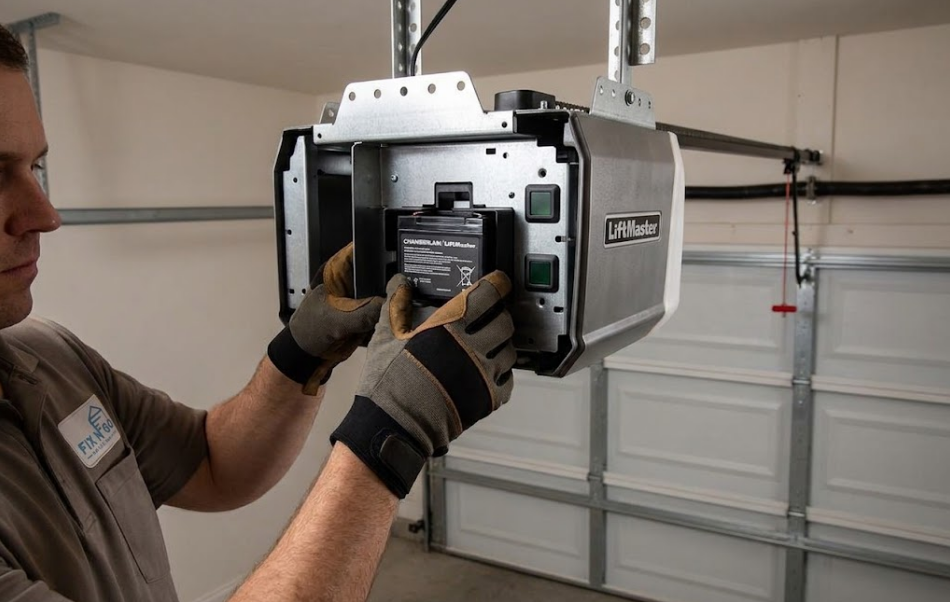
If the opener itself sounds like it's working harder than it used to, that's worth paying attention to. It could mean the door has fallen out of balance and the opener is doing more work than it should, or that the opener motor itself is starting to wear out. Either way, ignoring it usually leads to a bigger repair.
Why Texas Homes See More Noisy Doors
Garage doors in Texas take more punishment than those in many other parts of the country, and it often shows in the way they sound. The humidity, especially across Houston, the Bay Area, and coastal cities like Corpus Christi, can promote rust on metal components. Rusty hinges and rollers are often noisy hinges and rollers.
The intense summer heat can also cause lubricants to break down faster than they would in cooler climates, leaving moving parts dry sooner between tune ups. Storms and occasional hurricanes can shake garage doors, loosen hardware, and push tracks slightly out of alignment.
Homes throughout the greater Houston area, including Conroe, Webster, and surrounding communities, also commonly have larger double garage doors. Their added weight puts more stress on every component each time the door opens and closes.
Local tip: If your garage door has been living through a few Texas summers without a professional tune-up, the odds are good that dried-out lubricant, loose hardware, and light rust are all combining to make it noisy. A single service visit usually addresses all three.
What You Can Safely Try Yourself
Some noises are simple homeowner fixes. None of the steps below involve touching the springs, cables, or high-tension parts — those are strictly professional territory.
Quiet-Your-Door Checklist
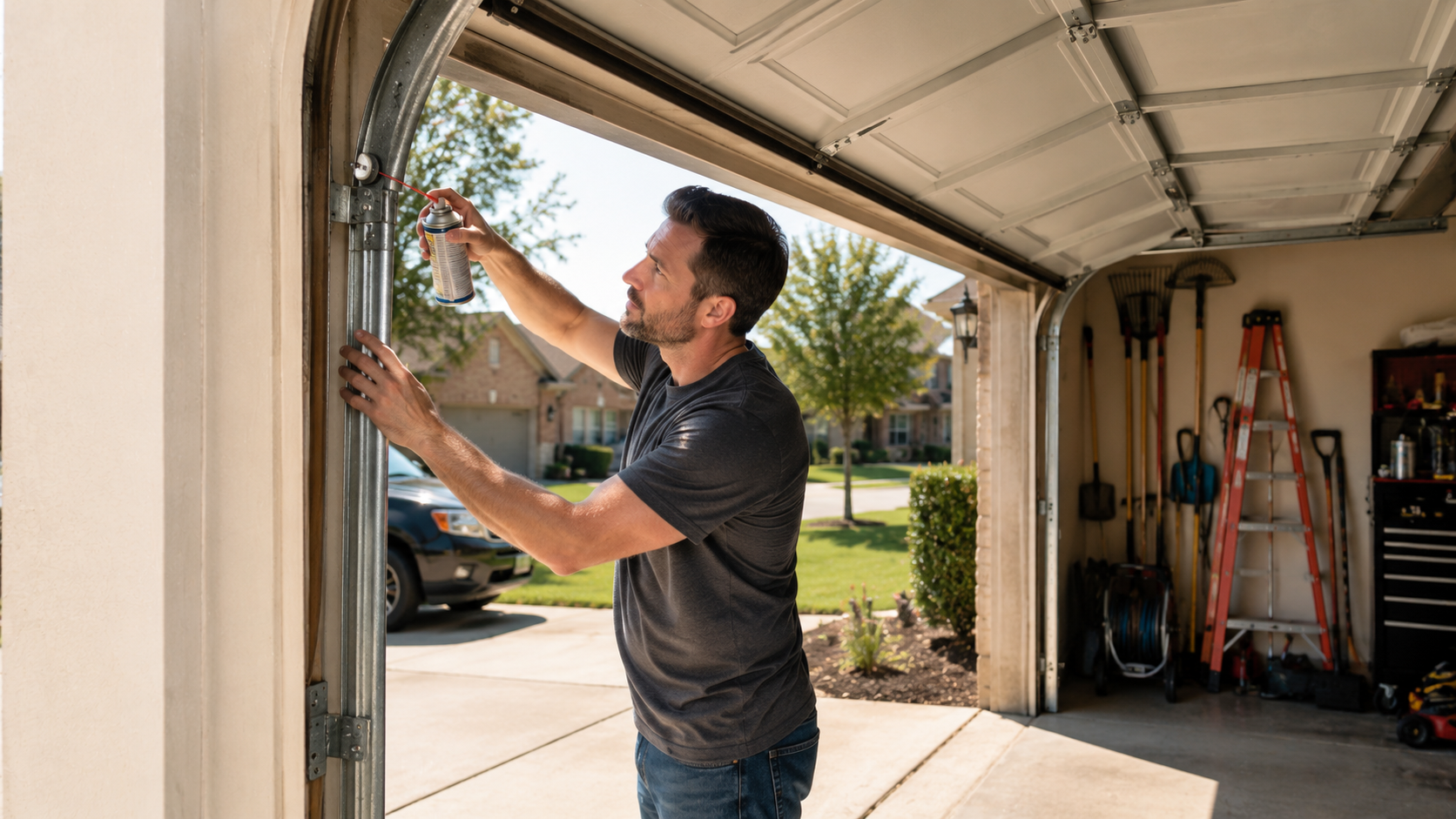
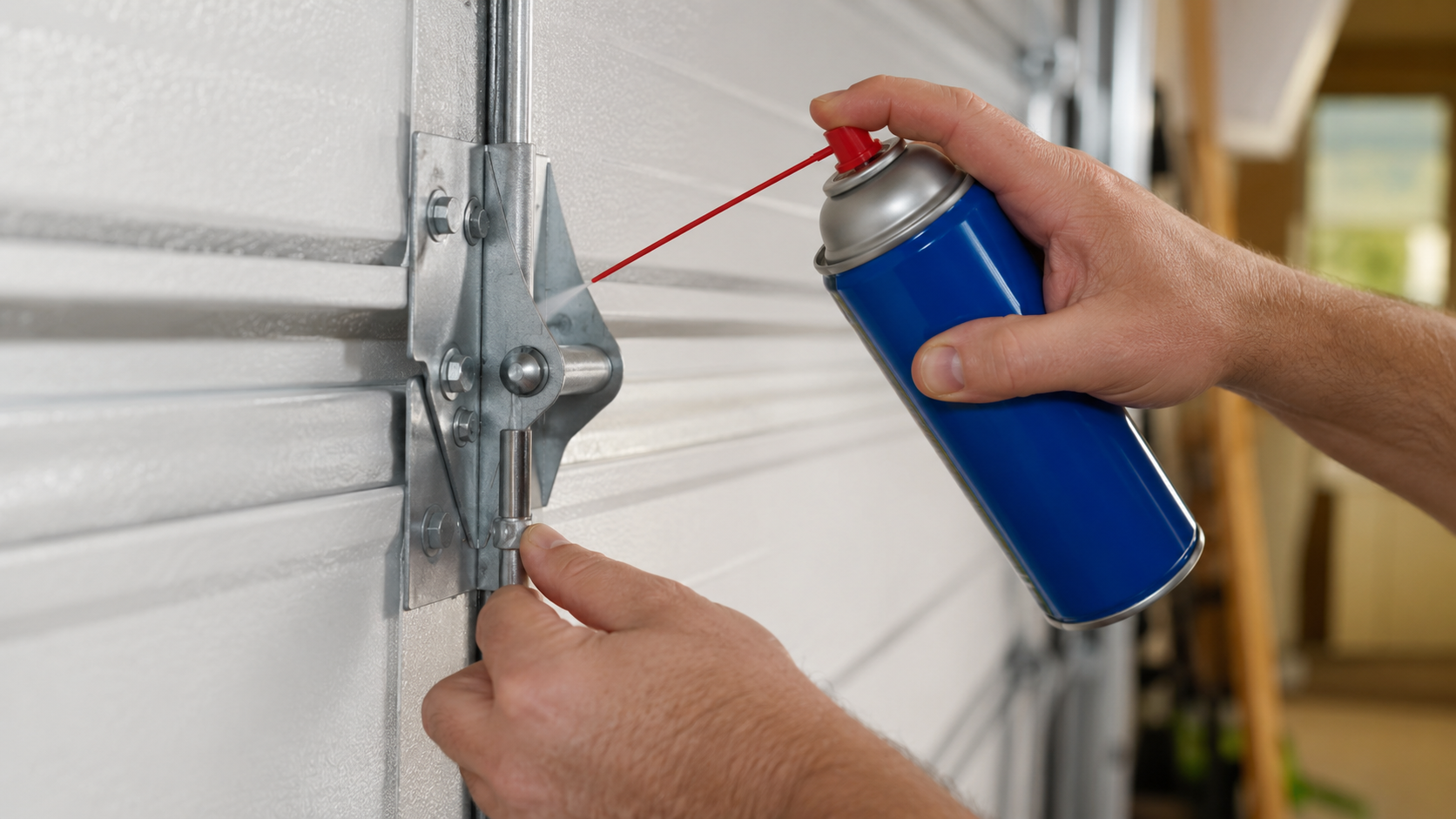
- Lubricate the moving parts with a silicone or lithium-based garage door lubricant — hinges, rollers, springs, and the opener rail. Avoid WD-40, which is a degreaser and attracts dust.
- Tighten visible hardware with a socket wrench. Nuts and bolts loosen from daily vibration.
- Wipe down the tracks with a damp cloth to remove built-up dust and debris.
- Inspect the rollers — if they look chipped, cracked, or worn, they'll need replacing (a job for a technician).
- Check the weather seal at the bottom of the door — a torn seal can cause rattling and slap sounds.
- Listen for where the noise is coming from — springs, opener, tracks, or panels. That helps a technician diagnose it faster if you do need to call one.
When to Call a Professional
DIY only takes you so far. If any of the following are true, the safest and cheapest path is to have a technician take a look before the problem gets bigger. The noise is a loud bang or pop, especially near the springs. Springs are under enormous tension and are the number-one source of garage door injuries when people try to handle them without training.
The door lifts unevenly, or one side sits lower than the other. That's almost always a spring or cable issue. The
opener strains, hesitates, or reverses partway. Something is either stuck, misaligned, or asking too much of the motor. You've lubricated and tightened everything, and the noise is still there.
The problem is deeper than a maintenance issue.
The door has been through a recent storm or hurricane. Alignment and structural issues aren't always visible right away. For Houston homeowners, including those in Memorial, River Oaks, Webster, and surrounding areas, as well as residents of Conroe, Corpus Christi, and the rest of our Texas service area, we offer
same-day service on most calls. A noisy garage door is often quick and affordable to fix when the problem is caught early.
How to Keep Your Garage Door Quiet Long-Term
The best way to prevent a noisy garage door is to take care of small problems before they become major repairs. A little routine maintenance every few months can make a big difference, especially in Texas.
Lubricate moving parts every three to six months, and consider doing it more often during the peak of summer. Tighten visible hardware twice a year. A quick inspection and adjustment usually takes about ten minutes. Wipe down the tracks and check for rust regularly, especially if you live in Webster, Clear Lake, Corpus Christi, or anywhere near the coast.
Replace worn rollers as soon as they begin showing signs of wear. New nylon rollers are significantly quieter than older metal rollers. Schedule a professional inspection once a year to catch worn springs, misaligned tracks, and failing components before they turn into costly repairs.
Frequently Asked Questions
Why is my garage door suddenly so loud?
Sudden noise usually means something specific has changed — lubricant has dried out, hardware has loosened, a roller has failed, or a spring is starting to wear. The type of sound is the biggest clue: squeaks point to dry parts, rattles to loose hardware, and bangs or pops to spring or panel issues.
Is a noisy garage door dangerous?
Some noises are just annoying, but banging, popping, and grinding sounds can be warning signs of parts under stress — especially springs or cables. If the noise is loud, sudden, or the door feels heavier than usual, stop using it and have a technician inspect it.
What lubricant should I use to quiet a garage door?
Use a silicone-based or lithium-based garage door lubricant. Avoid WD-40 as a lubricant — it's actually a degreaser and can attract dust that makes things noisier over time. Apply to hinges, rollers, springs, and the opener rail.
Are nylon rollers really quieter than metal ones?
Yes, noticeably. Nylon rollers run much quieter than the older metal-on-metal rollers found on many older garage doors, and they don't rust in Houston's humidity. Upgrading rollers is one of the most impactful changes you can make to a noisy garage door.
How fast can Fix N Go come out?
We offer same-day service on most calls across Houston, Memorial, Conroe, Webster, Corpus Christi, and the surrounding Texas areas. Call (832) 400-2992 to check current availability.
Tired of a Noisy Garage Door? Let's Quiet It Down.
A quick tune-up usually solves it. Same-day service across Houston, Memorial, Conroe, Webster, Corpus Christi, and beyond.
📞 Call (832) 400-2992 Schedule Online
You might also like
Fix N Go Blog