Garage Door Track Misalignment | Deep Diagnosis and How to Fix It
Your garage door worked perfectly yesterday. Today it grinds, shakes, moves unevenly — or stops dead halfway up.
Nine times out of ten, the culprit is garage door track misalignment. It's one of the most common garage door problems in Texas, and it's also one of the most misunderstood. Many homeowners ignore the early warning signs, wait too long, and turn a simple track adjustment into a full door replacement.
This guide walks you through a deep diagnosis — the exact signs, causes, and severity levels of track misalignment — so you know exactly what you're dealing with and what needs to happen next.
What Does a Garage Door Track Actually Do?
Before you diagnose a problem, you need to understand what you're diagnosing.
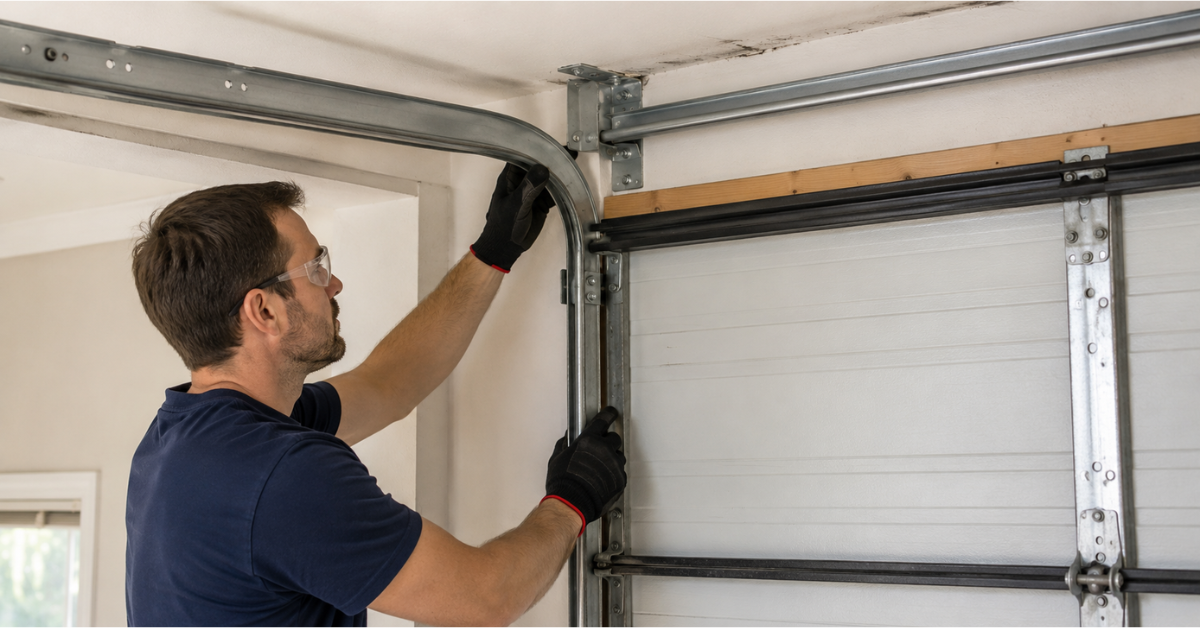
Your garage door rides along two vertical tracks on either side of the door opening. At the top, these vertical tracks curve and connect to horizontal tracks that run along the ceiling toward the back of the garage. The door's rollers sit inside these tracks and guide every inch of movement — up, down, open, close.
When both tracks are plumb (perfectly vertical), level (perfectly horizontal), parallel, and the right distance from the door, everything runs smoothly. The moment one track shifts even slightly out of position, the whole system fights itself. The rollers bind, the door strains, and the motor overworks. Left untreated, that friction destroys rollers, bends tracks further, and eventually pulls cables off their drums.
Track alignment isn't just a mechanical detail — it's the foundation everything else depends on.
Warning Signs Your Garage Door Track Is Misaligned
Your garage door will tell you something is wrong well before it completely fails. These are the signs to take seriously.
The Door Makes Grinding or Scraping Noises
A healthy garage door makes a consistent, low hum as it runs. A grinding, scraping, or squealing noise means the rollers are dragging against the inside of the track instead of rolling smoothly through it. That friction means the track is either bent, gapped, or sitting at the wrong angle.
The Door Moves Unevenly or Jerks
Watch your door from the front as it opens or closes. It should rise in a smooth, straight line. If one side rises faster than the other, if the door jerks mid-movement, or if it visibly tilts to one side, your tracks are not parallel. The door is fighting to balance itself on two rails set at different heights.
The Door Reverses Unexpectedly
Modern garage door openers have safety sensors and resistance detection. When the door hits too much resistance — like a roller jamming against a bent track — the opener interprets it as an obstruction and reverses. If your door reverses for no visible reason, misaligned or damaged tracks are the most likely cause.
The Door Stops Before Fully Opening or Closing
A door that stops partway and refuses to move further has hit a point where the rollers can no longer push through. This usually means a significant bend, gap, or kink in the track at that exact location.
You See Visible Gaps Between the Rollers and Track
Step to the side of your door and look at the rollers from the side as the door moves. The rollers should sit snugly inside the track at all times. If you see any daylight between the roller wheel and the track wall — even briefly during movement — your track has shifted away from the door.
The Door Looks Crooked in the Frame
Open your door six inches and step back. The bottom edge of the door should run perfectly parallel to the floor. If one corner drops lower than the other, your tracks are not level with each other. This is a textbook sign of track misalignment on one side.
The Four Main Causes of Garage Door Track Misalignment
Knowing why tracks go out of alignment helps you prevent it from happening again.
1. Physical Impact
This is the most common cause in residential garages. A car bumps the door panel. A basketball hits the track bracket. A ladder falls against the side wall. Even a relatively minor impact transfers force directly into the mounting brackets, and those brackets hold the track in position. One hard knock can shift a track enough to cause immediate binding.
2. Loose or Damaged Mounting Brackets
The tracks bolt to the wall and ceiling through a series of metal brackets. Over time, the bolts loosen from vibration — every time your door cycles, those fasteners experience stress. Loose brackets allow the track to drift gradually out of position. Many homeowners notice the door getting progressively louder and rougher over months without realizing the track is slowly moving.
3. Broken or Worn Rollers
Rollers are the wheels that ride inside your tracks. When a roller cracks, chips, or wears flat, it no longer rolls — it drags and skips. That uneven movement puts lateral pressure on the track walls, eventually bending them inward or outward. What starts as a roller problem becomes a track problem.
4. Broken Springs or Cables
This one surprises many homeowners. When a torsion spring breaks or a cable snaps, the door loses its counterbalance. One side drops suddenly under the full weight of the door. That weight goes straight into the tracks, bending them or pulling the rollers completely out of their channel. A broken spring that goes unrepaired long enough will always damage the tracks.
How to Diagnose the Severity: A Step-by-Step Process
Not all track misalignment is equal. Some cases are minor adjustments. Others are genuine structural failures that require professional intervention immediately. Here's how to assess where yours falls.
Step 1 — Visual Inspection with the Door Closed
Stand inside the garage with the door fully closed. Look at both vertical tracks from top to bottom. You're checking for:
- Visible bends or kinks in the track metal
- Gaps where the track pulls away from the wall
- Cracked, missing, or visibly loose mounting brackets
- Rust or corrosion that has weakened the track structure
Any visible bend in the track metal means the track needs straightening or full replacement — not adjustment.
Step 2 — Check for Plumb
Use a level tool against the vertical section of each track. The track should run perfectly straight up and down. Hold the level flat against the inside face of the track. If the bubble sits off-center, the track tilts — either toward the door or away from it.
A track that tilts toward the door pinches the rollers and causes grinding. A track that tilts away creates gaps that let the rollers jump out under load.
Step 3 — Check Track Spacing
The gap between the inside of the track and the door panel edge should be consistent from top to bottom — typically between ¼ inch and ½ inch, depending on your door system. Use a ruler and check this measurement at three points: near the floor, at mid-height, and near the curve. Inconsistent spacing confirms the track has drifted out of parallel alignment.
Step 4 — Check the Horizontal Tracks for Level
Now look up at the horizontal tracks running toward the back of the garage. These should slope very slightly downward toward the back — about ¼ inch of drop per foot is standard. This slight slope helps the door stay closed under its own weight.
If one horizontal track sits noticeably higher or lower than the other, the door will bind at the transition curve every single time. That transition point takes enormous stress from the rollers and door weight — misalignment there damages hardware fast.
Step 5 — Inspect Every Roller
While the door is at mid-height, look at each roller inside the track. Spin any rollers you can reach by hand. They should spin freely and smoothly. A roller that wobbles, grinds, or refuses to spin is causing track damage with every door cycle. Replacing worn rollers often resolves what seems like a track problem.
When Is This a DIY Fix — and When Isn't It?
This is a critical question. The internet is full of videos showing homeowners tapping tracks back into place with a rubber mallet. Sometimes that works. Often it doesn't — and occasionally it makes things significantly worse.
Minor tightening is DIY-safe. If your inspection reveals only loose bracket bolts and no visible track damage, tightening those bolts with the correct wrench is a legitimate first step. Always disconnect the opener first and work with the door fully down.
Bent tracks are not DIY-safe. Straightening a bent garage door track requires specific tools and the ability to judge alignment accurately. An amateur attempting to hammer a bent track back into shape usually introduces new bends, weakens the metal, or shifts adjacent brackets out of position.
Anything involving springs is never DIY-safe. If broken springs contributed to your track damage, do not attempt any repair with the springs still broken. A torsion spring under load stores enough energy to cause serious injury. This is a job for a trained technician every time, without exception.
Professional Track Repair: What the Process Looks Like
When you call Fix N Go Garage Door Repair, a certified technician arrives with the tools and parts to handle the full scope of your track problem in a single visit.
The process typically follows this sequence. First, the technician performs a complete safety inspection — not just the tracks, but the springs, cables, rollers, brackets, and opener — because track misalignment rarely happens in isolation. Second, they identify the root cause. Fixing tracks without addressing the cause that bent them means the problem returns within months. Third, they straighten or replace the damaged track sections, reset bracket positions, and verify plumb and level with precision gauges — not eyeballing. Finally, they cycle the door multiple times to confirm smooth, balanced operation before leaving.
How to Prevent Track Misalignment from Coming Back
Once your tracks are properly aligned and repaired, a few habits keep them that way.
Schedule annual maintenance. Fix N Go's maintenance service includes a full hardware inspection, lubrication of all moving parts, and bracket tightening — catching alignment drift before it becomes a problem.
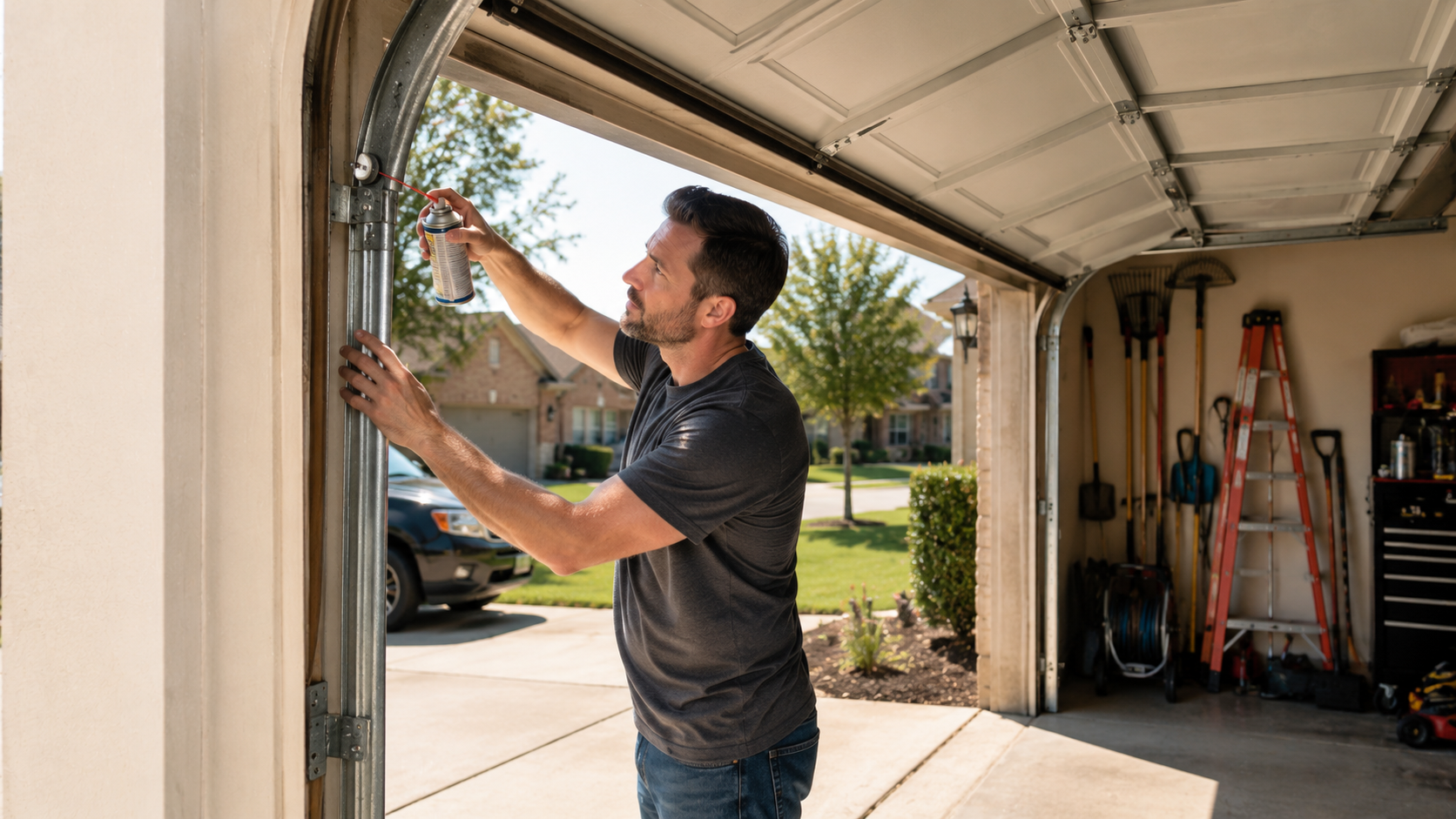
Lubricate your tracks twice a year. Use a silicone-based spray on the track interior and on each roller. Never use WD-40 on garage door tracks — it attracts dust and grit that accelerates wear. Lubricated rollers glide instead of dragging, which protects the track walls from lateral pressure.
Drive carefully into your garage. The most common cause of sudden track damage is vehicle contact. Give your door panels and track brackets clearance every single time you pull in or out.
Don't ignore grinding noises. A grinding door is your track or rollers telling you something is wrong right now. Continuing to operate a grinding door compounds the damage with every cycle.
Frequently Asked Questions
Q: How do I know if my garage door is off-track or just misaligned?
A: Misalignment means the tracks have drifted out of their correct position, but the rollers are still inside them. Off-track means the rollers have completely left the channel and the door hangs free. Misalignment produces grinding and uneven movement. An off-track door either collapses to one side, hangs at an angle, or refuses to move at all. Both need professional repair — an off-track door is a same-day emergency.
Q: Can I realign my garage door track myself?
A: Minor issues like loose bracket bolts are homeowner-safe to tighten. However, straightening bent tracks, resetting track spacing, or re-leveling horizontal tracks requires proper tools, alignment gauges, and experience. An incorrect DIY adjustment often worsens the alignment or shifts adjacent brackets. If you see any visible damage to the track metal, call a professional.
Q: How much does garage door track repair cost in Texas?
A: Track repair costs depend on the extent of the damage. Minor bracket tightening and adjustment runs significantly less than full track replacement.
Q: How long does a track repair take?
A: Most track realignments and minor repairs complete within one to two hours. If the damage requires full track replacement combined with roller or cable replacement, the visit may run two to three hours. Fix N Go technicians carry all common parts on their trucks, so most jobs finish in a single visit without waiting for parts orders.
Q: What happens if I keep using a garage door with misaligned tracks?
A: Every cycle on a misaligned track grinds the rollers, bends the track further, strains the opener motor, and puts excessive tension on the cables and springs. What starts as a minor adjustment can become a full track replacement, roller replacement, cable repair, and opener service — all because the early warning signs were ignored. Addressing misalignment early is always faster and less expensive than waiting.
You might also like
Fix N Go Blog