Best Garage Door Openers for Heavy Doors
Not every garage door is created equal, and if yours is made of solid wood, insulated steel, or oversized enough to fit an RV, a standard opener simply won't cut it. Choosing the best garage door openers for heavy doors isn't about picking the most expensive model on the shelf, it's about matching horsepower and drive type to the actual weight you're lifting.
At FixNGo TX, we regularly get called out to fix openers that failed within a year, and the root cause is almost always the same: an underpowered unit straining against a door it was never built to handle. In this guide, we'll cover exactly what to look for so you don't make that same costly mistake.
Why Standard Openers Fail on Heavy Doors
Most entry-level garage door openers are designed for lightweight aluminum or single-layer steel doors weighing under 200 pounds. Push them past that threshold, and the motor works harder than it's rated for on every single cycle.
Over time, this strain shows up as slower operation, unusual grinding noises, and eventually a burned-out motor or stripped gears. It's one of the most common repair calls we handle, and in almost every case, the fix isn't repairing the old opener, it's replacing it with one actually rated for the door's weight.
How to Determine If Your Garage Door Is "Heavy"
Before shopping for an opener, you need to know what you're actually dealing with. Door weight varies dramatically based on material and size.
- Solid wood doors are among the heaviest, often exceeding 300 to 400 pounds depending on size and thickness.
- Insulated steel doors with double or triple layers typically weigh more than single-layer steel, sometimes crossing 250 pounds.
- Oversized doors, such as those built for RVs, boats, or three-car garages, add significant weight simply due to their size, regardless of material.
- Custom or carriage-style doors often include decorative hardware and thicker panels, adding extra pounds beyond what the base material suggests.
If you're unsure of your door's exact weight, checking the manufacturer's spec sheet or having a technician measure it during an inspection removes the guesswork entirely.
What to Look for in an Opener for Heavy Doors
Horsepower Rating
This is the single most important spec for heavy doors. Standard openers run at 1/2 horsepower, which works fine for lightweight doors but struggles considerably once weight increases. For heavy doors, look for 3/4 horsepower or higher, with some heavy-duty models offering a full 1 horsepower or DC motors that adjust power output automatically based on load.
Drive Type Built for Torque
Chain drive openers are generally the top choice for heavy doors because chains handle high-torque situations better than belts or screw mechanisms over the long term. That said, high-horsepower belt drive models designed specifically for heavier loads have become more common and offer the added benefit of quieter operation.
Reinforced Rail System
A heavier door puts more stress on the rail guiding the trolley back and forth. Openers built for heavy-duty use typically feature reinforced steel rails that resist bending or flexing under sustained load, which extends the lifespan of the entire system.
Battery Backup for Consistent Power
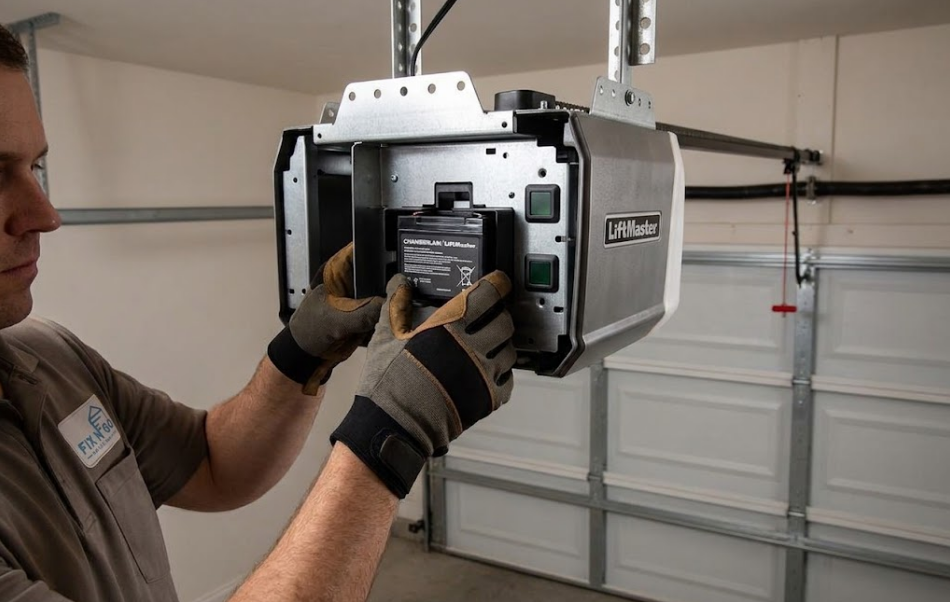
Heavy doors draw more current, and power fluctuations can cause a motor to stall mid-cycle. A built-in battery backup ensures the door still opens and closes smoothly during brief power issues, which matters even more with heavier loads straining the system.
Adjustable Force Settings
The best garage door openers for heavy doors let you fine-tune the force and travel settings during installation. This ensures the motor isn't working harder than necessary while still providing enough power to lift the door safely and consistently.
Recommended Opener Categories for Heavy Doors
While specific models change frequently, these categories consistently perform best for heavier garage doors based on what we install most often:
Heavy-duty chain drive openers remain the go-to choice for solid wood or oversized doors, since chains handle sustained torque better than any other drive type.
High-horsepower DC motor openers automatically adjust power delivery based on the door's resistance, making them ideal for doors with inconsistent weight distribution, such as carriage-style designs.
Commercial-grade openers, often used for oversized residential doors, provide the most overhead capacity for extremely heavy or oversized applications.
Signs Your Current Opener Isn't Powerful Enough
A few warning signs indicate your existing opener is underpowered for your door, even if it hasn't failed yet.
- The door reverses unexpectedly partway through opening or closing, which often means the motor senses too much resistance.
- Unusual grinding or straining sounds during operation point to the motor working beyond its intended capacity.
- The door opens noticeably slower than it used to, suggesting the motor is losing power output as internal components wear down faster than normal.
If you're noticing any of these signs, waiting it out usually leads to a full motor failure rather than a gradual, safe decline.
Installation Matters as Much as the Opener Itself
Even the most powerful opener will underperform if it's not installed correctly. Heavy doors require precise force calibration, properly secured mounting brackets, and a rail system installed without flex or misalignment.
This is one area where professional installation genuinely pays off, since a heavy door installed incorrectly puts stress on both the opener and the door itself, shortening the lifespan of both.
Final Thoughts
Choosing among the best garage door openers for heavy doors comes down to matching horsepower, drive type, and rail strength to your door's actual weight, not just picking the strongest-sounding model available. A properly matched opener runs quieter, lasts longer, and avoids the repeated strain that leads to premature failure.
If you're dealing with a heavy door and an opener that's struggling to keep up, FixNGo TX can assess your setup and recommend a system built to handle it long-term. Reach out to our team, and we'll make sure your next opener actually matches the door it's lifting.
FAQ
Q: How much horsepower do I need for a heavy garage door?
A:
Most heavy doors require at least 3/4 horsepower, with some solid wood or oversized doors needing a full 1 horsepower or a DC motor with adaptive power.
Q: Is chain drive or belt drive better for heavy garage doors?
A:
Chain drive openers are generally better suited for heavy doors due to their higher torque handling, though high-horsepower belt drive models are also available.
Q: What happens if my opener isn't powerful enough for my door?
A:
An underpowered opener will strain during operation, leading to slower movement, grinding noises, and eventually motor failure or stripped gears.
Q: How do I know if my garage door is considered heavy?
A:
Solid wood, insulated steel, and oversized doors typically qualify as heavy, often exceeding 250 to 400 pounds depending on material and size.
Q: Does a heavy garage door need a stronger rail system?
A: Yes, reinforced steel rails are recommended for heavy doors since they resist bending and flexing under the additional load.
You might also like
Fix N Go Blog