Garage Door Opens Slowly — Common Causes and How to Fix Them
Your garage door used to zip open in seconds. Now it crawls, strains, and takes twice as long to get out of the way. A garage door that opens slowly is not just an inconvenience — it is a warning signal. Something in the system is working harder than it should, and that extra strain shortens the life of every component involved. This guide breaks down every common reason a garage door opens slowly, what each cause means for your system, and exactly what to do about it before a slow door becomes a broken one.
Why Garage Door Speed Actually Matters
Speed is a byproduct of balance. A well-maintained garage door opens at a consistent, brisk pace because every component — springs, cables, rollers, tracks, and opener — shares the workload evenly. When any one part weakens or fails, the rest of the system compensates. The opener motor strains harder. The springs stretch unevenly. The result is a door that moves slower, louder, and with far more wear per cycle than it should.
Left unaddressed, a slow garage door does not stay just slow. The added strain accelerates wear across the entire system — turning what might have been a simple fix into a full component replacement down the line.
Worn or Weakening Torsion Springs
Springs are the most common reason a garage door opens slowly — and the most important one to address promptly. Torsion springs sit above the door and store mechanical energy to counterbalance the door's weight. When they work correctly, opening your door feels almost effortless. When they weaken, the opener motor carries far more of the load than it was designed to handle.
How to Spot Spring Wear
Weakening springs do not always snap dramatically. More often, they gradually lose tension over months or years. Signs include a door that strains upward slowly, a visible gap in a torsion spring coil, or a door that feels noticeably heavier when you lift it manually after disconnecting the opener.
Most residential torsion springs are rated for 10,000 cycles — roughly 7–10 years of average use. If your door is in that age range and opening slowly, spring wear is the first place to look. Spring replacement is strictly a professional job — the tension stored in these components can cause serious injury if handled incorrectly.
Lack of Lubrication on Moving Parts
Friction is a silent speed killer. Every moving part on your garage door system — rollers, hinges, tracks, and the torsion spring — requires lubrication to move freely. Without it, friction builds up across the system and the door drags its way open instead of gliding.
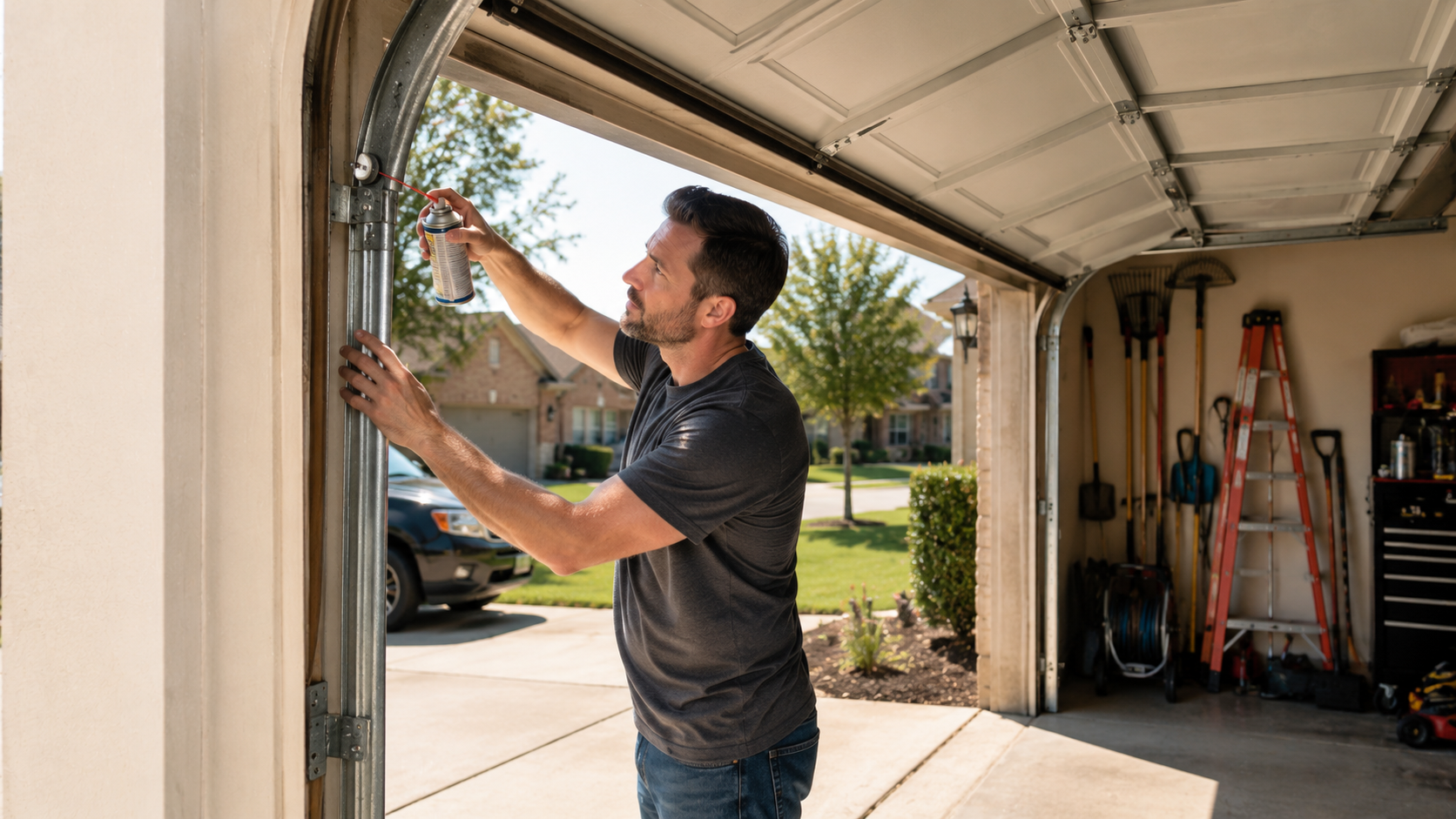
This is one of the easiest and cheapest fixes available. Apply a silicone-based or white lithium grease spray to every moving part: the rollers, the hinges at each panel joint, the torsion spring, and the bearing plates on each side of the spring. Do not use WD-40 — it is a solvent, not a lubricant, and it attracts dust that compounds the friction problem over time.
Lubricate your garage door system every six months. A single 15-minute maintenance session twice a year prevents a significant amount of the friction-related slowdown that causes premature wear.
Misaligned or Damaged Tracks
Your garage door travels along two vertical tracks that transition into horizontal ceiling tracks. When those tracks bend, dent, or pull away from their mounting brackets — even slightly — the door no longer has a clean, frictionless path. It binds against the track walls, slows down, and in some cases stops entirely mid-travel.
Inspect your tracks visually from top to bottom. Look for dents, bends, gaps between the roller and track wall, or sections where the track has shifted out of plumb. Minor looseness in the mounting brackets can sometimes be corrected by tightening the bolts. Any visible bending, significant misalignment, or a track that has separated from the wall needs professional attention — forcing a door through a damaged track accelerates wear on rollers, cables, and the opener motor simultaneously.
Opener Settings and Motor Issues
Sometimes the door itself is fine — the problem lives in the opener. Most garage door openers have an adjustable speed setting and force adjustment dials. If either has been bumped, reset, or factory-defaulted, your opener may be operating at a lower speed than its optimal setting.
Check Your Opener's Speed and Force Settings
Consult your opener's manual to locate the speed and force adjustment controls — typically small dials or buttons on the motor unit. Increasing the force setting slightly can restore normal speed if the motor was underperforming due to a low setting. However, do not crank the force setting to maximum as a shortcut — if your door is genuinely heavy due to spring wear, forcing the motor harder accelerates its failure.
Aging or Failing Opener Motor
Opener motors have a finite lifespan — typically 10–15 years. An aging motor loses efficiency over time, delivering less power per cycle and slowing the door as a result. If your opener is older and your door has become progressively slower despite proper maintenance, motor replacement or a full opener upgrade may be the most cost-effective solution long term.
Cold Weather and Temperature Effects
Temperature affects your garage door system more than most homeowners realize. In cold weather, metal contracts — making springs stiffer, tracks narrower, and lubricants thicker. All of these factors slow the door down. Rubber seals on the bottom of the door also stiffen in cold temperatures, creating additional drag against the floor.
If your door opens slowly only during winter months, temperature is likely a contributing factor. Switching to a low-temperature lubricant formulated for cold climates, and ensuring your springs are properly tensioned heading into winter, significantly reduces cold-weather slowdown.
How Fix-N-Go TX Diagnoses and Fixes Slow Garage Doors
When basic lubrication and a settings check do not restore your door's speed, the problem runs deeper — and accurate diagnosis matters. At Fix-N-Go TX, the trained technicians inspect every component of your garage door system to pinpoint exactly what is causing the slowdown. Whether the culprit is weakening springs that need recalibration or replacement, tracks requiring realignment, worn rollers creating drag, or an aging opener motor losing its output, Fix-N-Go TX brings the expertise and parts to fix it correctly the first time. Every service call includes a full system inspection — because a slow door rarely has just one cause, and fixing only the obvious issue leaves the underlying wear untreated. Visit fixngotx.net to schedule a diagnostic visit and get your garage door back to full speed safely.
Quick Maintenance Steps You Can Do Right Now
Before calling a technician, run through these basic checks. They resolve a surprising number of slow-door complaints at zero cost.
Step 1 — Lubricate everything. Spray silicone lubricant on all rollers, hinges, the torsion spring, and bearing plates. This takes 15 minutes and often restores noticeable speed immediately.
Step 2 — Check and tighten all hardware. Loose bolts and brackets create drag and resistance throughout the system. Tighten every visible fastener with a socket wrench.
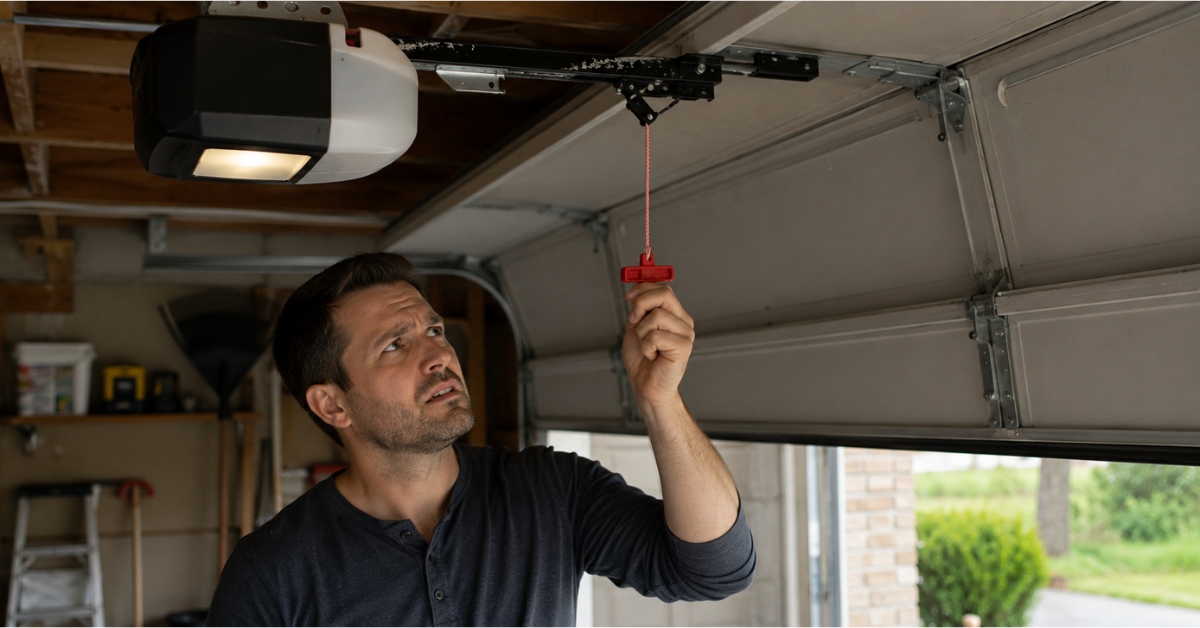
Step 3 — Test manual balance. Disconnect the opener and lift the door manually to waist height. If it does not hold steady, your springs are unbalanced and need professional adjustment.
Step 4 — Inspect the tracks. Look for dents, bends, or gaps. Tighten any loose mounting brackets you find.
Step 5 — Check opener settings. Consult your manual and verify the speed and force settings are at the recommended levels for your door's weight and size.
If the door is still slow after all five steps, call a professional. The problem is mechanical and needs trained hands.
Frequently Asked Questions
Q: Why does my garage door open slowly only in winter?
A: Cold temperatures stiffen springs, thicken lubricants, and contract metal components — all of which add resistance. Switching to a cold-weather lubricant and ensuring proper spring tension before winter usually resolves it.
Q: Can I adjust my garage door opener to open faster?
A: Yes — most openers have speed and force adjustment settings. However, if spring wear is the real cause of slowness, increasing opener force only strains the motor further without fixing the root problem.
Q: How long do garage door springs last?
A: Most residential torsion springs are rated for around 10,000 cycles, which translates to roughly 7–10 years of average use before tension loss causes noticeable performance issues.
Q: Is a slow garage door dangerous?
A: A slow door signals component strain that, if ignored, can lead to a snapped spring, a door off its track, or a failed opener — all of which create genuine safety hazards. Address it promptly.
Q: How much does it cost to fix a slow garage door?
A: Cost depends entirely on the cause — lubrication and minor adjustments are inexpensive, while spring replacement or opener motor upgrades cost more. A professional inspection gives you an accurate diagnosis and estimate before any work begins.
Conclusion
A garage door that opens slowly is a system under stress — and stress left unaddressed becomes failure. Start with the basics: lubricate every moving part, tighten all hardware, and check your opener settings. If the door is still sluggish, the cause is almost certainly worn springs, misaligned tracks, or an aging opener motor — all of which need professional attention before they escalate. Do not let a slow door grind your system into an early breakdown. Visit fixngotx.net to book a full diagnostic inspection and get your garage door opening at full speed again.
You might also like
Fix N Go Blog