Chain Drive vs Belt Drive Garage Door Openers
Choosing the right garage door opener is just as important as choosing the right garage door. A reliable opener ensures smooth daily operation, enhances home security, and adds convenience to your routine. When homeowners begin comparing options, one question comes up more than any other: chain drive vs belt drive garage door openers—what’s the difference, and which one should you choose?
Both chain drive and belt drive garage door openers are popular and effective, but they serve different needs. Understanding how they work, their advantages, and their limitations will help you make a smart decision for your home. This guide breaks everything down in simple terms so you can confidently choose the opener that fits your lifestyle and budget.
Understanding Garage Door Opener Drive Systems
Before comparing chain drive vs belt drive garage door openers, it helps to understand what a “drive system” actually is.
The drive system is the mechanism that moves your garage door along its track. It connects the motor to the door and controls how the door opens and closes. The main difference between chain drive and belt drive openers lies in the material used to pull the door.
While both systems perform the same function, their performance, noise level, maintenance needs, and cost vary.
What Is a Chain Drive Garage Door Opener?
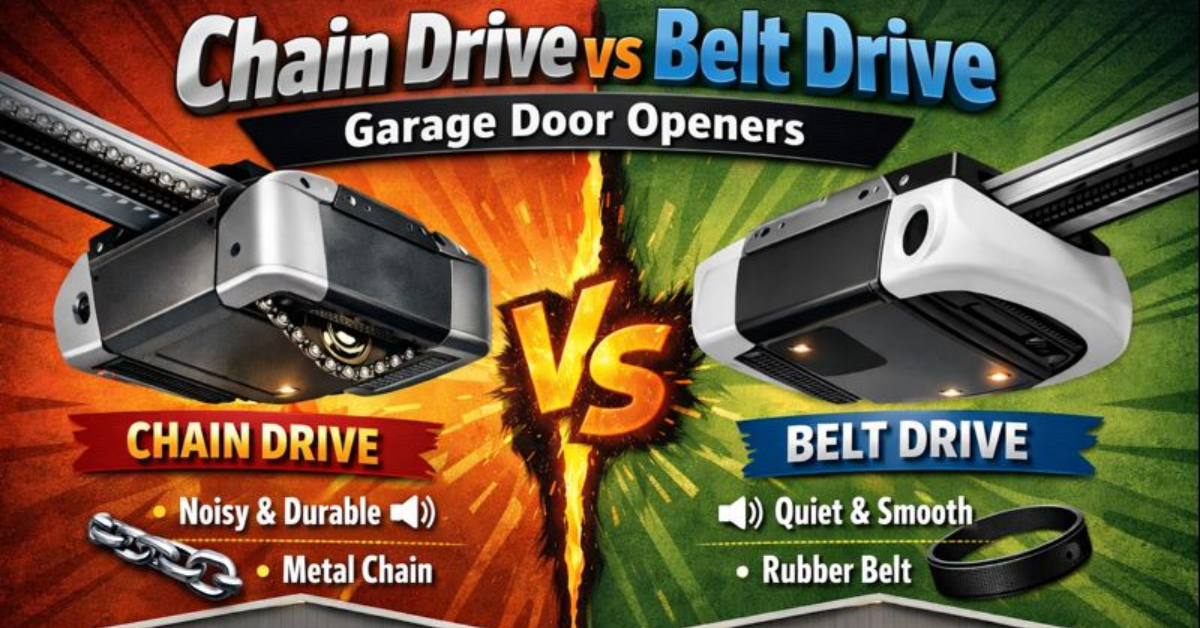
A chain drive garage door opener uses a metal chain—similar to a bicycle chain—to lift and lower the garage door. This system has been around for decades and is known for its strength and reliability.
How It Works
When the motor runs, the chain moves along a rail, pulling the trolley that lifts the garage door. The metal-on-metal design makes chain drive openers highly durable, especially for heavier doors.
Benefits of Chain Drive Garage Door Openers
When comparing chain drive vs belt drive garage door openers, chain drive models stand out for their strength and affordability.
Chain drive openers are a solid choice if you:
- Have a heavy or oversized garage door
- Want a budget-friendly option
- Need proven, long-term durability
They perform well in detached garages where noise is less of a concern.
Drawbacks of Chain Drive Garage Door Openers
The biggest downside of chain drive openers is noise. The metal chain creates vibration and sound during operation, which can be disruptive if living spaces are near or above the garage. Additionally, chain drive openers require periodic lubrication and maintenance to keep the chain moving smoothly.
How to Save Money on Garage Door Repairs
What Is a Belt Drive Garage Door Opener?
A belt drive garage door opener uses a reinforced rubber or polyurethane belt instead of a metal chain. This design allows for smoother and quieter operation.
How It Works
The motor moves the belt along the rail, lifting and lowering the door with minimal vibration. Because there is no metal-on-metal contact, belt drive systems operate more quietly and smoothly.
Benefits of Belt Drive Garage Door Openers
When homeowners compare chain drive vs belt drive garage door openers, belt drive models are often favored for comfort and convenience.
Belt drive openers are ideal if you:
- Have bedrooms or living areas near the garage
- Want quiet, smooth operation
- Prefer low-maintenance equipment
They are especially popular in modern homes where noise reduction is a priority.
Drawbacks of Belt Drive Garage Door Openers
The main drawback of belt drive openers is cost. They are typically more expensive than chain drive models. While they are durable, extreme temperature changes can affect belt flexibility over time, although modern belts are designed to handle most conditions.
Chain Drive vs Belt Drive Garage Door Openers
Noise Comparison
Noise is one of the most important factors for homeowners.
Chain drive openers are noticeably louder due to the metal chain moving along the rail. Belt drive openers, on the other hand, operate quietly and smoothly, making them better suited for attached garages.
If noise matters to you, belt drive openers usually win this comparison.
Durability
Both systems are durable when properly maintained.
Chain drive openers are extremely strong and well-suited for heavy doors. Belt drive openers are also long-lasting, especially modern models designed with reinforced belts.
The key difference is that chain drive systems tolerate heavy use slightly better, while belt drives offer smoother performance.
Maintenance Needs
Maintenance requirements differ slightly between the two.
Chain drive openers need:
- Regular lubrication
- Occasional chain adjustment
Belt drive openers generally require:
- Minimal maintenance
- Less frequent servicing
Homeowners looking for a low-maintenance option often prefer belt drive systems.
Cost Comparison
Cost is often a deciding factor.
Chain drive openers are typically more affordable upfront, making them appealing to budget-conscious homeowners. Belt drive openers cost more initially but may offer better long-term comfort and convenience.
The right choice depends on whether you value lower cost or quieter operation more.
How to make a garage door look nicer?
Which Opener Is Best for Your Home?
Choosing between chain drive vs belt drive garage door openers depends on your specific needs.
A chain drive opener may be best if:
- Your garage is detached
- You have a heavy garage door
- Budget is a primary concern
A belt drive opener may be best if:
- Your garage is attached to your home
- Noise reduction is important
- You want smoother operation
Both options are reliable when installed correctly.
Professional Installation Matters
Regardless of which opener you choose, professional installation plays a major role in performance and longevity. Proper alignment, balance, and safety sensor setup ensure the opener works efficiently and safely.
A poorly installed opener can create noise, wear parts faster, and lead to frequent repairs.
Long-Term Value and Convenience
While chain drive openers are cost-effective and strong, belt drive openers offer added comfort, especially in homes where quiet operation matters. Many homeowners find the extra investment worthwhile for daily convenience and reduced noise.
Frequently Asked Questions (FAQ)
Q: Are belt drive garage door openers reliable?
A: Yes. Modern belt drive openers are highly reliable and designed for long-term use.
Q: Do chain drive openers last longer?
A: Chain drive openers are extremely durable, especially for heavy doors, but both systems can last many years with proper maintenance.
Q: Is a belt drive opener worth the extra cost?
A: For attached garages or noise-sensitive homes, many homeowners find belt drive openers worth the investment.
Q: Can either opener work with smart features?
A: Yes. Both chain drive and belt drive openers are available with smart technology options.
Conclusion
When deciding between chain drive vs belt drive garage door openers, the right choice comes down to your home’s layout, noise tolerance, and budget. Chain drive openers offer strength and affordability, while belt drive openers provide quiet, smooth operation and low maintenance.
By understanding the differences and considering how your garage is used, you can select an opener that delivers reliable performance and daily convenience for years to come.
You might also like
Fix N Go Blog