Can Hackers Open Smart Garage Doors?
You installed a smart garage door opener for convenience — open it from your phone, check if you left it up, let the delivery driver in. What you may not have considered is whether that same convenience creates a door into your home for someone who should not be there. The question is real: can hackers open smart garage doors? The short answer is yes — under specific conditions. The longer answer is that the risk is manageable, the vulnerabilities are known, and protecting yourself is simpler than you think. Here is everything you need to know.
Smart Garage Doors Are Essentially Internet-Connected Entry Points
A traditional garage door opener works on a fixed radio frequency. A smart garage door opener connects to your home Wi-Fi, communicates with a cloud server, and responds to commands from a smartphone app — sometimes from anywhere in the world.
That connectivity is the feature. It is also the attack surface.
Every device connected to your home network is a potential entry point for someone who knows what they are looking for. Smart garage openers are no exception. They carry data — your location, your schedule patterns, your home network credentials — and they respond to digital commands. That combination is exactly what makes them useful and exactly what makes them worth securing properly.
The Real Ways Hackers Can Target Smart Garage Doors
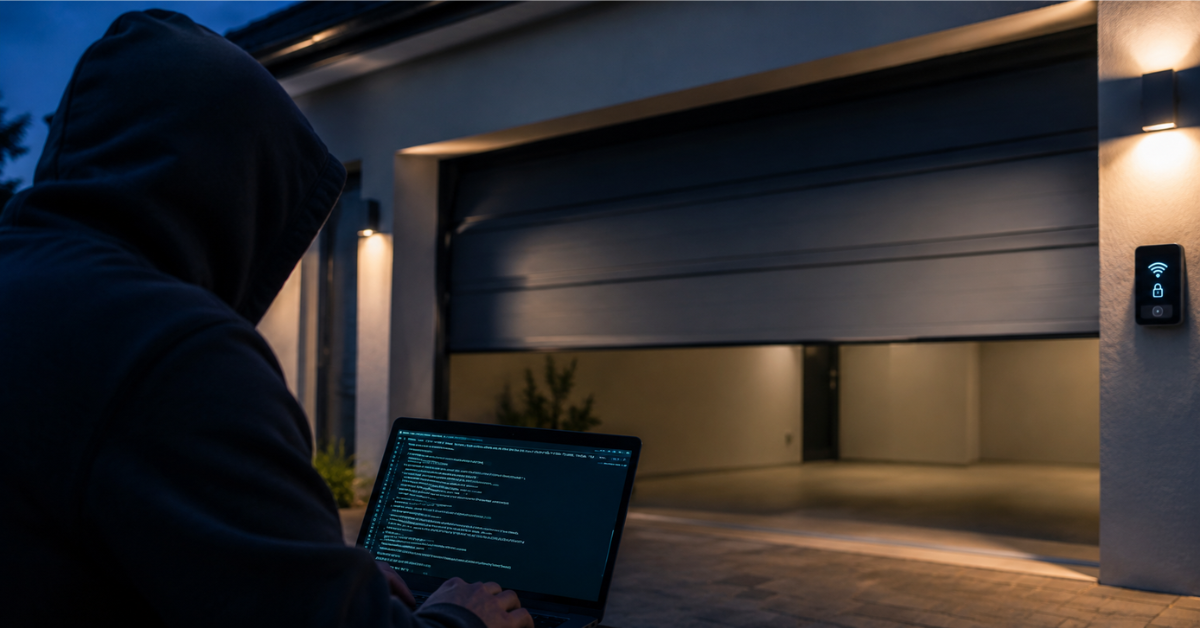
Forget the Hollywood image of a hacker typing frantically at a keyboard to break into your garage. The actual methods are more mundane — and more preventable.
Rolling Code Interception (Replay Attacks)
Older fixed-code garage door remotes transmitted the same signal every time. A criminal with a radio scanner could capture that signal and replay it to open your door. Most modern smart openers use rolling code technology — a new encrypted code generates with every press, making replay attacks ineffective.
However, some budget smart openers or older hybrid systems still use fixed codes. If your opener predates 2010 or came from an unknown brand, this vulnerability may apply to your system specifically.
Wi-Fi Network Compromise
Your smart opener talks to your home Wi-Fi. If your router uses a weak password, outdated firmware, or an unsecured guest network, an attacker who gets into your Wi-Fi can potentially interact with every device on it — including your garage opener. This is less a garage door problem and more a home network problem, but the consequences reach your garage all the same.
Cloud Server Vulnerabilities
Smart openers route commands through a manufacturer's cloud server. If that server has security flaws — something that has happened with several smart home brands — attackers can potentially issue commands to connected devices without ever touching your local network. This is outside your direct control, which is why choosing a reputable, security-conscious manufacturer matters enormously.
Smartphone App Weaknesses
The app on your phone is another link in the chain. A phone without a screen lock, an app that stays permanently logged in, or a shared account with a former roommate or partner all create access points that have nothing to do with technical hacking. Most real-world smart garage door breaches happen through lost or shared access credentials — not sophisticated cyberattacks.
Brute Force Attacks on Weak Passwords
Some smart opener apps and cloud accounts protect access with nothing more than a short PIN or a simple password. Automated brute force tools can cycle through thousands of common passwords in minutes. If your account password is your birthday or your dog's name, this is a genuine risk.
How Worried Should You Actually Be?
Honest perspective matters here. Smart garage door hacking is a real vulnerability — but it is not a common one among everyday criminals. Opportunistic thieves check for unlocked doors and unsecured windows far more often than they deploy Wi-Fi exploits against residential garages.
The more realistic threat profile looks like this: a former partner who still has app access, a neighbor who noticed you shared your code and never changed it, or a compromised home network that exposes multiple devices at once. These are access control problems, not sophisticated cyberattacks — and they are entirely preventable.
That said, ignoring security because an attack feels unlikely is exactly the gap that gets exploited.
Six Practical Steps to Secure Your Smart Garage Door Right Now
You do not need to be a cybersecurity expert to close the most common vulnerabilities. These steps cover the realistic threat landscape thoroughly.
1. Use a strong, unique password on your opener app account. At least 12 characters, a mix of letters, numbers, and symbols, and not reused from any other account. A password manager makes this effortless.
2. Enable two-factor authentication if your app supports it. This means even a stolen password cannot open your garage without a second verification step — typically a code sent to your phone.
3. Audit who has access. Most smart opener apps show every account that has been granted access. Review that list right now. Remove anyone who no longer lives in your home, no longer works for you, or should not have independent access.
4. Secure your home Wi-Fi. Use WPA3 encryption if your router supports it, keep your router firmware updated, and use a strong network password. If your router is more than five years old, an upgrade is worth considering from both a speed and a security standpoint.
5. Enable activity notifications. Most smart opener apps can alert you every time the door opens. Set this up. An unexpected notification at 2 a.m. is exactly the kind of early warning that prevents a break-in from becoming a burglary.
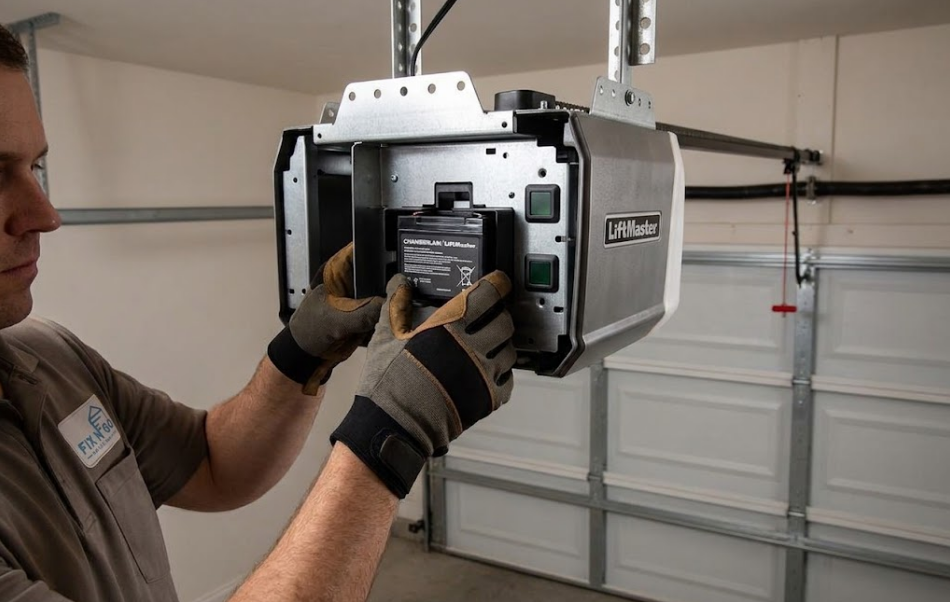
6. Check your opener's firmware. Manufacturers release security patches. Log into your opener's app or web portal and confirm you are running the latest firmware version. Outdated firmware is a known vulnerability that patches exist specifically to close.
When to Consider a Hardware Upgrade
Sometimes the right security answer is a better device. If your current smart opener came from an obscure brand with no track record of security updates, uses fixed codes instead of rolling encryption, or has not received a firmware update in years — the hardware itself is the weak link.
Modern smart openers from established manufacturers include end-to-end encryption, rolling code technology, automatic firmware updates, and activity logging as standard features. If your opener is more than seven to ten years old, an upgrade delivers both better security and better reliability simultaneously.
At Fix-N-Go TX, the team handles smart garage door opener installation, upgrades, and full system assessments for homeowners who want to know their door is both functional and secure. Whether you need a new opener installed with proper security configuration, want an older system assessed for vulnerabilities, or need any mechanical component of your door addressed alongside a tech upgrade, Fix-N-Go TX covers the complete picture. A secure garage door is a properly working garage door — and that means the hardware, the software, and the installation all need to be right. Visit fixngotx.net to book your assessment or opener upgrade today.
Frequently Asked Questions
Q: Can someone hack my garage door without being on my Wi-Fi?
A: It is possible through cloud server vulnerabilities or app credential theft, but extremely rare for residential targets — securing your account password and enabling two-factor authentication eliminates most of this risk.
Q: Do rolling code openers completely prevent hacking?
A: Rolling codes eliminate replay attacks, which were the most common radio-based threat — but they do not protect against network, app, or account-level vulnerabilities, which require separate security measures.
Q: What is the safest smart garage door opener brand?
A: Look for brands with a consistent track record of security updates, end-to-end encryption, two-factor authentication support, and rolling code technology — prioritize security features over price when making your choice.
Q: How do I know if someone has accessed my smart garage door without permission?
A: Enable activity notifications in your opener app — every open and close event gets logged with a timestamp, giving you a clear record of any unauthorized access.
Q: Should I disconnect my smart opener from Wi-Fi when I am away for a long time?
A: Keeping it connected actually helps — you retain remote monitoring and alert capabilities. Instead, audit access permissions and enable notifications before any extended absence.
Conclusion
Smart garage doors can be hacked — but the real vulnerabilities are far less dramatic than most people imagine. Weak passwords, shared app access, outdated firmware, and unsecured home networks are the actual doors criminals walk through. Close those gaps and you eliminate the overwhelming majority of the risk. Strong passwords, two-factor authentication, regular access audits, and an up-to-date opener from a reputable manufacturer give you a genuinely secure entry point — not just a convenient one. If your current opener is aging, misconfigured, or simply not up to the job, Fix-N-Go TX is ready to help you upgrade and secure it properly. Visit fixngotx.net and take the guesswork out of your garage door security.
You might also like
Fix N Go Blog