Garage Door Insulation for Hot Climates
Most homeowners assume insulation is only for cold weather, so they skip it entirely if they live somewhere like Texas, Arizona, or Florida. That assumption costs them comfort, energy efficiency, and sometimes even the lifespan of their garage door itself. Garage door insulation for hot climates works just as hard as it does in cold ones, just in reverse, keeping outside heat from turning your garage into an oven.
At FixNGo TX, we install and upgrade garage door insulation for homeowners across hot, humid regions, and the difference it makes often surprises people. In this guide, we'll cover why insulation matters even when it's hot outside, which types perform best, and how to choose the right one for your garage.
Why Insulation Matters in Hot Climates, Not Just Cold Ones
Insulation doesn't just keep warmth in, it also slows down how quickly heat transfers through a surface, in either direction. In hot climates, that means an insulated garage door resists absorbing outdoor heat as fast as an uninsulated one would.
Without insulation, a garage door acts almost like a giant heat conductor, especially if it's made of steel and sits in direct sun for hours. That heat radiates into your garage, and if your garage is attached to your home, it eventually affects your indoor temperature and your air conditioning bill too.
Benefits of Insulating a Garage Door in Hot Weather
A properly insulated garage door does more than just feel cooler when you walk in.
- Reduces heat transfer into attached living spaces, easing the load on your home's AC system.
- Protects stored items sensitive to heat, such as paint, electronics, or certain tools.
- Slows down thermal expansion and contraction, which helps prevent warping over time.
- Reduces noise transfer, an added benefit that comes with most insulated door designs.
Best Insulation Materials for Hot Climates
Polyurethane Foam
Polyurethane insulation is generally considered the top performer for hot climates. It's injected between door panels and expands to fill gaps completely, creating a dense barrier with a higher R-value than most alternatives.
Because it bonds directly to the door's interior and exterior skin, polyurethane also adds structural rigidity, which helps the door resist warping under sustained heat exposure.
Polystyrene Panels
Polystyrene is a more budget-friendly option, using rigid foam board panels inserted into the door's frame rather than injected foam. It still provides solid insulation value, though typically at a lower R-value than polyurethane.
This makes polystyrene a reasonable choice for homeowners who want improved heat resistance without the higher cost of a premium polyurethane door.
Reflective Insulation
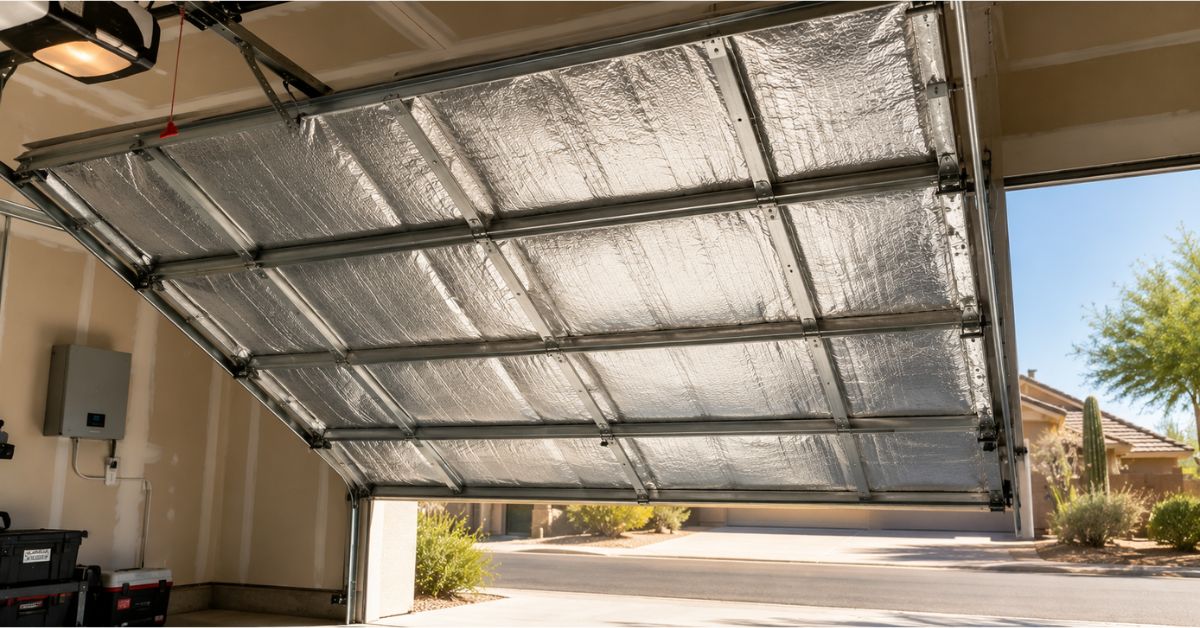
Reflective insulation uses a foil-faced layer designed to reflect radiant heat away from the door's surface rather than absorbing it. This works especially well in climates with intense direct sun, since it targets the radiant heat transfer that foam-based insulation doesn't address as directly.
Many hot-climate garage doors combine reflective layers with foam insulation for a more complete defense against both radiant and conductive heat.
Understanding R-Value for Hot Climates
R-value measures a material's resistance to heat transfer, and higher numbers indicate better insulation performance. For hot climates, an R-value of at least 6 is a reasonable baseline, though homes with attached garages or garages used as workspaces benefit from doors rated R-13 or higher.
Keep in mind that manufacturer-listed R-values sometimes reflect the insulation material alone rather than the entire door assembly, so it's worth asking for the door's overall thermal performance rating rather than just the foam's rating in isolation.
Single-Layer vs Double-Layer vs Triple-Layer Doors
Garage doors come in different construction layers, and this affects insulation performance significantly.
Single-layer doors offer no real insulation and perform poorly in hot climates, allowing heat to transfer almost directly through the steel or aluminum panel.
Double-layer doors add a layer of insulation between the exterior skin and an interior liner, offering a noticeable improvement in heat resistance.
Triple-layer doors include insulation sandwiched between two steel skins with an added interior layer, providing the best thermal performance and the most durability against heat-related wear.
For consistently hot regions, triple-layer insulated doors typically deliver the best long-term value despite a higher upfront cost.
Best Garage Door Materials for Extreme Heat
Signs Your Garage Door Needs Better Insulation
A few signals suggest your current door isn't handling heat well.
Your garage feels noticeably hotter than the outside temperature during peak sun hours, which indicates heat is being absorbed and trapped rather than reflected or resisted. Items stored in the garage show heat damage, warping, or degraded materials faster than expected. Your attached home's air conditioning runs more frequently or struggles to maintain temperature in rooms near the garage.
If any of these apply, upgrading your insulation, or the door itself, can meaningfully reduce heat-related issues throughout your home.
How to Choose the Right Insulated Door for Your Climate
If you're in an extremely hot, sun-exposed region, a triple-layer polyurethane door with a reflective layer offers the strongest combination of heat resistance and durability. For moderate heat, a double-layer polystyrene or polyurethane door often provides a solid balance of cost and performance.
Whatever you choose, pairing insulation with proper weatherstripping and adequate garage ventilation maximizes the overall heat-reduction effect rather than relying on the door alone.
Final Thoughts
Garage door insulation for hot climates isn't just a nice-to-have, it's a practical upgrade that protects your belongings, reduces strain on your home's cooling system, and extends the life of the door itself. Whether you choose polyurethane, polystyrene, or a reflective hybrid design, the right insulation makes a measurable difference during peak summer months.
If your garage feels like an oven every afternoon, FixNGo TX can assess your current door and recommend an insulation upgrade or replacement built for your specific climate. Reach out to our team, and we'll help you keep the heat out where it belongs.
FAQ
Q: Does garage door insulation actually help in hot climates, not just cold ones?
A: Yes, insulation slows heat transfer in both directions, helping keep outdoor heat from radiating into your garage and attached living spaces.
Q: What R-value is best for a garage door in a hot climate?
A: An R-value of at least 6 is a reasonable baseline, though R-13 or higher is recommended for attached garages or those used as workspaces.
Q: Is polyurethane or polystyrene insulation better for heat?
A: Polyurethane generally offers better insulation performance and structural rigidity, while polystyrene is a more budget-friendly alternative with slightly lower R-value.
Q: Do triple-layer garage doors perform better in extreme heat?
A: Yes, triple-layer doors provide the best thermal performance and durability, making them ideal for consistently hot climates despite a higher upfront cost.
Q: Can insulation help protect items stored in my garage from heat damage?
A: Yes, insulated doors reduce heat transfer significantly, helping protect temperature-sensitive items like electronics, paint, and certain tools.
You might also like
Fix N Go Blog