DIY vs Professional Garage Door Repair
YouTube makes garage door repair look easy. A quick video, a few tools, twenty minutes — and your door is fixed.
Except it's not always that simple. Garage doors are the largest moving mechanical systems in most homes. They operate under extreme tension, move heavy loads on every cycle, and connect directly to your home's security. Get the repair wrong and you're not just dealing with a broken door — you're dealing with a safety emergency, a voided warranty, or a bill that's three times what a professional would have charged.
This guide is not here to scare you away from all DIY. Some garage door tasks are genuinely homeowner-safe and save you real money. But others are dangerous in ways that aren't obvious until something goes wrong — fast.
The Case FOR DIY: Tasks You Can Safely Handle Yourself
Let's be fair. Not every garage door issue needs a service call. These are the tasks where a confident, careful homeowner can get real results without risk.
Lubricating Moving Parts
Garage door lubrication is pure maintenance — no tension, no structural risk, no heavy loads involved. Every six months, apply a silicone-based spray or white lithium grease to the hinges, rollers, and the torsion bar bearing plates. Never use WD-40 on tracks — it attracts grit and accelerates wear. This single habit extends the life of every moving component and prevents the gradual grinding that leads to bigger repairs.
Tightening Loose Hardware
Every time your door cycles, it vibrates. Over months and years, that vibration loosens the bolts on track brackets, hinge plates, and roller brackets. A loose bracket contributes directly to track misalignment. Checking and tightening these fasteners with the correct wrench — with the door fully closed and the opener disconnected — is safe, straightforward, and genuinely effective preventive maintenance.
Replacing Weather Stripping
The rubber seal running along the bottom and sides of your door keeps out rain, dust, and Texas heat. When it cracks or pulls away, your garage loses insulation and your floor gets wet. Replacing weather stripping requires no special tools and no knowledge of the door's mechanical system. Peel off the old seal, clean the surface, press the new one into the retaining channel, and you're done.
Reprogramming a Garage Door Opener Remote
Lost or malfunctioning remotes are a routine fix. Most modern openers — LiftMaster, Chamberlain, Genie, Craftsman — have a simple "learn" button on the motor unit. Press it, press the remote button, and the pairing is complete. Your opener's manual walks you through it in under five minutes. No tools, no risk, no service call needed.
Cleaning and Aligning Safety Sensors
Your opener's photo-eye sensors sit near the floor on both sides of the door. When they get dirty or slightly knocked out of alignment, the door refuses to close — or reverses immediately after starting. Wipe the sensor lenses with a dry cloth and check that both units point directly at each other. A solid green light confirms alignment. This is a two-minute fix that homeowners mistake for a major opener failure all the time.
The Case AGAINST DIY: When You Must Call a Professional
This is the section that matters most. These repairs look approachable on video. In reality, they carry risks that kill people every year — and damage that costs far more to fix when done incorrectly.
1. Broken Garage Door Springs — Never DIY
Torsion springs — the large, coiled springs mounted horizontally above your door — store an enormous amount of mechanical energy. A standard torsion spring for a two-car garage door holds the equivalent tension of several hundred pounds of force. When a spring breaks under load, it releases all of that energy in a fraction of a second.
An incorrectly handled torsion spring does not just snap — it launches. It can tear through drywall, shatter a car windshield, and cause fatal injuries. Professional technicians use winding bars, safety cables, and years of experience to handle this specific component safely. There is no DIY shortcut that makes this safe for an untrained person.
If your spring is broken — identified by a loud bang, a door that suddenly feels impossibly heavy, or a visible gap in the coil — stop. Disconnect the opener. Leave the door where it is. Call Fix N Go Garage Door Repair immediately.
2. Off-Track Garage Doors — Never DIY
An off-track door is a door where the rollers have completely left the track channel. The door now hangs under its own full weight — typically 150 to 400 pounds — with no mechanical guidance system supporting it.
Attempting to force an off-track door back into alignment without proper tools creates three serious risks. First, the door can drop suddenly if the cable tension shifts during your attempt. Second, incorrect roller placement causes immediate re-derailing and further track damage. Third, if a broken spring caused the off-track situation, you're now working next to a compromised spring under load.
Fix N Go handles off-track garage door repair as a same-day emergency service. Our technicians assess the full cause — not just the symptom — before touching the door.
3. Garage Door Cable Replacement — Never DIY
Lift cables run from the bottom of your door panels up to the cable drum, working in tandem with your springs to lift and lower the door smoothly. When a cable snaps or frays, the remaining cable and spring system go out of balance immediately.
Replacing cables requires releasing spring tension first — which brings you straight back to the torsion spring danger described above. Beyond that, improper cable winding on the drum creates uneven lift, which causes the door to rack (twist) under load and destroys rollers and tracks in the process. Cable replacement is a two-component repair that requires professional sequencing to be done safely and correctly.
4. Bent or Severely Misaligned Tracks — Rarely DIY
Minor bracket tightening is homeowner-safe, as noted above. But a track that has visibly bent, kinked, or pulled away from the wall is a different problem entirely.
Hammering a bent track back into shape with a mallet — the approach many DIY videos demonstrate — almost always introduces new bends while correcting the original one. It also weakens the track metal at the impact points, making future failure more likely. Restoring a bent track to correct plumb and spacing requires alignment gauges, specific track-straightening tools, and the experience to know when a track needs straightening versus full replacement.
Attempting this repair incorrectly means paying a professional to undo your work before they can do the correct repair. That doubles the cost every time.
5. Opener Motor Replacement or Rewiring — Call a Professional
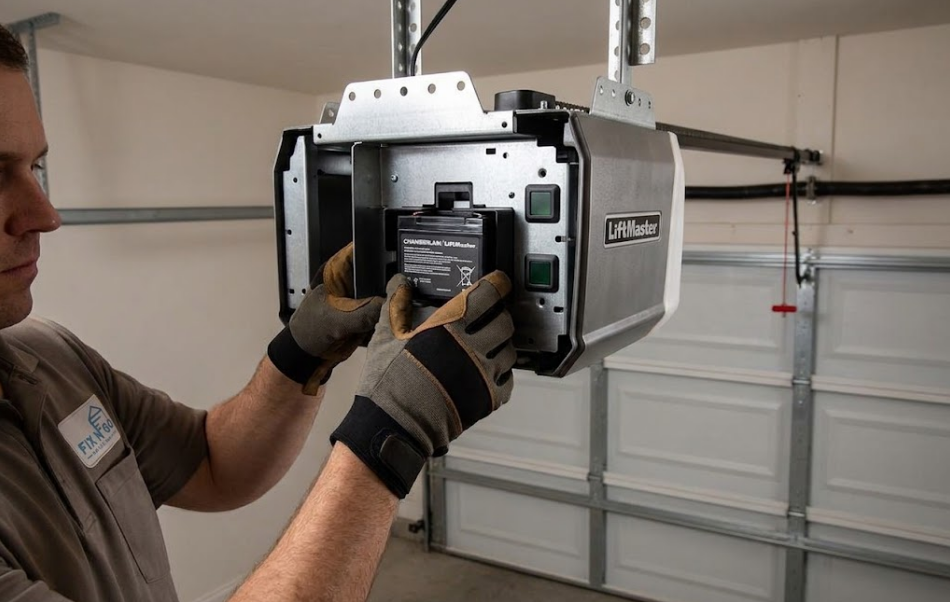
Replacing an opener remote or resetting the programming is DIY-safe. Replacing the motor unit itself — or any wiring inside the opener housing — is not. Opener motors connect to your home's electrical system. Incorrect wiring causes motor burnout, creates fire risk, and voids your opener's warranty instantly.
Beyond the electrical risk, opener compatibility with your door's springs, weight, and drive system matters enormously. Installing an underpowered opener on a heavy door burns out the motor within months. A technician selects the correct unit for your specific door configuration and installs it with proper force adjustment, travel limit settings, and safety sensor calibration — none of which are covered in a box store instruction manual.
6. Garage Door Panel Replacement on a Damaged Frame
Replacing a single cosmetically damaged panel is sometimes DIY-possible if the frame and tracks are completely intact. However, if the impact that damaged the panel also bent the surrounding frame, shifted a track, or stressed the bottom bracket — which is far more common than homeowners realize — the panel swap alone doesn't solve the structural problem underneath. The new panel goes into a compromised system and the door continues to malfunction.
The Real Cost of DIY Gone Wrong
A professional spring replacement in Texas typically costs a fraction of what most homeowners expect. A DIY spring repair gone wrong results in emergency room visits, vehicle damage, structural drywall damage, and a door that still needs professional repair anyway — now with additional damage factored in.
A cable replacement done incorrectly destroys rollers and tracks within weeks. What was a cable repair becomes a cable, roller, and track repair. The savings evaporate completely.
The question is never just "can I do this?" The question is "what does it cost if I do this wrong?" For garage door springs and cables, that answer is severe enough that the math never works in DIY's favor.
How Fix N Go Makes Professional Repair the Easy Choice
Fix N Go Garage Door Repair removes every barrier that makes homeowners attempt DIY repairs they shouldn't.
Transparent pricing — You get a clear, upfront quote before any work begins. No hidden fees, no surprise charges at the end of the job.
Same-day service — Most repairs happen the same day you call. You're not waiting three days with a broken door.
24/7 emergency response — A spring that breaks at midnight or a door stuck open on a Saturday isn't a problem you wait out. Fix N Go responds around the clock across Texas.
Certified technicians — Every technician is trained, background-checked, and fully insured. Your home and family are covered.
Parts on every truck — We stock the most common springs, cables, rollers, and hardware on every service vehicle. Most jobs complete in a single visit without waiting for parts.
The Simple Rule: When in Doubt, Call
Here's the clearest way to think about this.
If the repair involves removing or adjusting spring tension — call a professional. If the door is off-track — call a professional. If you see any cable fraying or slack — call a professional. If any part of the repair makes you pause and think "I'm not sure this is safe" — that instinct is correct. Call a professional.
Everything else — lubrication, weather stripping, remote programming, sensor cleaning — is yours to handle with confidence.
Frequently Asked Questions
Q: Is it safe to manually open my garage door if the spring is broken?
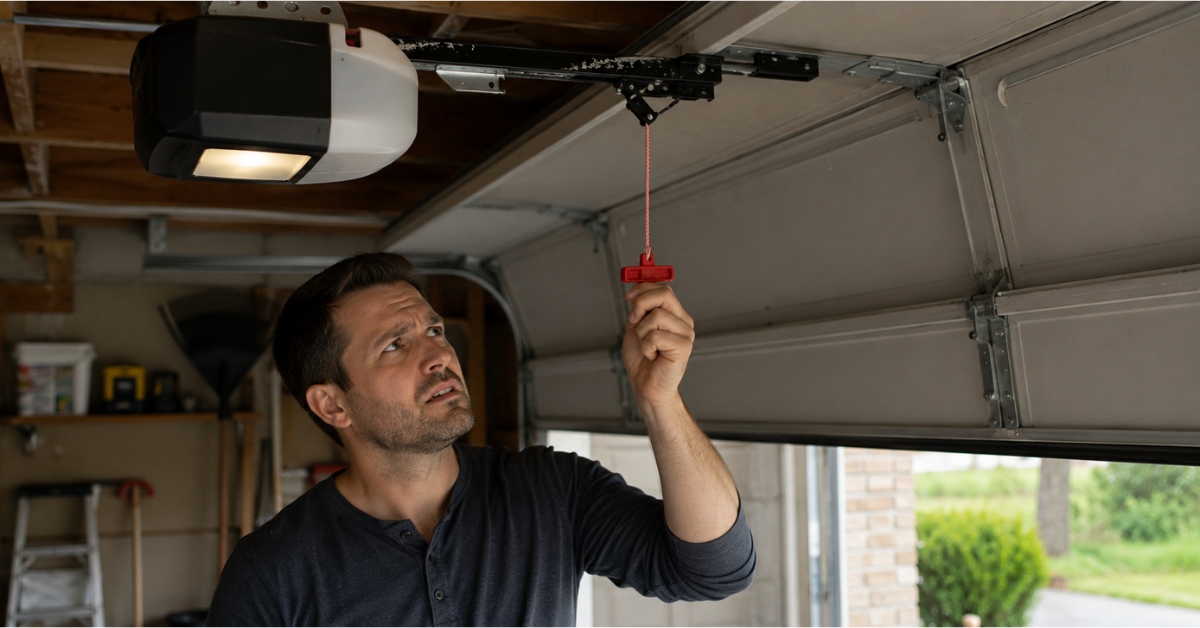
A: You can manually lift the door by pulling the red emergency release cord to disconnect the opener, then lifting by hand. However, a door with a broken spring is extremely heavy — most homeowners cannot safely lift it alone — and the door will not stay open without support. Prop it carefully if you must access your car, then call Fix N Go. Do not attempt to operate the opener with a broken spring under any circumstances.
Q: How do I know if my garage door cable is about to break?
A: Look for fraying at the cable end near the bottom bracket, visible rust or corrosion along the cable length, or one side of the door sitting visibly lower than the other. A cable that's starting to unravel gives you a short warning window before it snaps. Schedule a cable inspection at the first sign of wear — it's far less expensive than an emergency repair after the cable fails.
Q: Can a bad garage door repair void my opener warranty?
A: Yes. Most opener manufacturers — including LiftMaster, Chamberlain, and Genie — explicitly void warranties when unauthorized repairs or incompatible parts are used. This includes DIY motor replacement, third-party wiring modifications, and incorrect spring sizing that overloads the opener. Professional installation preserves your warranty and ensures your opener operates within its rated specifications.
Q: What's the average cost of professional garage door spring repair in Texas?
A: Spring replacement costs vary based on spring type (torsion vs extension), door size, and whether one or both springs need replacement. Fix N Go provides a free, transparent quote before any work begins. Most spring repairs complete within one to two hours of the technician's arrival.
Q: How often should I schedule professional garage door maintenance?
A: Once per year is the standard recommendation for most residential garage doors. An annual maintenance visit covers full hardware inspection, spring tension check, cable condition assessment, lubrication of all moving parts, safety sensor testing, and opener force adjustment. Catching small issues during maintenance prevents the large repairs that result from ignoring them.
You might also like
Fix N Go Blog