Why Your Garage Door Won't Close in Houston Humidity (And How to Fix It) | Fix N Go
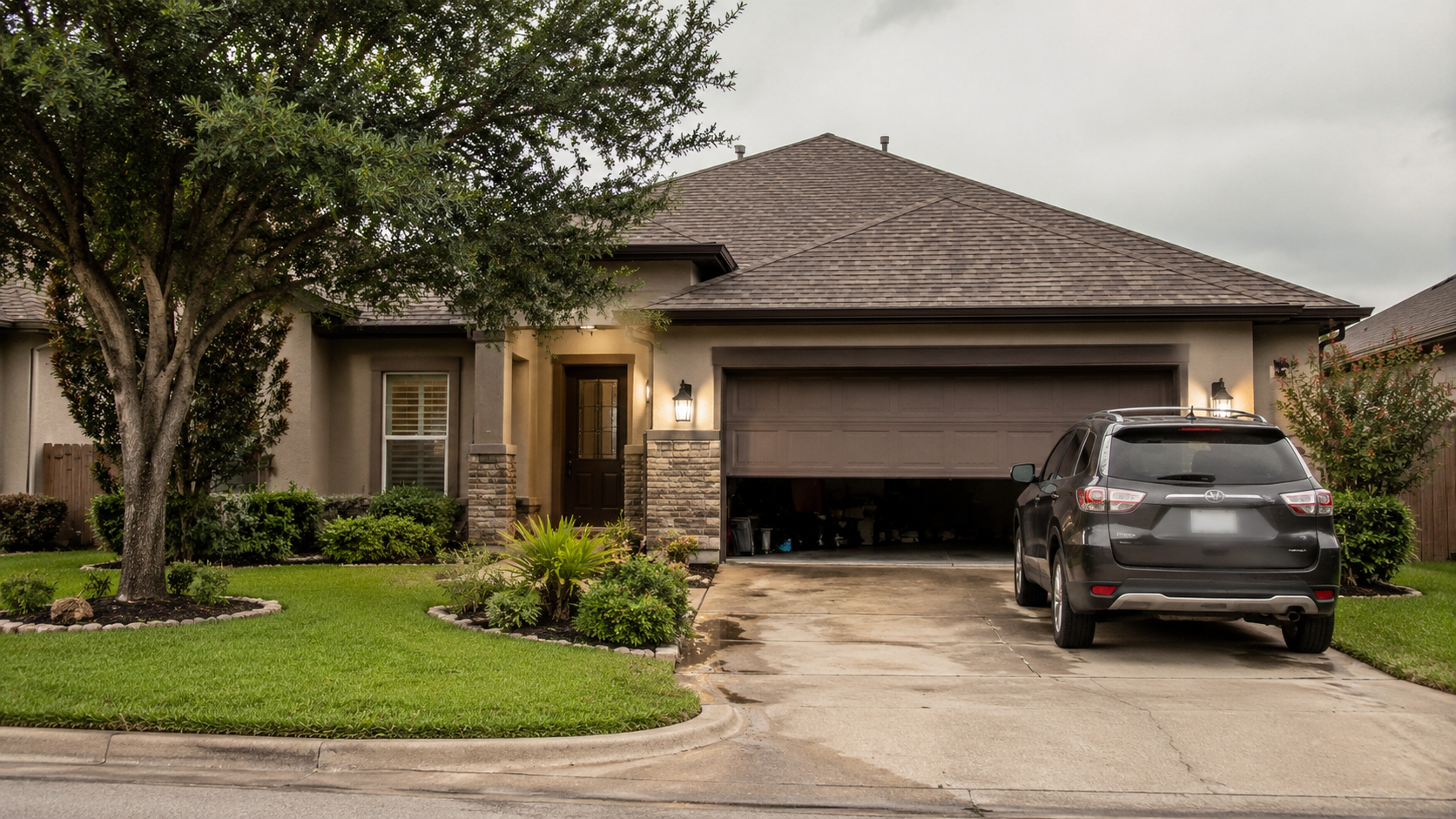
If you've ever stood in your driveway on a sticky Houston afternoon, jabbing the remote while your garage door stubbornly refuses to close, you're not imagining things — and you're definitely not alone. Around here, a garage door that won't close all the way is one of the most common calls we get, especially during the long stretch of humid months from late spring through hurricane season.
The good news is that most of the time, the fix is simpler than you'd think. The tricky part is figuring out which of several possible culprits is actually to blame. Below, we'll walk you through why Houston's climate is so hard on garage doors, the specific problems humidity and heat tend to cause, what you can safely check yourself, and when it's time to call a professional before a small annoyance turns into an expensive repair.
Why Houston's Climate Is So Tough on Garage Doors
Most people don't think of a garage door as a weather-sensitive machine, but that's exactly what it is. It's a large moving system made of metal, rubber, and electronics, mounted in the one part of your home that's most exposed to the outdoors — and Houston's climate throws just about everything at it.
Our humidity regularly sits above 75%, and closer to the coast in areas like Webster, Clear Lake, and Kemah, it climbs even higher. That constant moisture in the air affects wooden door panels, metal tracks, and the sensitive electronics that tell your door when to stop and reverse. Add in triple-digit summer heat, sudden thunderstorms, and the occasional tropical system, and it's easy to see why garage doors in the greater Houston area tend to act up more than they would in a drier climate.
Local tip: If your garage door problems always seem to flare up in the summer or right after a big storm, humidity and temperature swings are very likely part of the cause — not a coincidence.
The Most Common Reasons a Garage Door Won't Close in Humid Weather
When a door refuses to close, it's usually trying to tell you something. Here are the issues we see most often on Houston-area service calls, roughly in order of how common they are.
1. Dirty or Misaligned Safety Sensors
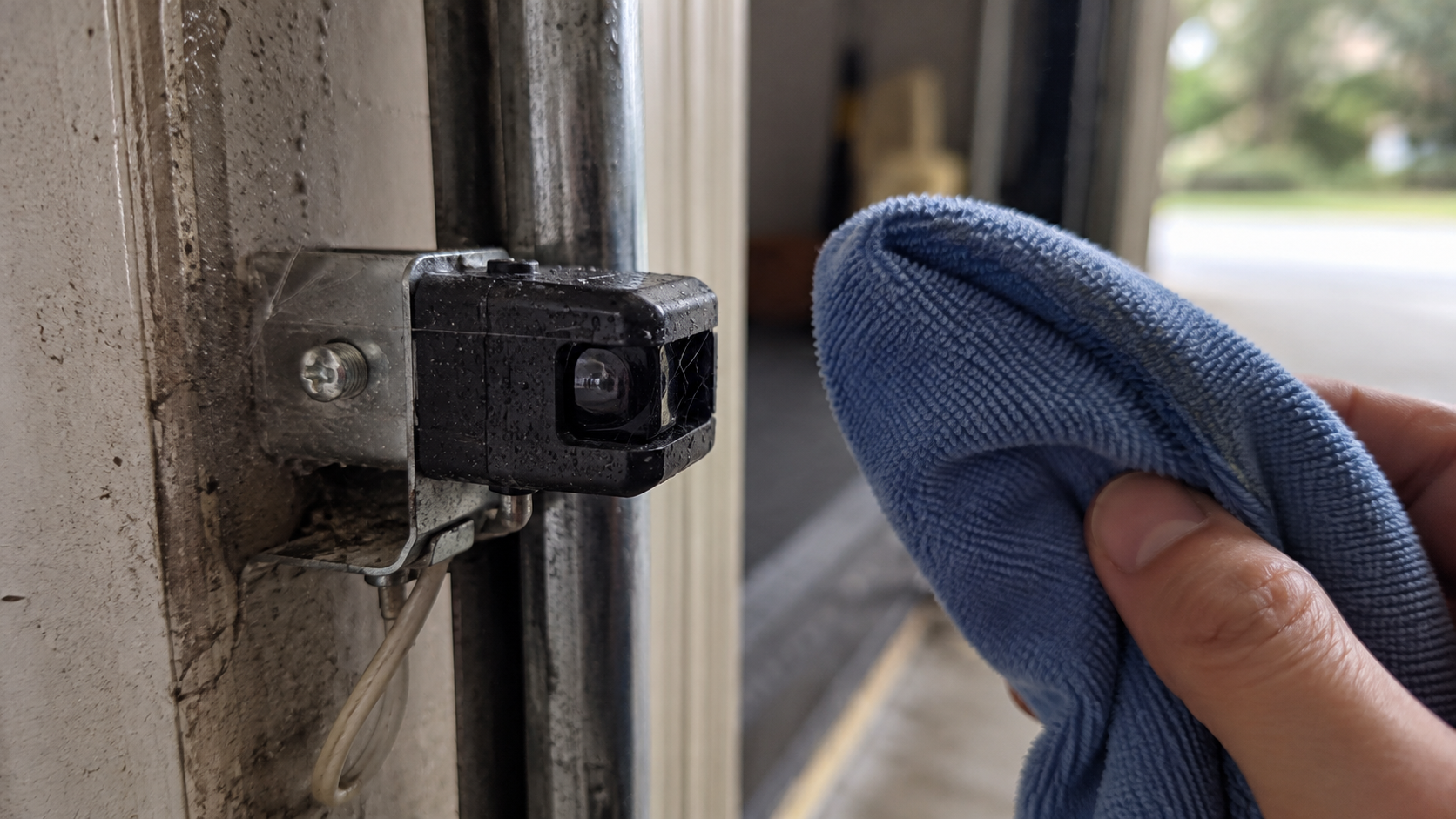
Near the bottom of your garage door tracks, you'll find two small photo-eye sensors — one on each side — that shoot an invisible beam across the opening. If anything breaks that beam, the door reverses instead of closing. It's a safety feature designed to keep the door from closing on a child, a pet, or your car.
In Houston, these sensors are magnets for trouble. Humidity causes condensation on the lenses, dust and pollen stick to that moisture, and spider webs (we have plenty) can drift right through the beam. Any of these can make the door think something is in the way even when the path is perfectly clear.
If your door starts to close and then reverses, or the opener lights blink when you try to close it, misaligned or dirty sensors are the first thing to check.
2. Swollen or Warped Wooden Panels
If you have a wood or wood-composite garage door — common on many older and higher-end Houston homes in neighborhoods like The Heights, River Oaks, and West University — humidity can cause the panels to absorb moisture and swell. When wood swells, the door can bind in the tracks or sit unevenly, preventing a clean close.
This is one reason we often recommend steel or insulated doors for Houston's climate, but if you love the look of a wood door, regular sealing and maintenance go a long way toward preventing swelling.
3. Rusted or Sticky Tracks and Rollers
The tracks that guide your door up and down, and the rollers that ride inside them, take a beating from moisture. Over time, humidity leads to rust and corrosion, which creates friction and rough spots. A door that used to glide can start to stick, hesitate, or stop short of closing completely.
A light coat of the right lubricant can work wonders here — but if rust has already set in, the rollers or a section of track may need replacing.
4. Storm and Wind Damage
Houston's storms don't mess around. High winds can push against a garage door hard enough to knock it slightly out of alignment, bend a track, or throw the door off balance. Even a door that looks fine after a storm may have taken enough of a hit to stop closing correctly.
If your door started acting up right after a thunderstorm or tropical system, it's worth having the alignment and balance checked.
5. Worn or Broken Springs
Your garage door springs carry almost the entire weight of the door. When they weaken or break, the door can become too heavy for the opener to handle, causing it to stop partway or refuse to close at all. Houston's heat and humidity accelerate spring wear, which is why we cover the full lifespan question in our guide on garage door spring replacement frequency.
A door that suddenly feels much heavier, or that closes unevenly, may have a spring problem — and springs are one repair you should always
leave to a professional, because they're under extreme tension.
What You Can Safely Check Yourself
Before you call anyone, there are a few quick things you can safely check. None of these involve touching the springs, cables, or high-tension parts — those are strictly professional territory.
Quick DIY Checklist
- Wipe the sensor lenses — gently clean both photo-eyes with a soft, dry cloth to remove moisture, dust, and cobwebs.
- Check sensor alignment — both sensors should point directly at each other. If one is bumped, the indicator light usually blinks.
- Clear the tracks — look for debris, leaves, or obstructions in the path of the door.
- Look for obvious track damage — bent sections or gaps after a storm are a red flag.
- Test the remote and wall button — if the wall button works but the remote doesn't, it may just be a battery.
- Listen and watch — note whether the door reverses, hesitates, or stops at the same spot every time. That detail helps a technician diagnose it fast.
When It's Time to Call a Professional
Some garage door problems are safe to troubleshoot on a Saturday morning. Others are a fast track to injury or a much bigger repair bill. Call a professional if:
You notice a broken, stretched, or gapped spring. Springs are under enormous tension and can cause serious injury if handled without the right tools and training.
The door is off its tracks or clearly out of alignment. Forcing it can bend tracks and damage panels.
The door feels much heavier than usual. This usually points to a spring or balance issue.
You've cleaned the sensors and cleared the tracks, but the door still won't close. At that point, something less obvious is going on.
The problem started after a storm. Wind and impact damage often aren't visible until a technician checks the alignment and balance.
For Houston homeowners, we offer
same-day service on most calls, so you're not left with a garage that won't secure overnight.
How to Prevent Humidity Problems Before They Start
A little seasonal maintenance goes a long way in a climate like ours. To keep your garage door closing smoothly through Houston's most humid months:
Lubricate the moving parts every three to six months with a silicone-based garage door lubricant — not WD-40, which can attract dust.
Wipe down the sensors monthly during humid stretches to keep the lenses clear.
Keep the tracks clean and free of debris and standing moisture.
Consider an insulated steel door if you're replacing an old wood door — it stands up to Houston humidity far better and helps regulate garage temperature.
Schedule an annual professional inspection so small issues get caught before they leave you stuck in the driveway.
Frequently Asked Questions
Why does my garage door close a little then reverse back up?
This is almost always a safety sensor issue. The photo-eyes near the bottom of the tracks think something is blocking the door. In Houston's humidity, condensation, dust, and spider webs on the sensor lenses are common causes. Wipe the lenses with a soft dry cloth and make sure both sensors point directly at each other.
Can humidity really affect my garage door?
Yes. Houston's high humidity causes wooden panels to swell, promotes rust on tracks and rollers, and leaves condensation on safety sensors. All of these can prevent a door from closing properly, which is why humidity-related issues spike during our most humid months.
Is it safe to fix a garage door that won't close myself?
Some things are safe to check yourself — cleaning the sensors, clearing debris from the tracks, and testing the remote. But anything involving the springs, cables, or a door that's off its tracks should always be handled by a trained technician, since those parts are under extreme tension and can cause serious injury.
How fast can Fix N Go come out in the Houston area?
We offer same-day service for most calls across Houston and surrounding areas, including Webster, Conroe, and the greater metro. Call (832) 400-2992 to check current availability.
Garage Door Still Won't Close? We'll Fix It Today.
Don't leave your garage open overnight. Fix N Go offers same-day service across Houston, Webster, Conroe, and the greater metro area.
📞 Call (832) 400-2992 Schedule OnlineYou might also like
Fix N Go Blog