Protecting Garage Doors During Storm Season
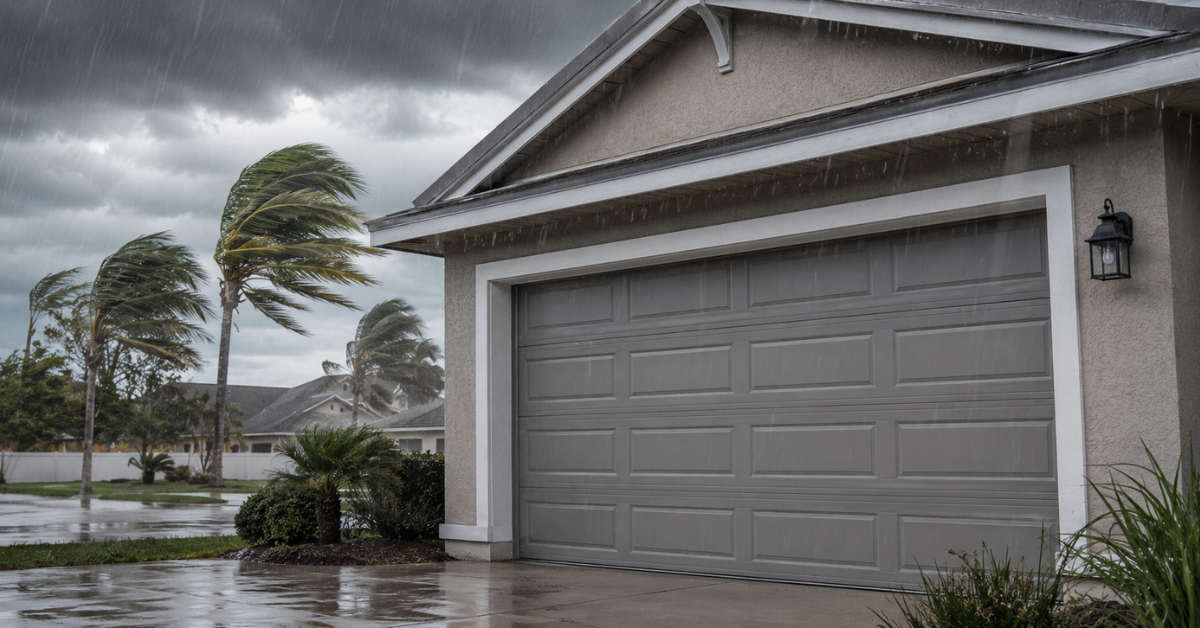
A violent storm doesn't knock politely before it arrives. One powerful gust, one wall of rain, and suddenly the weakest point in your home's envelope isn't the windows — it's the garage door. Protecting garage doors during storm season is one of the most important and most overlooked steps a homeowner can take before severe weather hits. A standard residential garage door covers anywhere from 96 to 192 square feet of wall space. That's a massive surface area exposed to wind pressure, flying debris, and flooding. Get this wrong and the consequences go far beyond a broken door.
Why Garage Doors Are the Most Vulnerable Point During a Storm
Engineers and insurance adjusters agree on this: garage doors fail more often than any other part of a home's structure during high-wind events. When a garage door fails mid-storm, the sudden pressure change inside the garage can blow out walls and lift the roof off the structure entirely.
That's not an exaggeration — it's physics. A breached garage creates a pressurized interior that the rest of the structure wasn't built to handle. Protecting your door protects far more than just the garage.
Inspect and Reinforce Your Garage Door Before Storm Season Starts
The time to prepare is not when the forecast shows a hurricane bearing down on your city. Preparation done weeks before storm season gives you real options. Rushed preparation the night before a storm gives you almost none.
Check the Door's Wind Load Rating
Every garage door carries a wind load rating — the maximum wind speed it's engineered to withstand. In Texas, where Fix N' Go serves Houston, Dallas, and Austin, building codes in coastal and high-wind zones require doors rated for at least 130 mph winds. Check your door's documentation or look for a label on the door itself.
If your door has no wind load rating or carries an outdated one, replacement with a hurricane-rated door is the most effective protection upgrade you can make.
Look for Structural Weaknesses
Walk the full perimeter of your garage door and check for:
- Bent or cracked panels that reduce structural integrity
- Loose or missing bolts on the track brackets and hinges
- Worn rollers that allow the door to flex out of the tracks under pressure
- Damaged weatherstripping along the bottom and sides
Any of these weaknesses turns a moderate storm into a door-destroying event. Fix small problems now so they don't become catastrophic ones in August.
Install a Garage Door Bracing Kit or Vertical Bracing
A standard residential garage door flexes under wind load. Without bracing, the door bows inward or outward, eventually failing at the panel seams or pulling free from the track system entirely. A horizontal or vertical bracing kit stiffens the door significantly and dramatically increases its resistance to wind pressure.
How Bracing Works
Bracing kits bolt onto the interior face of the door panels. They distribute wind pressure across the entire door surface instead of concentrating it at the weakest points — usually the center of each panel. Some kits work with your existing door. Others require a specific door thickness or panel configuration.
Installation takes a few hours and the materials cost between $100 and $400 depending on door size and kit quality. For many homeowners, this is the most cost-effective storm upgrade available short of full door replacement.
Upgrade to a Hurricane-Rated Garage Door
If your garage door is more than 15 years old, a bracing kit may not be enough. Older doors weren't engineered to modern wind resistance standards, and the panel material degrades over time. A hurricane-rated replacement door is the most reliable long-term solution.
What Makes a Door Hurricane-Rated
Hurricane-rated doors use heavier-gauge steel or reinforced aluminum panels, stronger horizontal stiffeners, and an upgraded track and hardware system designed to hold under sustained high-wind conditions. Many also carry impact ratings, meaning they can take a hit from wind-borne debris without breaching.
In Texas coastal counties, a hurricane-rated door may also qualify you for a homeowner's insurance discount. Check with your insurance provider — the savings over time can offset a significant portion of the installation cost.
Seal the Gaps: Weatherstripping and Threshold Protection
Wind and water find every gap in a poorly sealed garage door. Even a door in excellent structural condition allows flooding and wind-driven rain inside if the weatherstripping is cracked, compressed, or missing.
Bottom Seal and Side Weatherstripping
The bottom seal runs along the base of the door and compresses against the floor when the door closes. It takes the most abuse of any seal on the door and wears out faster than the side or top seals. Replace a flattened or cracked bottom seal before storm season — not during it.
Side and top weatherstripping fills the gap between the door and the door frame. Check the seal by closing the door in daylight and looking for light coming through the edges from inside the garage. Light means wind and water have a path in.
Garage Door Threshold Seals
A threshold seal mounts directly to the garage floor and creates a raised barrier the bottom of the door presses against. Combined with a good bottom seal, a threshold creates a near-watertight barrier against flooding from storm surge or heavy rain runoff. In low-lying areas of Houston and other flood-prone Texas cities, this combination is essential.
Secure the Emergency Release Cord
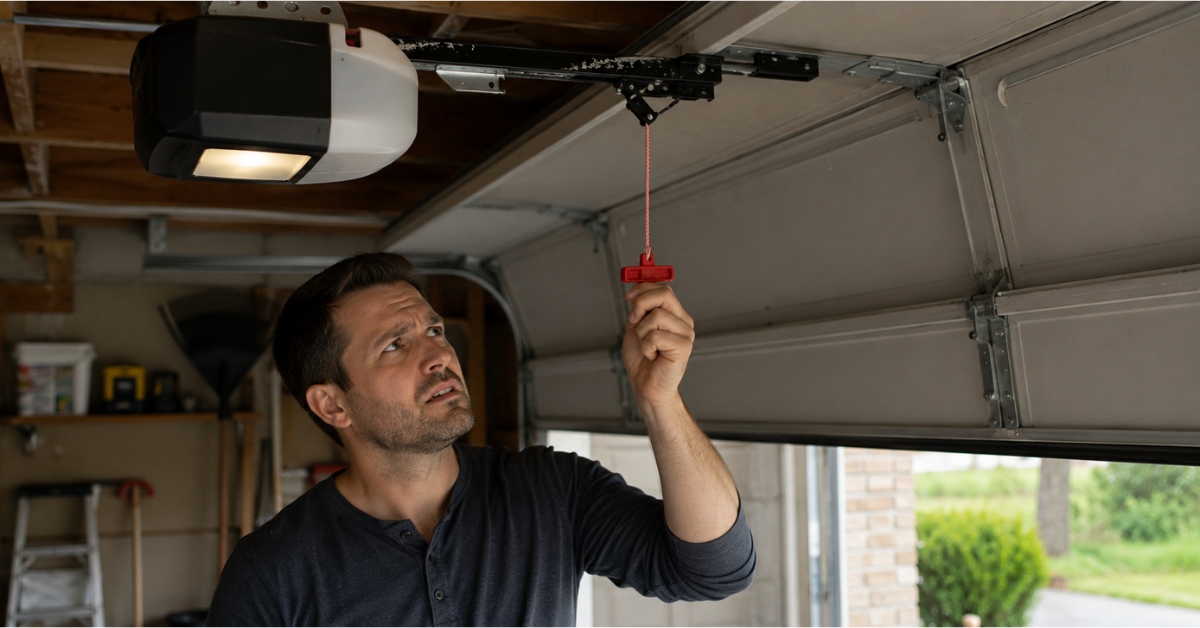
Every residential garage door opener has a red emergency release cord that disconnects the door from the drive system. During a storm, a door that's only held by the opener's drive carriage — not latched or locked — can be pushed open from the outside by wind pressure.
Before a major storm, manually lock the door using the built-in slide lock if your door has one. If it doesn't, consider adding a slide bolt lock to the inside of the door. This keeps the door from being forced open even if wind pressure exceeds the opener's holding force.
Also, disable the opener itself during a hurricane warning. Power surges and flooding can damage the opener motor and circuit board. Unplug the unit and operate the door manually until the storm passes.
Call a Professional Before Storm Season, Not After
Post-storm garage door repairs cost two to three times more than pre-season maintenance and upgrades. Parts are in short supply after a major weather event, wait times stretch from days to weeks, and a door that fails mid-storm can cause interior water damage that multiplies the total repair bill significantly.
Fix N' Go provides pre-storm inspections, bracing installations, weatherstripping replacements, hurricane-rated door upgrades, and post-storm emergency repairs across Houston, Dallas, and Austin. Our technicians know exactly what Texas storms demand from a garage door — and we help you get ahead of the damage before it happens.
FAQ: Protecting Garage Doors During Storm Season
Q: How do I know if my garage door can handle high winds?
A: Check the door's documentation or the label on the door itself for a wind load rating. Doors in Texas high-wind zones should be rated for at least 130 mph.
Q: Can I reinforce my existing garage door instead of replacing it?
A: Yes. A vertical or horizontal bracing kit significantly increases wind resistance and works with most existing residential doors without full replacement.
Q: Should I leave my garage door open or closed during a hurricane?
A: Always keep it closed. An open garage door allows wind to pressurize the interior, which can blow out walls and lift the roof off the structure.
Q: How often should I replace garage door weatherstripping?
A: Inspect weatherstripping every year and replace it whenever you notice cracking, compression, or visible gaps. Before storm season is the ideal time for this check.
Q: Does a hurricane-rated garage door lower my home insurance premium?
A: Often yes — especially in coastal Texas counties. Contact your insurance provider to ask about wind mitigation discounts for storm-rated garage doors.
Conclusion
Storm season in Texas is not a maybe — it's a certainty. And every season it arrives, the garage door is the first thing the wind tests. The difference between a door that holds and one that fails comes down to preparation: the right wind load rating, proper bracing, sealed weatherstripping, locked hardware, and a professional inspection before the first storm warning appears on your radar.
Start your storm prep now, not when the clouds roll in. A little investment before the season saves you from an expensive, stressful repair when it's over.
You might also like
Fix N Go Blog