Garage Door Shakes When Opening?
Your garage door shakes when opening and you are not sure if it is a minor annoyance or a serious problem. The honest answer is — it depends on the cause. Some reasons are simple fixes you can handle yourself in under an hour. Others signal structural or mechanical issues that get worse — and more expensive — the longer you ignore them. This guide walks you through every common cause of a shaking garage door, what each one means, and exactly what to do about it.
Why a Shaking Garage Door Is Never "Just Normal"
A properly functioning garage door moves smoothly, quietly, and in a straight vertical line. Any shaking, rattling, or vibrating during operation means something is off. The door's components — springs, cables, rollers, tracks, and opener — work as a connected system. When one part fails or wears down, the entire system feels it.
Ignoring a shaking garage door is a mistake. What starts as a minor vibration can progress to a snapped spring, a door jumping off its track, or — in serious cases — a complete door collapse. Catching the problem early protects both your door and anyone standing near it.
The Most Common Reasons Your Garage Door Shakes When Opening
Several mechanical and structural issues cause a garage door to shake. Here are the most frequent culprits, starting with the most likely.
Worn or Damaged Rollers
Rollers are the small wheels that guide your door along its tracks. Most residential doors use nylon or steel rollers. Over time, they crack, chip, or flatten — and a worn roller no longer rolls smoothly. Instead, it drags, bounces, and vibrates against the track with every cycle.
Worn rollers are one of the top causes of a shaking garage door. Inspect them visually — if you see cracks, flat spots, or broken wheel edges, replacement is the fix. Rollers typically last 5–7 years with normal use and are one of the more affordable repairs on a garage door system.
Loose or Misaligned Tracks
Your garage door travels along two vertical and horizontal tracks. If those tracks loosen from their mounting brackets — or if they shift out of alignment — the door loses its smooth path and shakes as it fights against the misalignment.
Check your tracks by looking for visible gaps between the rollers and the track walls. You should also look for bends, dents, or sections where the track has pulled away from the wall mounting. Minor looseness can sometimes be corrected by tightening the mounting bolts. Bent or severely misaligned tracks need professional realignment or replacement.
Loose Hardware Throughout the System
A garage door completes thousands of open-close cycles over its lifetime. All that repeated motion gradually loosens the nuts, bolts, and brackets holding the system together. Loose hardware creates rattling and shaking — and the problem compounds over time as loosened components stress adjacent parts.
Walk along your garage door system and tighten every visible bolt, nut, and bracket with a socket wrench. Pay particular attention to the track mounting brackets, the hinges connecting door panels, and the opener mounting hardware on the ceiling. This simple maintenance step eliminates a surprising amount of vibration.
Unbalanced Garage Door
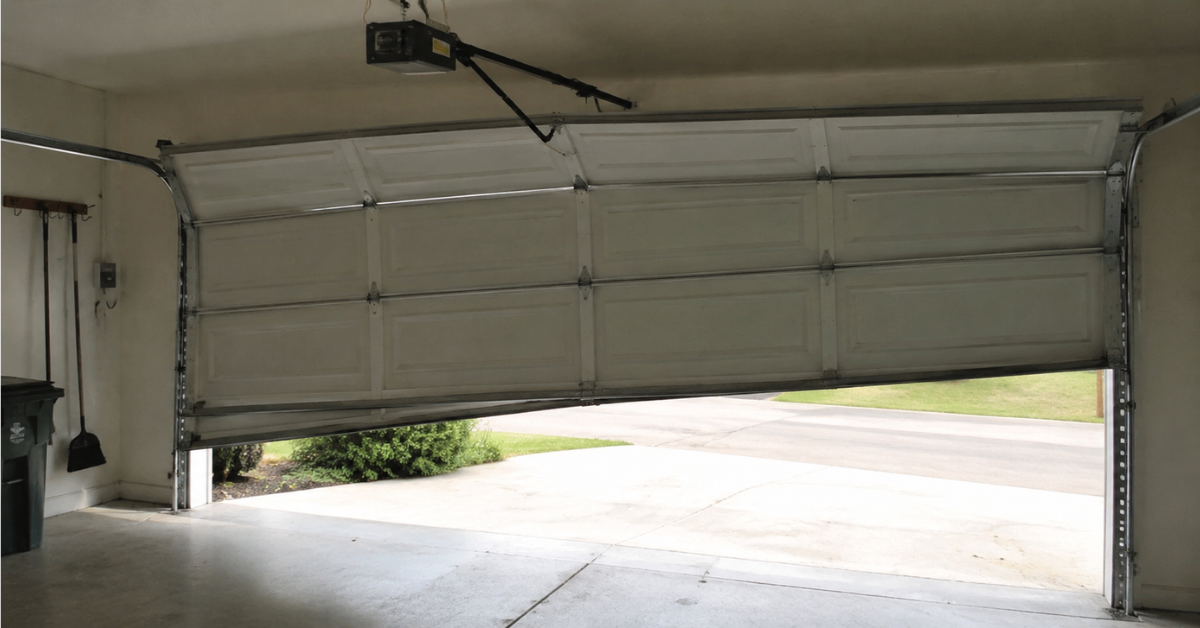
A garage door relies on perfectly calibrated spring tension to stay balanced. When that balance shifts — because springs wear unevenly, lose tension, or one side stretches more than the other — one side of the door carries more weight than the other. The result is a door that shakes, strains, and moves unevenly on its way up and down.
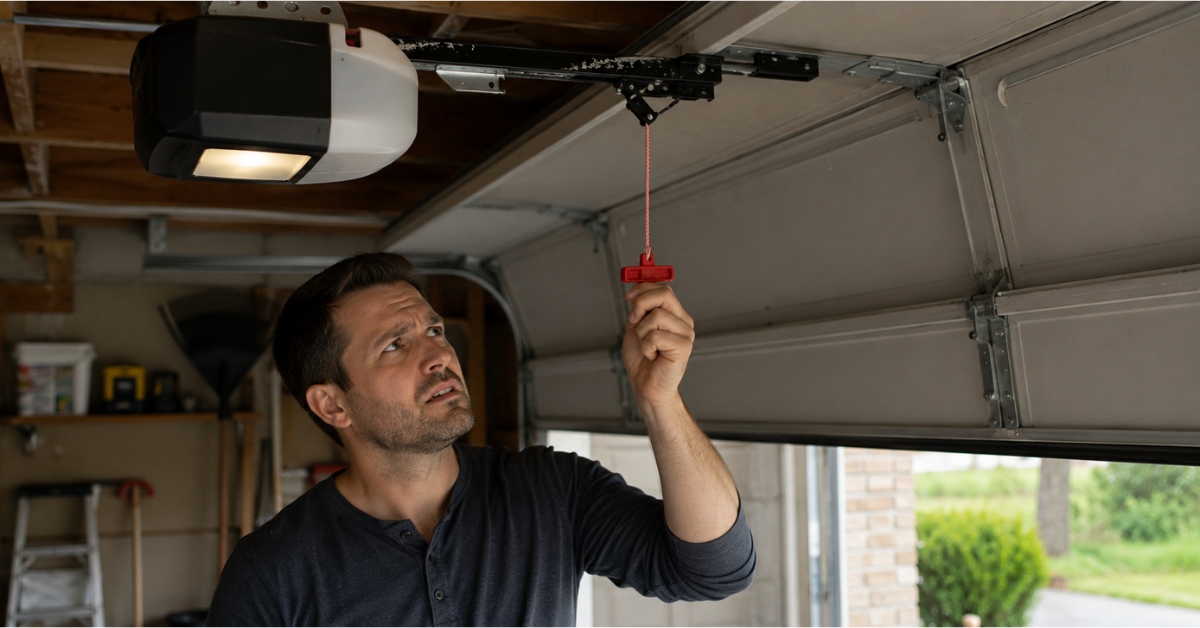
Test your door's balance by disconnecting the opener and manually lifting the door to waist height. Release it. A balanced door stays in place. A door that falls or rockets upward is unbalanced and needs spring adjustment — a job that should only be handled by a trained technician due to the extreme tension involved in garage door springs.
Worn or Damaged Springs
Torsion and extension springs do the heavy lifting on your garage door. They are under enormous tension and wear down with every cycle. As they weaken, the door becomes harder to lift evenly — creating the shaking and straining motion you notice during operation.
Signs of spring trouble include visible gaps in a torsion spring coil, a loud bang (which signals a spring has snapped), or a door that moves lopsided. Spring repair is not a DIY job. The tension stored in garage door springs is powerful enough to cause serious injury if released incorrectly.
Opener Vibration and Mounting Issues
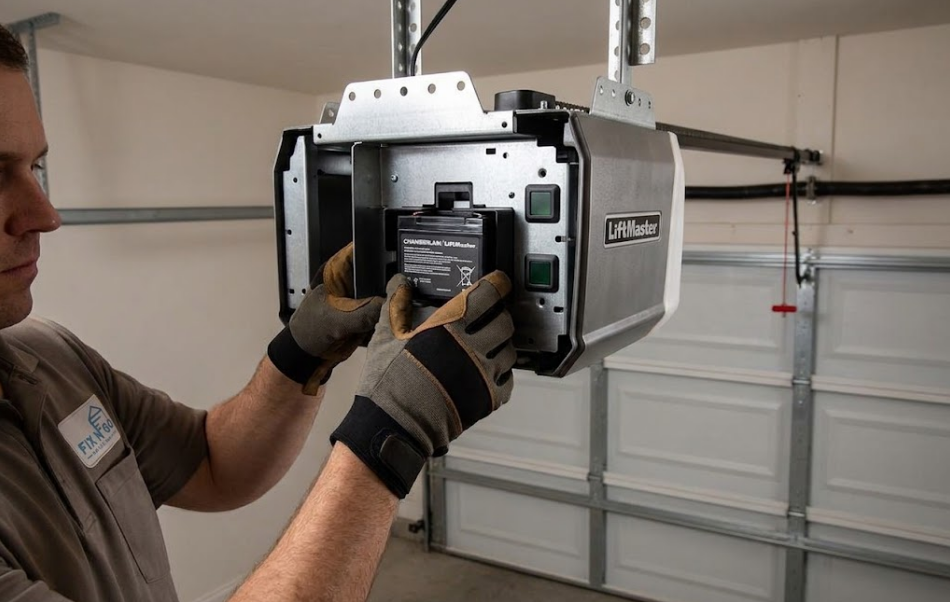
Sometimes the shake originates from the opener itself, not the door. A chain-drive opener naturally produces more vibration than belt or screw-drive models. If the opener mounting bracket has loosened, that vibration transfers directly into the door and the ceiling structure.
Check the opener's mounting hardware and tighten any loose bolts. If your chain-drive opener vibrates excessively, anti-vibration pads installed between the mounting bracket and the ceiling can significantly reduce the noise and movement transmitted to the door.
When to DIY and When to Call a Professional
Some garage door shaking causes are safe and straightforward to fix yourself. Others are not. Here is the clear line.
Safe to DIY:
- Tightening loose nuts, bolts, and brackets
- Lubricating rollers, hinges, and tracks with a silicone-based spray
- Replacing visibly worn rollers (if you are comfortable with basic tools)
- Installing anti-vibration pads on the opener mount
Call a professional for:
- Any spring adjustment or replacement
- Track realignment or replacement
- Cable repair or replacement
- Any situation where the door has jumped off its track
- Electrical issues with the opener
Spring and cable systems store extreme mechanical tension. Attempting to adjust or replace them without proper training and tools is genuinely dangerous.
How Fix-N-Go TX Handles Garage Door Shaking Problems
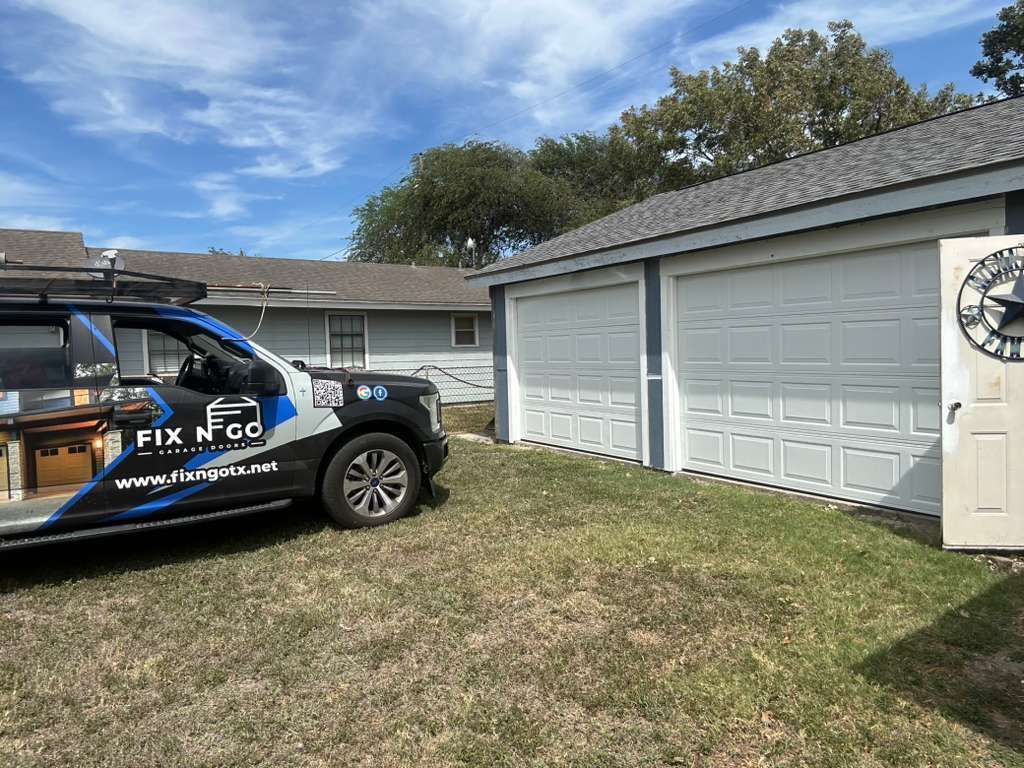
When tightening bolts and lubricating rollers does not stop the shaking, the issue goes deeper — and that is where professional diagnosis makes all the difference. At Fix-N-Go TX, the experienced repair technicians handle the full spectrum of garage door problems that cause shaking, rattling, and uneven operation. From worn roller replacement and precise track realignment to spring adjustment, cable repair, and full opener servicing, Fix-N-Go TX brings the tools, training, and parts to get your door moving smoothly again — safely and efficiently.
Every service call starts with a thorough inspection to identify every contributing factor, not just the most obvious one. Because a shaking garage door rarely has just one cause. Visit fixngotx.net to schedule your repair and stop the shake before it becomes a costly breakdown.
How to Prevent Your Garage Door From Shaking in the Future
Preventive maintenance is far cheaper than emergency repair. These habits keep your garage door running smoothly year-round.
Lubricate every moving part every 6 months. Use a silicone-based or lithium-based garage door spray on rollers, hinges, tracks, and the torsion spring. Avoid WD-40 — it attracts dust and degrades rubber components over time.
Tighten all hardware annually. Set a reminder once a year to walk the system and snug up every bolt and bracket. It takes 20 minutes and prevents years of compounding wear.
Test your door's balance twice a year. Disconnect the opener, lift the door manually to waist height, and release it. If it does not hold steady, call a technician before the imbalance damages your springs further.
Schedule a professional tune-up every 1–2 years. A technician catches wear, tension changes, and alignment shifts that are invisible to the untrained eye — and corrects them before they cause a failure.
Frequently Asked Questions
Q: Is it safe to use my garage door if it shakes when opening?
A: If the shaking is mild and caused by loose hardware, it is generally safe short-term — but you should fix it promptly before the issue worsens and causes damage or a safety hazard.
Q: Can I fix a shaking garage door myself?
A: You can handle basic fixes like tightening hardware and lubricating components, but spring, cable, and track issues require a professional technician due to the serious safety risks involved.
Q: How much does it cost to fix a shaking garage door?
A: Costs vary widely depending on the cause — roller replacement is relatively affordable, while spring replacement or track realignment costs more. A professional inspection gives you an accurate estimate upfront.
Q: Why does my garage door shake only on the way up, not coming down?
A: This usually points to a spring tension imbalance or roller wear on a specific section of the track — the door struggles more against gravity on the way up, exposing the weak point in the system.
Q: How long do garage door rollers last before needing replacement?
A: Most residential rollers last 5–7 years under normal use, but heavy daily use, lack of lubrication, or extreme temperatures can shorten their lifespan significantly.
Conclusion
A garage door that shakes when opening is telling you something is wrong — and the sooner you listen, the cheaper the fix. Start with the basics: tighten all hardware, lubricate every moving part, and visually inspect your rollers and tracks. If the shaking persists, the cause is almost certainly mechanical — worn springs, misaligned tracks, or an unbalanced door — and it needs professional attention. Do not wait for a snapped spring or a door off its track to take action. Visit fixngotx.net to book a professional inspection and get your garage door running smooth, quiet, and safe again.
You might also like
Fix N Go Blog