Garage Door Motor Hums But Door Won't Open? Here's Exactly Why
You press the button. The motor kicks on, the light flickers — and the door sits completely still. If your garage door motor hums but the door won't open, you're not facing a random malfunction. You're facing one of the most common, most diagnosable garage door problems homeowners run into. The hum itself is a clue — it tells you the opener has power and the motor is trying. Something mechanical is getting in the way. The good news? Each cause is identifiable, and most are fixable the same day you catch it. Here's exactly what's going on.
The Real Reason Your Garage Door Motor Hums But Won't Open
That hum is actually a clue — a useful one. It tells you the opener has power and the motor is running. Something mechanical is stopping the door from moving, not an electrical failure. That narrows the diagnosis significantly and helps a technician get to the fix faster.
The most common causes fall into five categories: broken springs, a disengaged trolley, stripped internal gears, locked or obstructed tracks, and a failing capacitor. Each one produces that same maddening hum with zero door movement.
Broken Garage Door Springs: The Most Likely Culprit
Broken springs cause more humming-opener calls than any other issue. Here's why — your garage door weighs anywhere from 130 to 400 pounds depending on its size and material. The springs, not the motor, carry almost all of that weight every time the door moves.
Torsion Springs vs. Extension Springs
Torsion springs mount horizontally on a rod above the door opening. Extension springs run along the side tracks and stretch as the door closes. Both types snap without warning, usually after years of daily cycling.
When a spring breaks, the motor runs and strains — but it cannot physically lift that load alone. The door stays flat on the ground while the opener hums helplessly.
How to check: Stand facing your closed garage door and look at the horizontal spring above the opening or the springs along the side tracks. A visible gap or separation in the coil means it's broken. Stop there — do not try to manually lift the door. A broken spring stores enormous tension and can snap back violently.
Fix N' Go handles broken spring replacement across Houston, Dallas, and Austin with same-day service. Our technicians carry torsion and extension springs for all major door brands, so the job gets done on the first visit.
Disconnected Trolley or Stripped Drive Gears
The trolley is the carriage that physically connects the door to the drive system and pulls it along the ceiling track. If the trolley disconnects — or if the gear that drives it wears down — the motor spins freely while the door sits still.
Did Someone Pull the Red Cord?
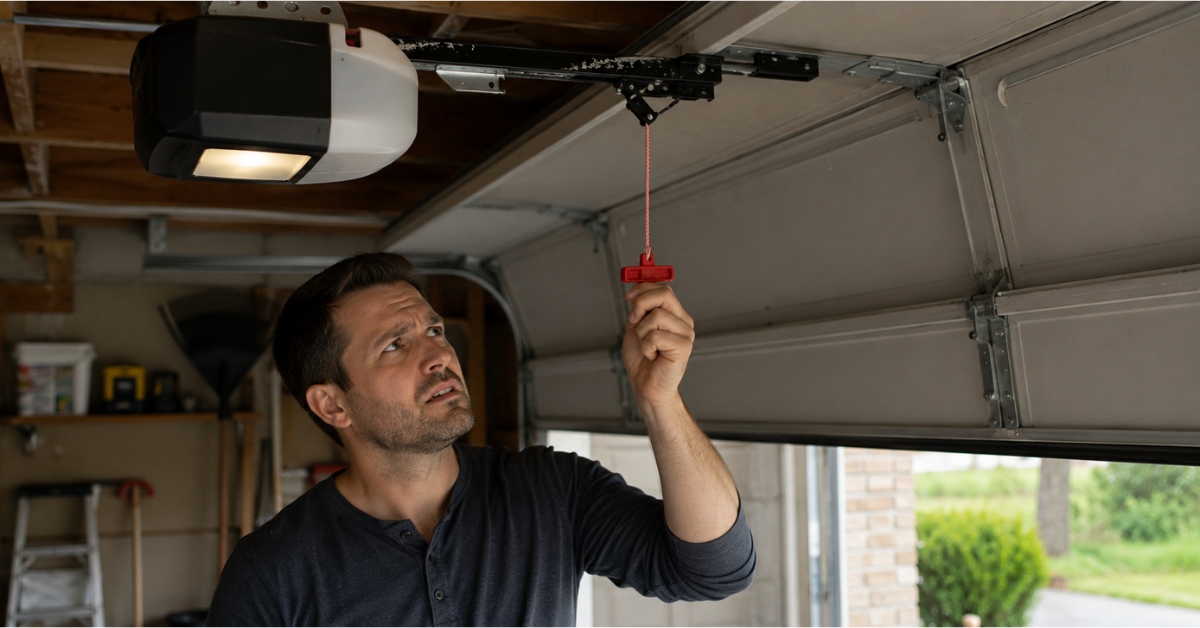
Every residential opener has a red emergency release cord hanging from the trolley. Homeowners pull it during power outages to open the door manually. That action disengages the door from the drive carriage entirely. After that, the motor hums every time you press the button, but the door never moves.
Fix it yourself: Pull the red cord firmly back toward the motor unit to re-engage the trolley. Then press the wall button and test the door. If it still doesn't move, the issue is something else on this list.
Stripped Plastic Gears Inside the Opener
Openers that are 10 or more years old often use plastic drive gears inside the motor housing. Those gears wear down gradually and eventually strip out completely. When that happens, the motor runs and hums but delivers zero mechanical force to the door. You may also hear a faint grinding or chattering sound alongside the hum.
Stripped gears require either a gear kit replacement or a full opener replacement. A Fix N' Go technician diagnoses this in minutes and gives you a clear, honest recommendation based on your opener's age and condition.
The Door Is Locked — And the Opener Doesn't Know It
This one surprises a lot of homeowners. Many garage doors have a manual slide lock — a metal bar that slides horizontally across the door and locks it to the track. If that bar is engaged, the opener motor strains, hums, and goes nowhere.
Walk up to your closed door and look for a sliding lock bar in the center section. If it's engaged, simply slide it to the unlocked position and test the opener. Some doors also have a vacation lock switch on or near the wall button — confirm that's turned off as well.
It sounds simple, but Fix N' Go technicians encounter this on service calls regularly. A quick visual check saves you time and a service fee.
Misaligned or Obstructed Garage Door Tracks
Your door travels along two vertical metal tracks, then transitions along horizontal ceiling tracks. If either track bends, shifts out of alignment, or collects an obstruction, the door physically cannot complete its travel — and the opener motor hums under the strain of trying.
Warning Signs of a Track Problem
- The door moves two or three inches, then stops abruptly
- You hear a scraping or grinding noise during operation
- The door looks visibly uneven or sits crooked in the opening
Small debris caught in the track — pebbles, dirt buildup, or a warped roller — can sometimes be cleared at home with a cloth and a flashlight. However, a significantly bent or shifted track requires professional attention. Forcing the door on a damaged track destroys the rollers, bends the panels, and risks snapping the cables.
Fix N' Go technicians realign and repair tracks for both residential and commercial doors across Texas, usually within the same service call that diagnoses the problem.
Failing Capacitor or Internal Motor Fault
If you've checked the springs, the trolley, the lock, and the tracks — and everything looks fine — the problem lives inside the opener unit itself. The capacitor gives the motor its initial burst of starting power. When the capacitor fails, the motor receives electricity, hums, but never generates enough torque to drive the door.
This is not a DIY repair. The capacitor inside an opener stores a significant electrical charge even when the unit is unplugged. Touching it without proper training risks a serious shock.
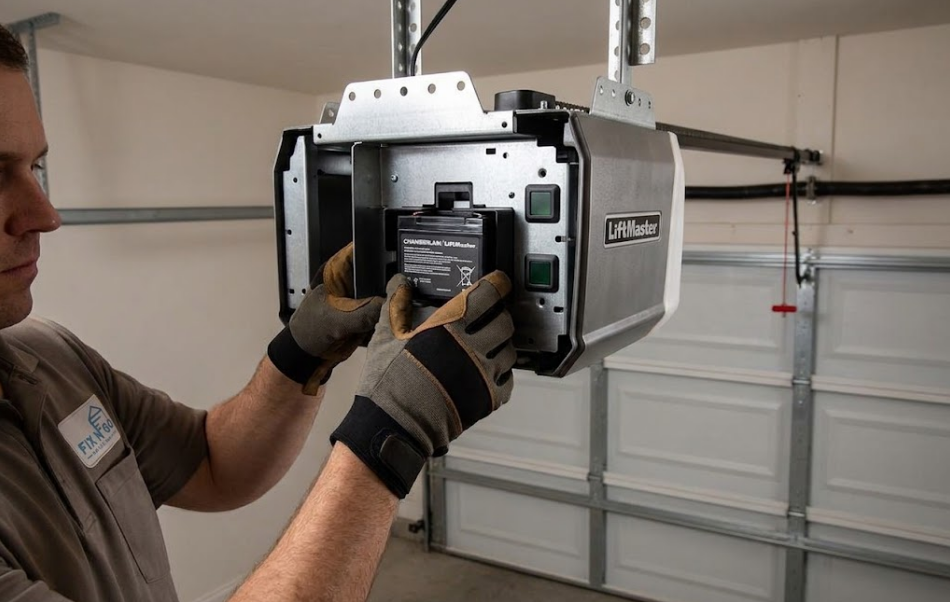
A Fix N' Go technician tests the capacitor and motor windings safely and quickly. If the capacitor is the issue, replacement is inexpensive. If the motor itself has failed, our team helps you choose the right new opener — including models from LiftMaster, Chamberlain, Genie, and Craftsman — and handles the installation the same day.
Limit Settings Knocked Out of Calibration
Every garage door opener uses limit settings — electronic parameters that tell the motor exactly how far to travel when opening or closing. If these settings get knocked out of calibration after a power surge or accidental adjustment, the motor may think the door has already reached its open position and cut out almost immediately after humming.
You notice this when the opener hums briefly, clicks off, and the door doesn't move at all. Adjusting limits is straightforward for a trained technician but causes additional problems when done incorrectly. Fix N' Go technicians recalibrate limit settings as part of standard opener service calls throughout Houston, Dallas, and Austin.
When to Call Fix N' Go for Same-Day Garage Door Repair
Some of these problems — like re-engaging the trolley or unlocking the slide bar — take two minutes at home with no tools. Others, like broken springs and internal motor failures, demand professional parts and professional training. Attempting a spring repair without proper equipment puts you at real physical risk.
Fix N' Go has served Texas homeowners for over 20 years. We offer:
- 24/7 emergency garage door repair
- Same-day service across Houston, Dallas, and Austin
- Certified technicians with parts for all major brands on the truck
- Upfront pricing with no surprise fees
When your garage door motor hums but the door won't open, call Fix N' Go at (877) 880-0570 for a fast, same-day diagnosis and repair.
FAQ: Garage Door Motor Hums But Door Won't Open
Q: Why does my garage door motor hum but the door doesn't move?
A: The motor is running but something mechanical is blocking the door — most often a broken spring, a disengaged trolley, or stripped internal gears. A technician can pinpoint the exact cause within minutes.
Q: Can I still open my garage door manually if the spring is broken?
A: No. A broken spring makes the door dangerously heavy and unstable. Call a professional for spring replacement before attempting to open the door in any way.
Q: How do I re-engage my garage door trolley after pulling the emergency cord?
A: Pull the red release cord back toward the motor unit — away from the door — until you feel it click back into the drive carriage. Then test the opener with the wall button.
Q: Does a humming garage door opener always mean I need a new opener?
A: Not at all. Most humming issues come from mechanical problems outside the opener itself, like broken springs or obstructed tracks. A professional inspection identifies whether you need a repair or a replacement.
Q: How much does it cost to fix a humming garage door that won't open?
A: Spring replacement typically runs $150–$300, while gear or capacitor replacements cost less. Fix N' Go offers competitive pricing and free estimates on new opener installations across Texas.
Conclusion
A humming garage door motor points directly to a mechanical problem — broken springs, a disengaged trolley, bad tracks, a stripped gear, or a failing capacitor. Some fixes take two minutes at home. Others need a trained technician with the right parts. Either way, a stuck door is a security risk and a safety hazard — don't leave it for tomorrow.
Fix N' Go serves Houston, Dallas, and Austin with same-day repairs, 24/7 emergency service, and over 20 years of trusted experience. If your garage door motor hums but the door won't open, call
(877) 880-0570 or visit
fixngotx.net to book your repair right now.
You might also like
Fix N Go Blog