What’s the Difference Between Stamped and Overlay Garage Doors?
Choosing a new garage door can feel overwhelming, especially when you’re comparing two popular styles—stamped garage doors and overlay garage doors. Both add curb appeal, durability, and value to your home, but the way they’re made, how they look, and how much they cost can be very different. For homeowners trying to make a smart investment, understanding these differences is essential.
In this guide, we’ll break down what sets stamped and overlay garage doors apart, how each one performs, and which option may be the better fit for your home. The goal is to keep things simple, clear, and helpful so you can make the best decision with confidence.
Understanding Stamped Garage Doors
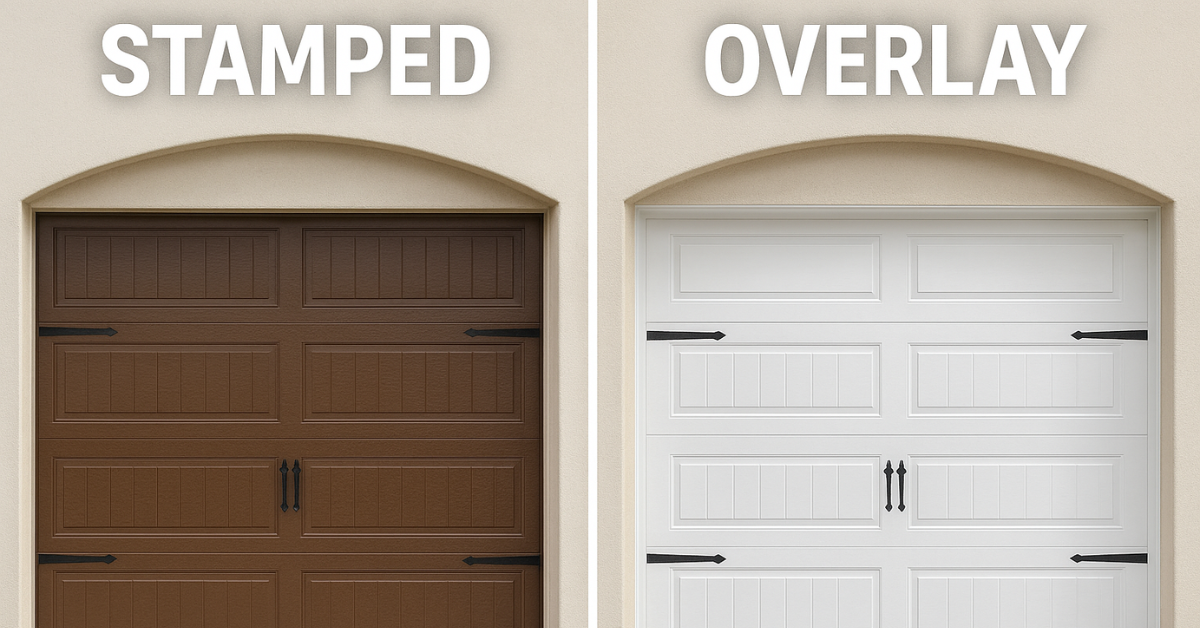
Stamped garage doors—often called stamped steel garage doors—are made by pressing a design directly into a steel panel. If you've seen popular carriage-house styles or modern minimalist doors at a lower price, chances are they were stamped.
How They’re Made
Manufacturers use large machines to press decorative patterns into single-layer or multi-layer steel. These patterns create the illusion of wood grain, raised panels, or carriage-style designs.
Why Homeowners Choose Stamped Doors
Stamped garage doors are known for being:
- Budget-friendly: They offer stylish designs without the high cost of wood or composite materials.
- Low maintenance: Since they’re made of steel, they don’t crack, warp, or require frequent refinishing.
- Durable: Modern steel doors resist dents, rust, and weather damage when properly coated.
Best Suited For
If you want a stylish garage door that’s affordable, strong, and easy to maintain, stamped doors are a great fit. They work especially well for homeowners who want a carriage-house or raised-panel look without spending extra on premium materials.
Why Do You Need a Guide to Coastal Garage Doors?
Understanding Overlay Garage Doors
Overlay garage doors take things a step further. Instead of stamping the design into the steel, manufacturers create the door base first and then apply decorative overlays—usually made of wood, composite, or PVC—on top of it.
How They’re Made
Overlay doors start with a sturdy base (steel, composite, or wood). Then skilled craftsmen add pieces that mimic traditional wood door construction. The result is rich, dimensional detailing that looks closer to a custom door.
Why Homeowners Choose Overlay Doors
Many choose overlay doors because they provide:
- Exceptional aesthetics: They look more high-end, handcrafted, and authentic—especially in carriage-house styles.
- Complex detail: Overlays give deeper shadows and textures compared to stamped doors.
- Customization options: You can choose designs, trim patterns, window layouts, and materials.
Best Suited For
Overlay garage doors are ideal for homeowners who want the look of a custom wood door but prefer durability and lower maintenance. They’re popular in upscale homes and neighborhoods where architectural detail matters.
Key Difference Between Stamped and Overlay Garage Doors
Now let’s break down the important differences that matter most when choosing between these two door types.
1. Design and Appearance
Stamped Doors: These offer clean, simple, and attractive designs, but the patterns are limited to what can be pressed into steel. They have a flatter appearance and less dimensional detail.
Overlay Doors: Overlay doors provide a richer, more authentic look. Because decorative pieces are added separately, the design looks more realistic and closer to traditional wooden craftsmanship.
If design realism is your priority, overlay doors clearly win.
2. Cost and Budget Considerations
Stamped Doors: Much more affordable. Even premium stamped steel doors cost significantly less than most overlay models.
Overlay Doors: These are higher-end products. The added materials, labor, and craftsmanship result in a higher price tag.
If budget is tight, stamped doors are the better option.
3. Durability and Maintenance
Stamped Doors: Very durable, especially when coated with rust-resistant finishes. They require minimal upkeep.
Overlay Doors: Durability depends on the overlay material. Composite and PVC overlays hold up well, while real wood overlays require more maintenance, such as staining or sealing.
For low maintenance, stamped garage doors come out ahead.
4. Customization Options
Stamped Doors: Limited patterns and designs. You typically choose from preset styles.
Overlay Doors: Highly customizable. You can request specific trim patterns, colors, windows, and materials.
If you want customization, overlay garage doors offer far more flexibility.
5. Weight and Installation
Stamped Doors: Lightweight and easy to install. They put less strain on hardware and openers.
Overlay Doors:Typically heavier because of the additional materials. This may require stronger hardware or upgraded openers.
If you want a lighter, easier-to-manage door, stamped wins again.
Which Garage Door Is Right for Your Home?
Choosing between stamped and overlay garage doors really depends on your priorities:
- Pick stamped garage doors if you want something durable, budget-friendly, low maintenance, and stylish enough for most homes.
- Choose overlay garage doors if you prefer a premium, handcrafted look and don’t mind spending more for customization and detail.
Both are excellent choices, but understanding your home’s style, your budget, and your design preferences will help you make the right call.
What Is The Most Energy-Efficient Garage Door?
FAQs
Q1. Are overlay garage doors worth the extra cost?
A:
Yes—if you value detailed design, customization, and a more authentic wood-like appearance. They add strong curb appeal and can increase home value.
Q2. Do stamped garage doors look cheap?
A:
Not at all. High-quality stamped steel doors can look very stylish, but they won’t have the depth and detail of overlay doors.
Q3. Which option is more durable?
A: Both are durable, but stamped steel doors require less maintenance and hold up extremely well over time.
Q4. Can stamped doors mimic wood?
A: Yes, many stamped doors come with wood-grain textures, though they won’t match the realism of overlay doors.
Q5. Do overlay doors require special garage door openers?
A: Not always, but because overlay doors are heavier, you may need a more powerful opener or stronger hardware.
You might also like
Fix N Go Blog