Why Garage Doors Fail Faster in Humidity?
If you live in Houston, Corpus Christi, or anywhere along the Texas Gulf Coast, you already know what humidity feels like. That thick, heavy air that hits you the moment you step outside in July.
What most homeowners don't realize is that same air is working on your garage door every single day — quietly corroding metal, swelling wood, degrading rubber, and breaking down lubrication. Humidity doesn't cause dramatic failures. It causes slow, invisible ones that suddenly become expensive.
This guide breaks down exactly what humidity does to each component of your garage door system, how to spot damage before it becomes a crisis, and what you can do to protect one of your home's most hardworked mechanical systems.
How Humidity Attacks a Garage Door System
Your garage door is not one component — it's a system of interdependent parts: springs, cables, tracks, rollers, hinges, panels, weatherstripping, and an opener motor. Humidity doesn't attack all of them equally. It targets the most vulnerable ones first and works outward from there.
Understanding the mechanism matters. Humidity introduces moisture into the air surrounding every metal surface in your garage. That moisture lands on steel and iron components and begins the oxidation process we call rust. Rust is not just a cosmetic problem — it's a structurtracal one. Rust weakens metal at the molecular level, making components brittle, reducing their load capacity, and causing them to fail under stress that undamaged metal would handle without issue.
Beyond rust, humidity causes wood panels to absorb moisture and swell. It breaks down lubricants, turning smooth grease into a sticky, grit-collecting paste. It degrades rubber seals and weather stripping. And it creates condensation inside opener motor housings that corrodes circuit boards and electrical contacts.
Texas doesn't give your garage door a break. Houston averages over 65% relative humidity year-round. Corpus Christi sits even higher. That's a relentless, constant assault on every component in the system.
Component-by-Component: What Humidity Does to Each Part
Garage Door Springs — The Highest-Risk Component
Springs are the most mechanically stressed components in your entire garage door system. They store and release enormous energy on every single cycle. Under normal conditions, a quality torsion spring lasts 10,000 cycles or more. In high humidity environments, that lifespan compresses significantly.
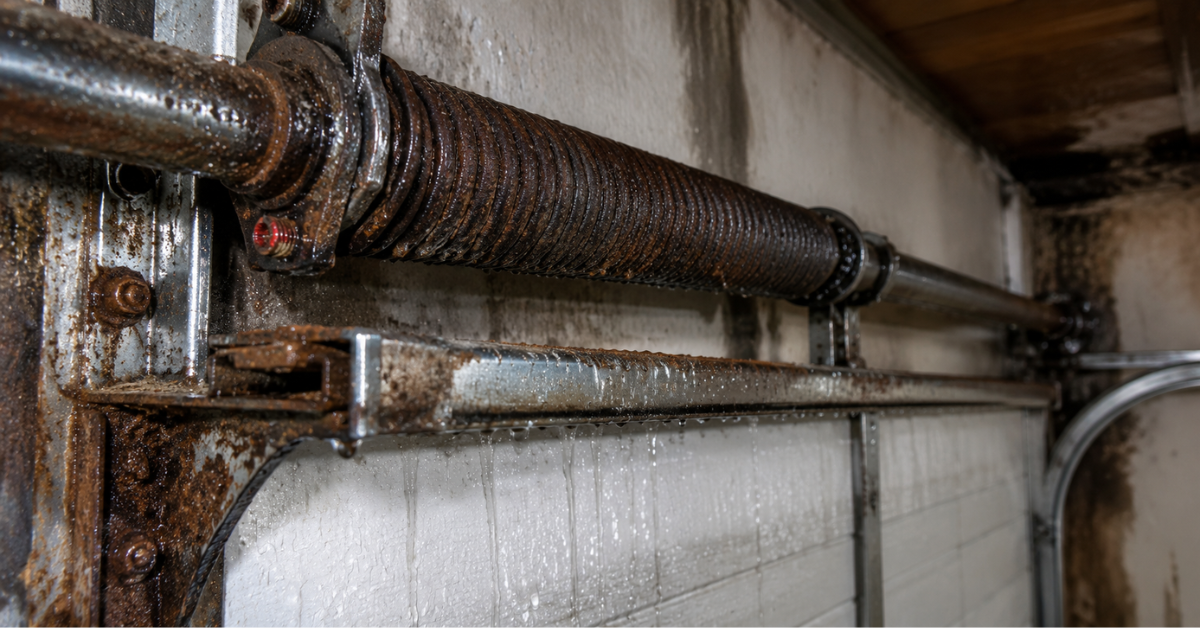
Here's why. The spring coils sit tightly wound, metal against metal. Moisture penetrates into those coil gaps and accelerates oxidation directly at the contact points — exactly where stress is highest. Rust weakens the metal at those points, making the spring brittle. A brittle spring doesn't gradually fail — it snaps suddenly, releasing all its stored tension in an instant.
A rusted spring snapping is not just an inconvenience. It's a safety event. The explosive energy release can cause serious injury and property damage. In humid Texas climates, spring inspection and replacement intervals need to be shorter than national averages suggest.
Garage Door Cables — Slow Fraying Leads to Sudden Failure
Lift cables carry the full weight of your door on every cycle, working in tandem with the springs. They're made of twisted steel wire strands, which creates a structural problem in humid environments: moisture penetrates between the strands and rusts them from the inside out.
The visible surface of the cable can look perfectly intact while the inner strands corrode and weaken. By the time you see visible fraying or rust on the outside, the internal damage is already advanced. A cable that looks 70% healthy may be holding at 30% of its rated load capacity.
When a corroded cable snaps under load, the door drops — fast, heavy, and with no warning. In a humid climate, annual cable inspection by a professional is not optional maintenance. It's basic safety practice.
Tracks and Rollers — Friction Turns Into Damage
Garage door tracks are steel channels that guide your door on every movement. In dry conditions with proper lubrication, rollers glide through them smoothly. In humid conditions, rust forms on the track interior, creating microscopic roughness along the rolling surface.
Rollers — especially steel rollers — develop their own rust layer on the wheel surface and axle. The combination of a rusted roller on a rusted track turns smooth rolling motion into grinding friction. That friction accelerates wear on both components simultaneously, generates the grinding noise homeowners often hear on humid mornings, and puts extra strain on the opener motor as it works harder to move the door.
Hinges and Brackets — Small Parts, Big Consequences
The hinges connecting your door panels and the brackets mounting your tracks to the wall are small components that most homeowners never look at — until they fail. In humid environments, hinge pins rust inside their barrels and seize. Seized hinges prevent panels from flexing as the door curves through the track transition, placing enormous stress on the panels themselves.
Bracket bolts corrode and become difficult to tighten. Corroded brackets lose clamping force, allowing tracks to drift out of alignment. The track misalignment problem that results looks like a track issue — but its root cause is a corroded bracket nobody caught in time.
Garage Door Panels — Wood and Steel React Differently
Steel panels resist moisture better than wood but develop rust at scratches, dents, and factory finish chips. Every small breach in the painted surface becomes an entry point for oxidation. Surface rust on panels is cosmetic at first but penetrates to structural layers over time, especially at the bottom section closest to the ground where moisture contact is highest.
Wood panels absorb humidity directly. They swell in wet months, which throws panel alignment off and increases friction in the tracks. They contract in dry months, creating gaps in the panel joints that let moisture, pests, and air infiltrate the garage. A wood door in Houston requires consistent sealing maintenance to avoid a cycle of swelling and warping that eventually makes replacement unavoidable.
Opener Motors — Moisture Inside Electronics
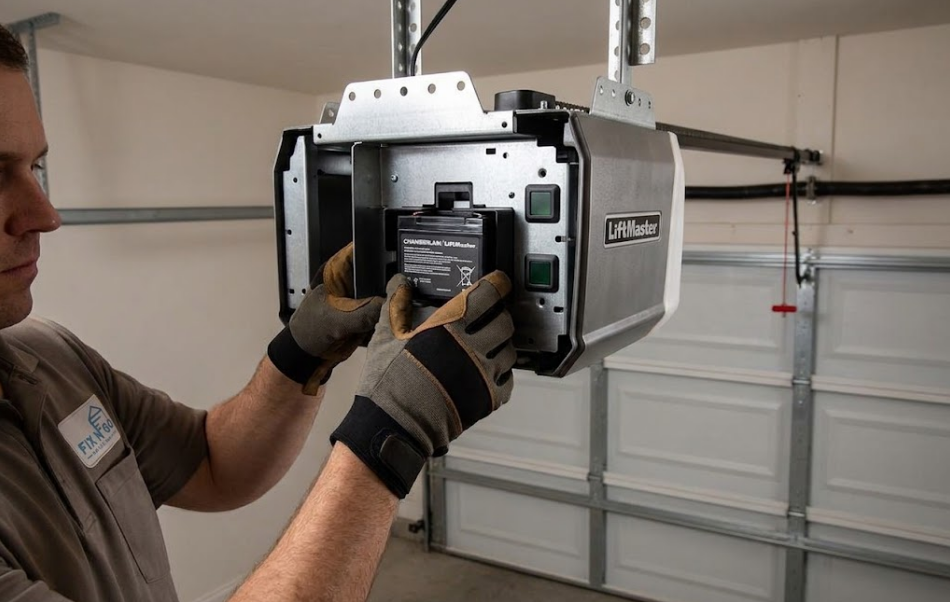
Your garage door opener motor sits at ceiling level, often directly above the door opening. In humid conditions, warm moist air rises into the motor housing, condenses on the cooler circuit board surfaces, and creates the conditions for corrosion on electrical contacts and solder points.
The result is an opener that behaves erratically — working fine on cool mornings and struggling on humid afternoons, reversing for no visible reason, or failing to respond to remote commands consistently. Homeowners chase phantom opener problems for months without realizing the root cause is moisture damage to the circuit board.
Warning Signs Your Garage Door Has Humidity Damage Right Now
Your garage door will show you the damage if you know what to look for. Check for these signs during your next inspection.
Orange or brown discoloration on springs means active rust has formed on the coil surface. Surface rust is treatable. Deep pitting means the spring is structurally compromised and needs replacement.
Visible roughness or dark staining inside the tracks indicates rust formation on the rolling surface. Run a gloved finger along the inside of the track — it should feel smooth. Rough, gritty texture means rust is present.
Grinding or squealing during door operation that gets worse on humid mornings points directly to rusted rollers or tracks, or lubricant that humidity has degraded into grit-attracting paste.
Cables that appear discolored, stiff, or show any fraying at the end fittings near the bottom brackets need professional inspection immediately. Never wait on cable concerns.
Swollen or warped panels that create visible gaps between sections or rub against the track face indicate moisture absorption in wood panels or significant impact damage on steel panels.
An opener that behaves inconsistently in humid weather — especially if it works fine after the temperature drops — suggests moisture in the motor housing or control board.
How to Protect Your Garage Door from Humidity Damage
The good news is that humidity damage is largely preventable. These steps keep your system healthy even in Texas's most challenging coastal and inland conditions.
Lubricate every moving part every six months — without fail. Use a silicone-based spray or white lithium grease on springs, hinges, rollers, and cable drums. This barrier slows moisture contact with metal surfaces. Never use WD-40 on springs or tracks — it thins out quickly, leaves a residue that attracts grit, and provides almost no rust protection.
Install a dehumidifier in your garage. This is the single most effective step for Houston and Corpus Christi homeowners. Keeping interior humidity below 50% dramatically slows the corrosion rate on every metal component. A mid-range dehumidifier pays for itself in extended component life within the first year.
Seal every scratch and chip on steel panels immediately. Touch-up paint or rust-inhibiting primer stops oxidation at the entry point before it spreads. A scratch ignored in April is a rust patch by August in Houston.
Check and replace weather stripping annually. Intact weather stripping blocks the direct moisture pathway into the garage from the door perimeter. Cracked or compressed stripping lets humid outside air flood in at the base and sides.
Schedule annual professional maintenance. A trained technician inspects spring coil condition, cable strand integrity, track rust levels, hinge function, and opener performance in a single visit. Catching a corroding cable or weakening spring during maintenance costs a fraction of the emergency repair it prevents.
Fix N Go Protects Texas Garage Doors from Humidity Year-Round
At Fix N Go Garage Door Repair, we see humidity damage every single week across our Texas service areas. Houston's coastal air, Corpus Christi's salt-laden moisture, and the summer humidity spikes across Dallas and Austin all take a consistent toll on garage door systems that don't receive regular attention.
Our maintenance service covers full spring inspection, cable condition assessment, track and roller cleaning and lubrication, hinge and bracket tightening, weather stripping evaluation, and opener performance testing — everything humidity targets, addressed in a single professional visit.
When damage has already progressed beyond maintenance, Fix N Go handles it the same day.
Don't Wait for Humidity to Win
Humidity damage is slow and invisible — right up until it isn't. A spring that's been corroding for two years snaps without warning. A cable that looks fine from three feet away drops the door without notice. The repair that would have cost $150 during maintenance becomes a $600 emergency call after the failure.
Texas homeowners who stay ahead of humidity with consistent lubrication, annual professional maintenance, and prompt attention to early warning signs keep their doors running smoothly for years longer than those who don't.
Frequently Asked Questions
Q: How often should I lubricate my garage door in a humid climate like Houston?
A: Every six months is the standard recommendation for most climates. In Houston, Corpus Christi, and other high-humidity Texas markets, lubricating every four months gives better protection. Use silicone spray or white lithium grease on springs, hinges, rollers, and cable drums. Avoid WD-40 — it provides minimal rust protection and degrades quickly in heat and humidity.
Q: Can I fix rust on my garage door springs myself?
A: Light surface rust on spring coils can be slowed with penetrating oil and lubrication. However, once rust has created visible pitting or darkening deep into the coil metal, the spring's structural integrity is compromised. A pitted spring in a humid environment is approaching failure — it needs professional replacement, not surface treatment. Never attempt to remove, adjust, or replace springs yourself.
Q: Does humidity affect garage door opener performance?
A: Yes. Moisture that enters the opener motor housing condenses on circuit boards and electrical contacts, causing erratic behavior — inconsistent remote response, unexpected reversals, and failure to open or close completely. If your opener behaves differently on humid days versus dry ones, moisture infiltration in the motor housing is the most likely cause. A technician can inspect and clean the housing or recommend replacement if corrosion is advanced.
Q: How do I know if my garage door cable is corroding internally?
A: Internal cable corrosion is difficult to detect visually because it progresses from the inside out. External warning signs include stiffness when the cable bends near the drum, discoloration or darkening of the cable surface, any visible fraying at the end fittings, or one side of the door sitting slightly lower than the other during operation. Annual professional inspection is the only reliable way to catch internal corrosion before it causes failure.
Q: Is a dehumidifier really worth it for a garage in Texas?
A: Absolutely. In Houston and Corpus Christi where relative humidity regularly exceeds 70–80%, a garage dehumidifier set to maintain 45–50% humidity reduces the corrosion rate on springs, cables, tracks, and hinges dramatically. Most quality units cost between $200 and $400 and pay for themselves within the first year in extended component life and avoided repair costs. It's one of the highest-return maintenance investments a Texas homeowner can make.
You might also like
Fix N Go Blog