How to Install a Craftsman Garage Door Opener Like a Pro
Installing a garage door opener might sound like a job best left to professionals, but with the right approach, you can handle it yourself. A Craftsman garage door opener installation is actually quite manageable for homeowners and beginners who follow clear steps and stay organized.
In this guide, I’ll walk you through the process in a simple, practical way—so you can install your opener confidently, save money, and get that smooth, automatic operation you want.
Why Choose a Craftsman Garage Door Opener?
Before diving into the installation, it helps to understand why Craftsman openers are so popular. They are known for durability, quiet operation, and user-friendly features. Whether you’re upgrading or replacing an old unit, choosing Craftsman means you’re getting a reliable system that’s built for everyday use.
Tools and Materials You’ll Need
To make your DIY garage door opener setup smooth, gather everything beforehand.
You’ll typically need a drill, adjustable wrench, ladder, screwdriver set, measuring tape, and the opener kit itself. Most Craftsman kits come with rails, motor unit, sensors, and hardware, so double-check the contents before starting.
Preparation is key—having everything ready will save time and prevent frustration midway.
Step 1: Assemble the Rail System
Start by assembling the rail on the floor. This is one of the easiest parts of the garage opener installation guide, but it’s important to do it correctly.
Connect the rail sections as instructed and attach the trolley. Then, secure the rail to the motor unit. Make sure everything is tightly fastened, as this system will guide the door during operation.
Take your time here—precision matters.
Step 2: Install the Header Bracket
Next, locate the center of your garage door and mark it above the door frame. This is where the header bracket will go.
Drill pilot holes and secure the bracket firmly. This step is crucial because it supports the opener when the door moves.
If your garage has a concrete wall, use appropriate anchors for extra stability.
Step 3: Attach the Rail to the Header Bracket
Now lift the assembled rail and attach it to the header bracket.
You may need help here, as holding the rail steady while securing it can be tricky. Once attached, the rail should be level and aligned with the center of the door.
This alignment ensures smooth movement during operation.
Step 4: Mount the Motor Unit
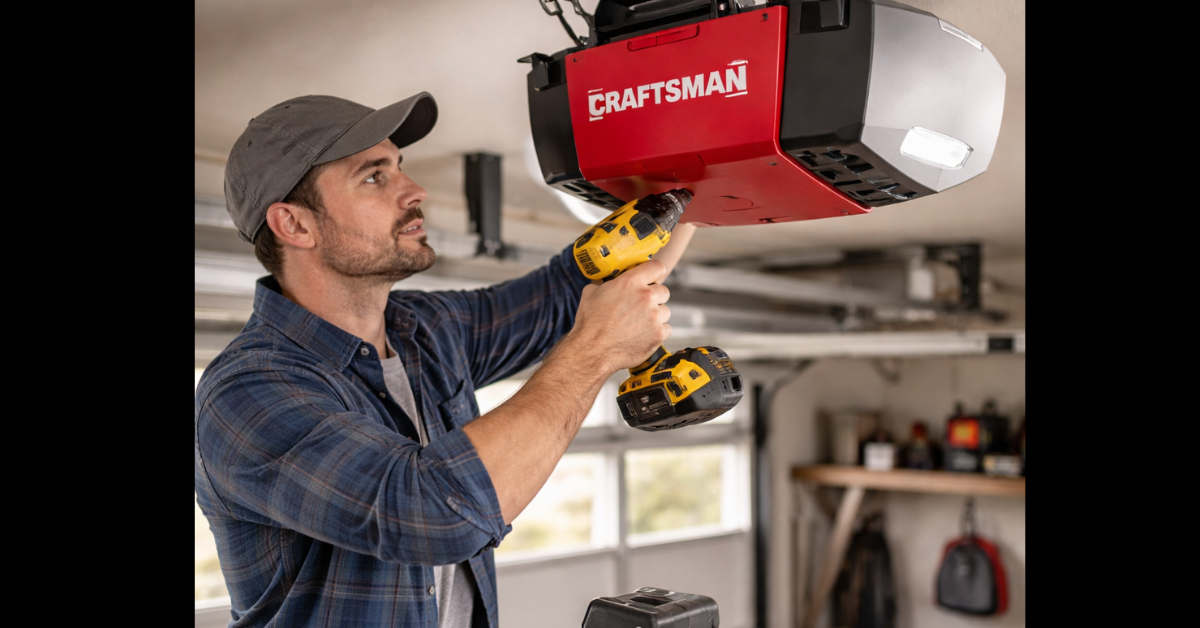
With the rail in place, it’s time to mount the motor unit on the ceiling.
Use angle irons to suspend the motor securely from ceiling joists. Make sure it is level and positioned properly.
A stable motor unit is essential for a successful install Craftsman opener process. If it’s not balanced, the opener may vibrate or operate inefficiently.
Step 5: Install the Door Arm
The door arm connects the opener to the garage door itself.
Attach the bracket to the door, then connect the arm from the trolley to the bracket. Adjust the length so the door opens and closes smoothly without strain.
This step directly affects performance, so double-check your adjustments.
Step 6: Set Up Safety Sensors
Modern openers include safety sensors, and Craftsman models are no exception.
Install the sensors on both sides of the garage door, about 6 inches above the ground. Make sure they are aligned properly—if they don’t face each other correctly, the door won’t close.
These sensors are essential for safety, preventing the door from closing on objects or people.
Step 7: Connect the Power and Test
Plug in the motor unit and turn on the power.
Now test the opener using the wall control or remote. Watch how the door moves—does it open smoothly? Does it stop correctly?
If needed, adjust the travel limits and force settings according to the manual. Fine-tuning is part of a professional-level Craftsman opener setup.
Common Mistakes to Avoid
Even though the process is straightforward, a few common mistakes can cause problems.
One major issue is improper alignment. If the rail or sensors are slightly off, the opener won’t function properly. Another mistake is loose hardware—always tighten bolts securely.
Lastly, skipping the manual can lead to confusion. Every model has slight differences, so follow the instructions closely.
Pro Tips for a Smooth Installation
If you want your installation to feel truly professional, keep these tips in mind.
- First, measure everything twice before drilling. Accuracy saves time.
- Second, work with a partner when lifting heavy components.
- Third, test each step before moving to the next.
These small habits make a big difference in achieving a clean, reliable setup.
Maintenance After Installation
Once your opener is installed, don’t forget maintenance. Lubricate moving parts regularly, check the sensors for alignment, and inspect the chain or belt for wear. Routine care ensures your opener lasts longer and performs smoothly. A well-maintained system can save you from costly repairs down the road.
Conclusion
Installing a garage door opener doesn’t have to be complicated. With the right tools, patience, and attention to detail, a Craftsman garage door opener installation can be a rewarding DIY project.
By following this step-by-step guide, you can achieve professional results without hiring a technician. Not only will you save money, but you’ll also gain the satisfaction of completing a practical home improvement project on your own.
FAQs
Q1. How long does it take to install a Craftsman garage door opener?
A: For beginners, it usually takes 3–5 hours. With experience, the process can be completed in about 2–3 hours.
Q2. Can I install a Craftsman opener by myself?
A: Yes, but having a helper makes certain steps easier, especially when mounting the motor unit.
Q3. Do I need special tools for installation?
A: No, basic household tools like a drill, wrench, and screwdriver are sufficient for most installations.
Q4. Why is my garage door not closing after installation?
A: This is often due to misaligned safety sensors. Check their positioning and ensure they face each other properly.
Q5. Is professional installation better than DIY?
A: Professional installation saves time, but DIY installation is cost-effective and manageable if you follow instructions carefully.
You might also like
Fix N Go Blog