How to Reset Your Garage Door Combination?

Rabia Tingat • September 29, 2025

For many homeowners, a garage door keypad or lock is the first line of defense for home security. Over time, you might need to change the code to keep your property safe—whether you’ve given the code to too many people, moved into a new home, or simply forgot the old combination. Understanding how to reset your garage door combination is essential for protecting your belongings and ensuring only trusted individuals have access.


This guide explains how to reset both keyless entry keypads and mechanical combination locks, offering practical tips for beginners and experienced homeowners alike.


Why Resetting Your Garage Door Combination Matters


Your garage door is more than just a place to park your car—it often provides direct access to your home. Resetting the combination regularly keeps intruders out and prevents unauthorized access. You should especially consider changing the code if:


  • You’ve recently moved into a new home.

  • A family member or neighbor no longer needs access.

  • You suspect someone has discovered your old code.

Regularly updating the keypad ensures your security system stays one step ahead of potential threats.


Understanding Your Garage Door System


Before resetting your garage door combination, identify what type of system you have. Most modern garage doors use a keyless entry keypad, while some older doors rely on a mechanical combination lock or a smart garage door opener.


Keyless Entry Keypads


These wireless keypads are mounted outside your garage and operate with a programmed PIN. They connect directly to your garage door opener using a receiver.


Mechanical Combination Locks


Some garage doors, particularly older models, may use a manual combination lock. These locks require a reset of the mechanical dials or levers. Knowing your system type will guide you toward the correct reset method.


Tools You May Need


Resetting a garage door combination usually requires only a few basic tools:


  • A ladder to reach the garage door opener or keypad.

  • A screwdriver for opening the keypad battery compartment if needed.

  • The user manual for your specific opener model (often available online).

Having these items ready will make the process smoother.


How to Reset a Garage Door Keypad


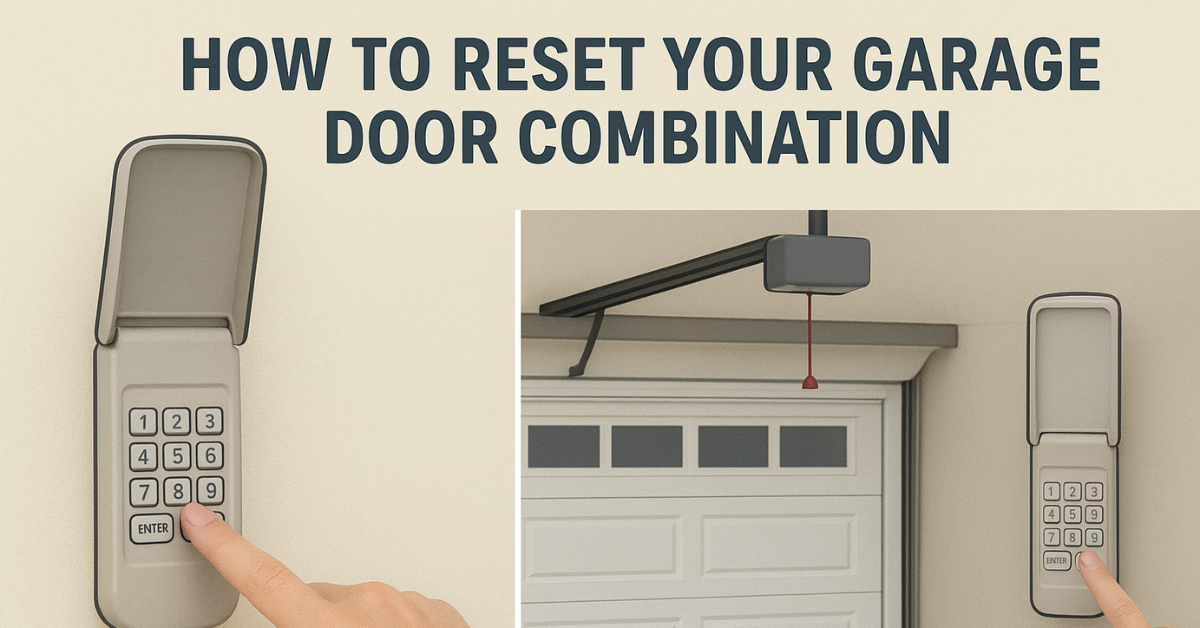
If your garage uses a keyless entry keypad, follow these steps to reset the code. The process may vary slightly depending on the brand (such as LiftMaster, Genie, or Chamberlain), but the basic method is similar.


Step 1: Locate the “Learn” or “Program” Button

Inside your garage, find the garage door opener motor unit, typically mounted on the ceiling. Look for a small button labeled Learn, Program, or Set. This button is usually near the antenna wire or under a light cover.


Step 2: Press and Hold the Button

Press and hold the Learn button until the indicator light begins to flash or turns solid (usually about 10–15 seconds). This action erases the old code and prepares the system for a new one.


Step 3: Enter Your New Code

Within 30 seconds of pressing the Learn button, go to your keypad and enter a new 4–6 digit PIN. Then press the Enter or Set button, depending on your model. The opener light will blink to confirm the new code.


Step 4: Test the Keypad

Wait a few seconds, then test the new code by entering it on the keypad and pressing the Open button. If the door responds correctly, your new combination is active.


How to Reset a Mechanical Combination Lock


For older garage doors with manual combination locks, resetting the code requires adjusting the dials or tumblers.


  1. Open the Lock: Use the current combination to unlock the door.

  2. Access the Reset Mechanism: Look for a reset lever or button inside the lock mechanism.

  3. Set the New Code: Move the dials to your desired combination while holding the reset lever.

  4. Secure the Lock: Release the lever to save the new code and test it several times to ensure it works.

Because mechanical locks vary widely, check the manufacturer’s instructions for your specific model.


Tips for Choosing a Secure Combination


When resetting your garage door combination, pick a code that’s easy to remember but difficult for others to guess. Avoid obvious choices like “1234” or your house number. Instead:


  • Use a mix of random numbers that don’t follow a pattern.

  • Change the code every 6–12 months for added security.

  • Share the code only with trusted family members.

These habits help keep your garage door keypad secure against unauthorized access.


Troubleshooting Common Issues


Sometimes, the reset process doesn’t go as planned. Here are a few common problems and solutions:

  • Keypad Not Responding: Replace the keypad batteries and try again.

  • Opener Light Doesn’t Flash: Ensure you pressed the Learn button long enough to activate the programming mode.

  • Door Won’t Open After Reset: Double-check that the keypad and opener are properly synced.

If you continue to experience issues, consult the user manual or contact a professional technician.


When to Call a Professional


While resetting a garage door combination is typically a simple DIY task, certain situations may require expert help. Call a professional if:


  • The keypad or opener is damaged or malfunctioning.

  • You’ve lost the user manual and can’t locate the Learn button.

  • Your garage door opener is an older model with complicated wiring.

A technician can quickly diagnose problems and ensure your security system is functioning correctly.


Maintenance Tips to Keep Your System Secure


Resetting your combination is only part of maintaining a secure garage. Regularly inspect the keypad for wear, replace batteries every 1–2 years, and test the opener monthly to ensure it operates smoothly. Cleaning the keypad with a soft, damp cloth also prevents dirt buildup that could interfere with the buttons.


FAQs About Resetting a Garage Door Combination


Q1. How often should I change my garage door code?
A:
 It’s recommended to change your code every 6–12 months or anytime you suspect someone unauthorized may know it.


Q2. Can I reset my keypad without the old code?
A:
 Yes, most keypads allow you to reset the code directly from the opener using the Learn or Program button.


Q3. What if I forget my new combination?
A:
You can repeat the reset process to create a new code. Keep the new combination written in a secure location.


Q4. Will resetting the keypad affect my remote controls?
A:
No, resetting the keypad only changes the code for keyless entry. Your handheld remotes will still work.


Q5. How do I find my opener’s model number?
A:
Check the back or side of the opener motor unit for a label containing the model and serial number.


Final Thoughts


Knowing how to reset your garage door combination is an important skill for any homeowner. Whether you’re updating a keypad or a mechanical lock, the process is straightforward and can be completed in just a few minutes. By choosing a strong code, maintaining your system, and resetting it regularly, you can protect your home and enjoy peace of mind knowing your garage is secure.
You might also like

Fix N Go Blog
How Often Should Commercial Garage Doors Be Serviced?
By Rabia Tingat February 20, 2026
Learn how often commercial garage doors should be serviced, ideal maintenance schedules by usage, what a tune-up includes, and signs you need repairs fast.
How Often Should Commercial Garage Doors Be Replaced?
By Rabia Tingat February 20, 2026
If you manage a warehouse, service bay, loading dock, or retail backroom, your overhead doors are working harder than most people realize. They open and close dozens of times a day, take hits from forklifts, battle weather, and still need to seal and operate safely. So it’s natural to ask: how often should commercial garage doors be replaced? There isn’t one perfect number, because commercial doors “age” based on cycles, environment, and how well they’re maintained. Still, there are practical timeframes you can use for planning and budgeting. In most facilities, a commercial garage door lasts about 15–30 years, but high-cycle locations may need replacement much sooner—sometimes in 8–15 years—especially if safety, downtime, and energy loss become costly. This guide breaks down typical commercial garage door lifespan by door type, the signs that replacement is smarter than repair, and how to make a decision that protects operations. What Determines a Commercial Garage Door’s Lifespan? Before we talk timelines, it helps to understand what really wears out. In commercial settings, the door panels often survive longer than the moving parts. The parts that usually drive replacement decisions include: Springs and cables (cycle-related wear) Rollers and hinges (friction and alignment) Tracks (impact damage and shifting) Bottom seal and perimeter weathering Operator/motor compatibility and safety systems The biggest factor is usually cycle count—how many times the door opens and closes. A door at a busy dock might run 80–200 cycles per day, while a storage facility door might run 5–15 cycles. That difference alone can cut years off the system. Typical Replacement Timelines by Door Type Sectional steel overhead doors (common in warehouses) These are durable and repair-friendly. With consistent commercial door maintenance, many facilities get 15–25 years, sometimes more. If you run high daily cycles or deal with corrosion, replacement may come earlier. Rolling steel doors (often used for security) Rolling steel doors can last 20–30 years, but they need proper alignment and regular service. Heavy use and impacts can shorten lifespan. High-speed doors (fabric, rubber, or fast-acting sectional) High-speed doors are designed for cycle-heavy environments, but they may need major component replacement sooner due to constant motion and sensor reliance. Many operators plan for 10–15 years depending on environment and usage. Dock doors and loading bay doors Dock doors take the most abuse: pallets, trucks, forklifts, and constant openings. Even with good upkeep, dock door replacement planning often lands around 10–20 years, sometimes sooner in high-impact facilities. How Often Should Commercial Garage Doors Be Replaced in High-Traffic Facilities? If your door is part of daily operations—shipping, receiving, fleet service, or temperature-controlled movement—replacement schedules usually tighten. Here’s a realistic way to think about it: Low traffic (under 20 cycles/day): replacement often 20–30 years Moderate traffic (20–60 cycles/day): replacement often 15–25 years High traffic (60+ cycles/day): replacement often 8–15 years , depending on upkeep and damage High traffic doesn’t always mean the door panels fail. It means the system becomes costly to keep alive: frequent spring changes, constant roller wear, downtime from sensor or track issues, and growing energy loss from poor sealing. In these environments, replacement becomes less about age and more about operational efficiency. The Clear Signs It’s Time to Replace (Not Just Repair) A commercial door can be repaired many times, but at a certain point, repairs stop making sense. You’ll usually know replacement is near when you see these patterns. 1) You’re paying for repeated “same problem” repairs If you’re calling service repeatedly for: tracking issues roller failures cables slipping bottom seal tearing operator strain and limit problems …it’s a sign the door system is aging out or the structure is compromised. 2) Door panels are bent, cracked, or no longer sealing Panels that are bowed or dented can still open and close, but they often: scrape tracks leak air and pests increase operator load fail under wind pressure If sealing problems affect climate control, replacement can pay for itself faster than expected. 3) Your operator and safety features are outdated Modern facilities rely on photo eyes, edge sensors, monitored safety devices, and reliable reversing systems. If your door system can’t support safe operation consistently—or if parts are hard to source—an overhead door upgrade may be the safer choice. 4) Rust, corrosion, or rot is spreading Once corrosion starts affecting key areas (bottom sections, hinges, fasteners), repairs become temporary patches. Coastal areas and chemical-exposure environments reach this stage faster. 5) Downtime is costing more than the door This is the most business-focused indicator. If door breakdowns interrupt shipments, block bays, delay fleets, or create safety risks, replacement becomes a productivity decision—not just a maintenance one. Repair vs Replace: A Practical Decision Framework Instead of guessing, use this simple logic: Repair makes sense when the door is structurally sound, the issue is isolated (springs, rollers, sensor alignment), and service calls are infrequent. Replacements make sense when damage is structural, service calls are frequent, parts are hard to find, or energy/downtime costs keep rising. A common rule facility managers use: if you’re spending a large percentage of the door’s replacement cost every year just to keep it operating, replacement should be on the table. Even without exact percentages, you’ll feel it in recurring invoices and repeated disruptions. Commercial Door Maintenance That Extends Replacement Timing If you want to push replacement further into the future, maintenance matters more than brand. The best routine focuses on preventing friction, misalignment, and safety failures. What helps most: scheduled inspections (not just “fix when broken”) tightening hardware and checking track alignment replacing worn rollers before they damage tracks keeping seals intact to reduce strain and heat loss checking spring condition and balance regularly A well-maintained door often lasts years longer because it avoids the “domino effect” where one worn part damages several others. Examples: When Replacement Is the Better Business Move Example 1: Busy loading dock A distribution center runs dock doors constantly. Repairs are frequent, and trucks wait when a door jams. Even if the door is only 12 years old, replacement may be smarter because downtime affects deliveries and labor costs. Example 2: Climate-controlled warehouse A facility stores temperature-sensitive products. The door still works but leaks air badly and struggles to close smoothly. The energy loss and equipment strain may justify replacement earlier than expected. Example 3: Service bays for fleet vehicles A door with dented panels and worn tracks becomes a safety hazard. Even if it “works,” it’s risky around staff and vehicles. Replacing prevents injuries and property damage. Cost Factors to Consider (Beyond the Door Price) Replacement decisions aren’t only about purchase price. Consider: installation time and scheduling around operations upgrading the operator or controls insulation value and energy savings security improvements reduced maintenance and fewer service calls Sometimes a newer, better-sealing door can reduce heating/cooling loss enough to matter in monthly operating costs—especially for large openings. Conclusion So, how often should commercial garage doors be replaced? In many facilities, the realistic lifespan is 15–30 years, but high-traffic or harsh environments may require replacement closer to 8–15 years. The best time to replace is usually when repairs become repetitive, safety and sealing are declining, and downtime starts affecting daily operations. If you’re unsure, don’t wait for a failure. Plan ahead, evaluate cycle count and repair history, and treat replacement as an operational upgrade—not just a maintenance expense.
Why Won’t My Commercial Garage Door Open or Close?
By Rabia Tingat February 16, 2026
Commercial garage door not opening or closing? Learn the most common causes, quick checks, safe fixes, and when to call a pro.