What to Expect from a Professional Garage Door Service
Most homeowners have never watched a garage door technician work. You call, someone shows up, things get fixed — but you're not entirely sure what happened or whether you got what you paid for.
That uncertainty is a problem. It's exactly what repair scammers exploit. And it leaves honest homeowners unable to evaluate whether a service visit was thorough, fair, and complete.
This guide walks you through every stage of a professional garage door service call — from the moment you book to the moment the technician leaves. You'll know exactly what to expect, what to ask, and what a genuinely thorough visit looks like versus one that cuts corners.
Step 1 — Booking the Service Call
A professional company makes booking straightforward. You call, describe the problem you're experiencing — grinding noise, door won't open, spring broke, door came off track — and the dispatcher gives you a clear service window.
Here's what a legitimate booking experience includes.
A clear arrival window. Not "sometime today" — an actual time range, typically two to four hours. A company that books you without committing to a window doesn't respect your time.
An honest call fee explanation. Most companies charge a service call fee that covers the technician's arrival and initial diagnosis. This fee should be stated clearly before you book, not revealed when the invoice appears. At Fix N Go, pricing is always transparent from the first call.
Confirmation of insurance and licensing. If you ask whether the company is insured and licensed — which you should — the answer should come immediately and confidently. Any hesitation or deflection is a red flag worth acting on.
Same-day availability for urgent situations. A door stuck open is a home security emergency. A broken spring that traps your car is an urgent problem. A professional company offers same-day or emergency response for situations that genuinely can't wait.
Step 2 — The Technician's Arrival
First impressions at the door tell you a great deal about the company behind the service call.
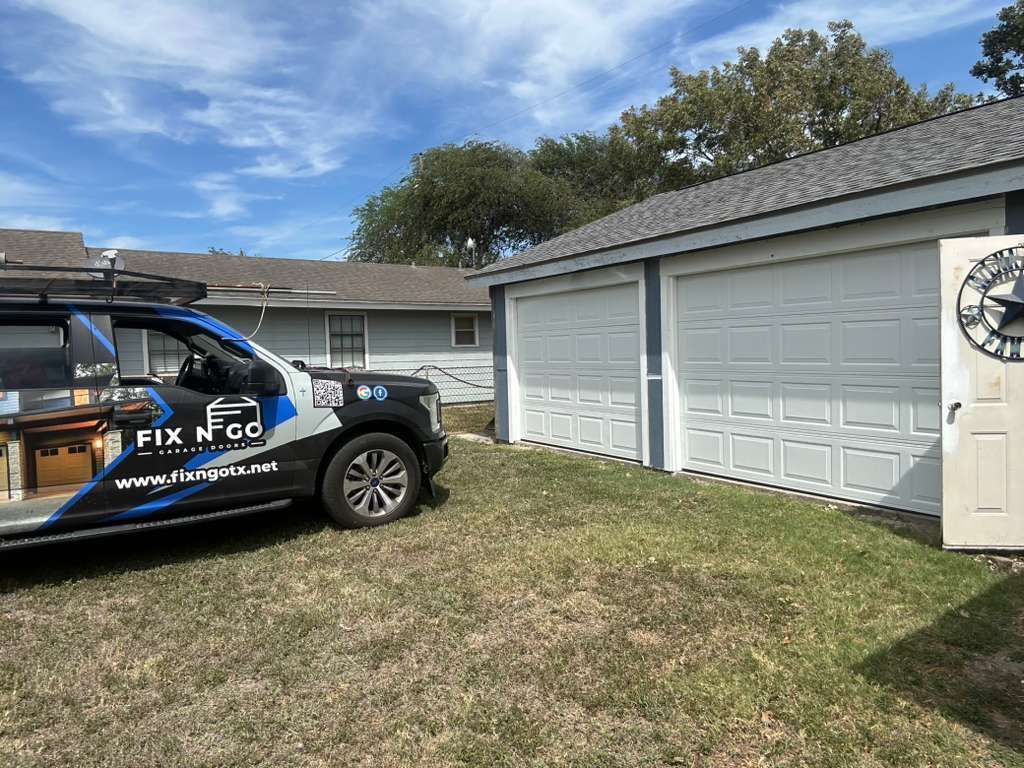
A professional technician arrives in a branded company vehicle — not a personal truck with magnetic signs that peel off. They wear a company uniform or clearly identifiable work attire and carry identification that connects them to the business. They introduce themselves by name.
They do not arrive and immediately start listing problems before they've looked at anything. They do not pressure you into a decision before performing any assessment. They greet you professionally, confirm the issue you reported, and ask a few clarifying questions before moving to the door.
What to watch for: A technician who immediately says "I can already tell you need a full system overhaul" before touching a single component is following a sales script, not performing a diagnosis.
Step 3 — The Initial Inspection
Before any repair recommendation, a thorough technician performs a complete inspection of your garage door system. This is not optional — it's the foundation of accurate diagnosis.
A proper inspection covers every component that affects safe, reliable door operation.
Springs: The technician checks both springs — even if only one is broken — for coil condition, rust, tension consistency, and remaining cycle life. They note whether the springs are correctly sized for your door's weight.
Cables: Both lift cables get checked for fraying, corrosion, proper winding on the cable drum, and even tension. A cable that looks intact from three feet away may show early corrosion under close inspection.
Rollers: Each roller gets checked for cracking, flat spots, seized axles, and wear on the wheel edge. The technician notes whether nylon or steel rollers are installed and whether an upgrade makes sense for your usage pattern.
Tracks: Both vertical and horizontal track sections get checked for plumb, level, correct spacing from the door, visible bends or kinks, and bracket condition and tightness.
Hinges: Every hinge plate gets checked for cracks, worn hinge pin barrels, and loose fasteners. A cracked hinge is a structural failure waiting to happen.
Bottom brackets: The bottom corner brackets where cables attach get specific attention — they're high-stress components that fail without warning and are dangerous to replace without proper training.
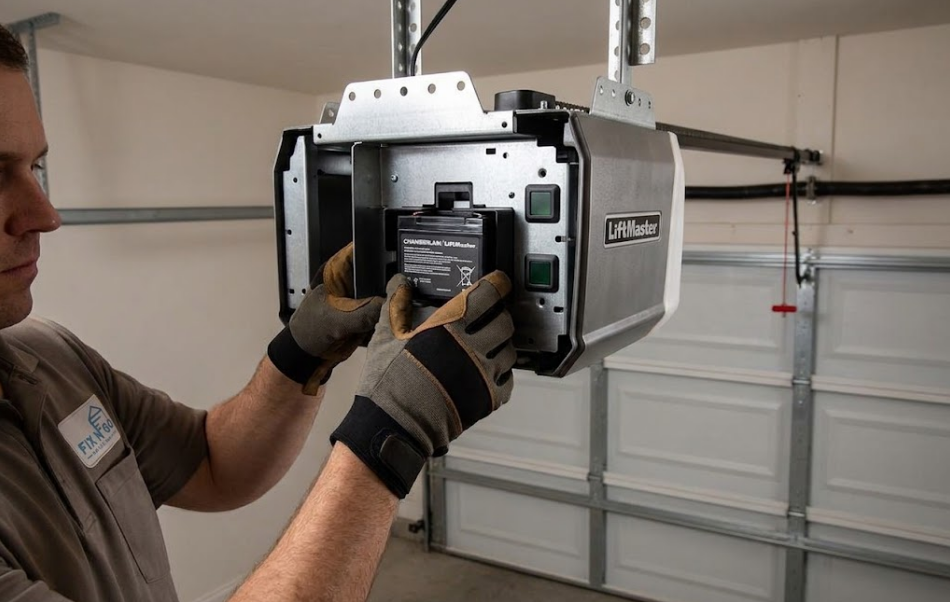
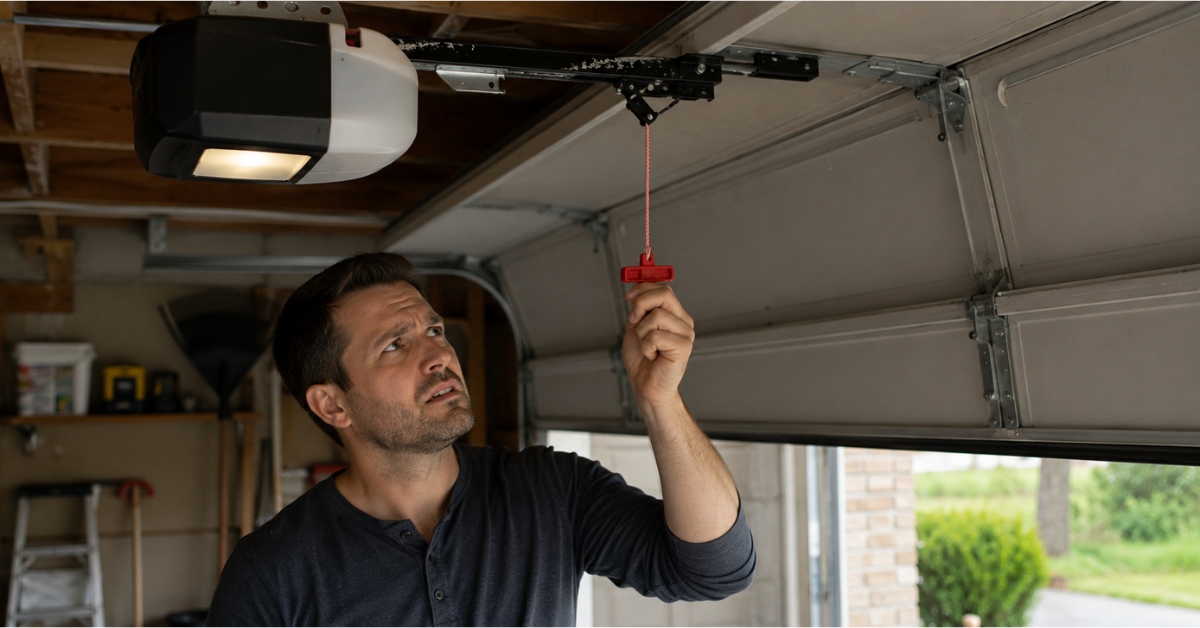
Opener: The technician tests opener function, checks drive mechanism condition, verifies safety sensor alignment and response, and tests the auto-reverse force setting — a critical safety feature that prevents the door from closing on a person or object.
Weather stripping: The seal condition at the bottom and sides of the door gets checked for gaps, cracking, or compression failure.
This inspection takes ten to twenty minutes on a thorough visit. A technician who spends two minutes looking at your door and immediately writes a quote has not inspected it — they've priced it.
Step 4 — The Diagnosis and Written Quote
After the inspection, the technician sits down with you and explains what they found — clearly, in plain language, without jargon designed to confuse.
A professional diagnosis covers three things. First, the primary problem you called about and its cause. Second, any other components that show active damage or early wear that will become a problem soon. Third, a clear distinction between what needs repair now versus what warrants monitoring.
That last point matters enormously. A trustworthy technician does not treat every imperfect component as an emergency requiring immediate replacement. They tell you "this spring is broken and needs replacement today" separately from "these rollers are showing wear — they have roughly six months before I'd recommend replacing them." That distinction is the difference between honest service and upselling.
The written quote comes next. Before a single tool touches your door, you receive a complete written estimate that includes every part being replaced with its brand and specification, the labor cost, the total amount, and the warranty terms on both parts and labor.
You review it. You ask questions. You approve it. Work begins only after your written authorization.
Any company that starts work before you approve a written quote is removing your ability to make an informed decision. That is not how professional service works.
Step 5 — The Repair
With your authorization confirmed, the technician begins the work. Here's what professional execution looks like on the most common repairs.
Spring replacement: The technician uses proper winding bars — never a screwdriver or improvised tool — to safely release tension from the old spring before removal. The new spring gets installed with correct tension winding for your door's specific weight. Both springs get replaced together if both have meaningful wear. The technician never rushes this step — spring work done quickly is spring work done dangerously.
Cable replacement: Old cables get removed with spring tension properly managed. New cables get wound correctly onto the drum with consistent tension on both sides. The technician checks that cable tension is equal left and right before cycling the door — uneven cable tension causes racking under load.
Roller replacement: All rollers get replaced as a set, not individually. Mixing new and worn rollers creates uneven rolling resistance that wears out the new rollers faster and stresses the track walls unevenly.
Track realignment: The technician uses a level and measuring tools — not eyeballing — to verify plumb on vertical sections and correct slope on horizontal sections. Every bracket gets tightened to specification.
Opener adjustment: After any mechanical repair, the opener's force settings and travel limits get rechecked. A door with new springs behaves differently than the opener was previously calibrated for. Failing to readjust the opener after spring work is a common shortcut that causes premature opener wear.
Throughout the repair, a professional technician works cleanly — not leaving hardware, packaging, or debris behind — and communicates with you if they discover anything during the repair that changes the scope of the work.
Step 6 — Lubrication and Final Adjustments
A thorough service visit does not end when the broken part gets replaced. It ends when the entire door system operates at its best.
After completing the primary repair, a professional technician lubricates every moving part — springs, hinges, rollers, cable drums, and bearing plates — with the correct lubricant for each component. This step reduces friction, slows corrosion, and extends the life of every part the door depends on.
They then cycle the door multiple times — both with the opener and manually — watching for any sound, movement, or resistance that suggests something is still not right. They verify the auto-reverse safety function works correctly by placing a two-by-four flat on the floor under the door and confirming the door reverses on contact.
They test the remote, keypad, and any interior wall button to confirm all control points work reliably. If your opener supports smart home connectivity, they confirm that function works too.
This post-repair testing phase takes five to ten minutes. A technician who replaces your spring, cycles the door once, and hands you an invoice has skipped steps that protect your safety and your investment.
Step 7 — The Invoice, Warranty, and Walk-Through
Before leaving, the technician reviews the completed invoice with you — confirming every item matches the written quote you approved, with no additions you didn't authorize.
They explain the warranty on parts and labor clearly. Most quality parts carry manufacturer warranties ranging from one year to lifetime depending on the component. Labor warranties vary by company — Fix N Go backs our work with clear warranty terms stated in writing on every invoice.
They also give you a brief maintenance walk-through — what to lubricate, how often, and what early warning signs to watch for before they become service calls. This is not a sales pitch for the next visit. It's the information a professional leaves behind so their customer can protect the investment that was just made.
What a Fix N Go Service Visit Looks Like
Every point in this guide describes exactly what Fix N Go Garage Door Repair delivers on every service call across Texas.
Our certified technicians arrive in branded vehicles, perform complete documented inspections, provide written quotes before touching anything, use proper tools and quality parts, lubricate and test the full system after every repair, and leave a clean workspace with a clear invoice that matches what was approved.
Same-Day Service — Most calls are answered and completed the same day. You don't wait three days with a broken door.
24/7 Emergency Response — A door stuck open at midnight or a broken spring on Sunday morning gets the same response as a weekday call. Fix N Go is always on.
Transparent Pricing — The price you approve is the price you pay. No line items appear after the fact. No surprises at invoice time.
Fully Insured and BBB Accredited — Every technician carries full liability and worker's compensation coverage. Our BBB A+ rating reflects 20+ years of accountable service.
Frequently Asked Questions
Q: How long does a typical garage door service call take?
A: A standard repair visit — spring replacement, cable replacement, or roller swap — takes one to two hours from arrival to completion. More complex jobs involving track replacement, opener installation, or multiple component repairs run two to three hours. Fix N Go technicians carry the most common parts on every truck, so most jobs finish in a single visit without waiting for parts to be ordered.
Q: Do I need to be home during the service visit?
A: Yes — someone 18 or older should be present for the full visit. The technician needs access to the garage interior, needs to review the inspection findings with you, and requires your authorization before beginning work. Leaving a neighbor or family member to handle the visit is acceptable if you brief them on the issue and authorize them to approve the written quote on your behalf.
Q: What should I do to prepare for a garage door service visit?
A: Clear the area around the garage door and opener unit — remove vehicles, storage items, and anything stored near the track path on both sides. This gives the technician full access to every component and speeds up the inspection. If you have documentation of previous repairs or the door's installation date, having that available helps the technician understand the system's history.
Q: What warranty should I expect on garage door repairs?
A: Quality parts carry manufacturer warranties ranging from one year on standard components to lifetime on premium springs and hardware. Labor warranties vary by company but should be stated clearly in writing on your invoice — not mentioned verbally and then unavailable when you need them. Ask specifically what the warranty covers, how long it lasts, and what the process is for a warranty claim before authorizing any work.
Q: How do I know if my garage door needs a tune-up versus a repair?
A: A tune-up — lubrication, hardware tightening, opener adjustment, and safety testing — is appropriate when your door operates but shows early signs of wear like minor noise, slightly sluggish movement, or a remote that occasionally misses. A repair is needed when a specific component has failed or is causing the door to malfunction, stop mid-cycle, make severe grinding noises, or refuse to open or close completely. When in doubt, schedule a service call — Fix N Go's inspection will tell you exactly which category you're in.
You might also like
Fix N Go Blog