How Texas Heat Damages Garage Doors
Texas summers are not gentle. Temperatures regularly climb past 100°F across Houston, Dallas, Austin, and Corpus Christi. Inside a closed garage facing the afternoon sun, temperatures push even higher — 130°F to 150°F is not unusual on a peak July afternoon.
Your garage door sits directly in the middle of all that heat. Every component — metal springs, steel cables, rubber seals, plastic rollers, electronic openers, and panel finishes — absorbs that thermal stress on every single summer day.
The damage isn't always dramatic. It's slow, cumulative, and invisible until something fails at the worst possible moment. A spring that weakened through three summers snaps in August. An opener that overheated repeatedly through July stops responding in the middle of a thunderstorm. A rubber seal that baked through two seasons lets in every Texas pest and rain event that follows.
This guide breaks down exactly what Texas heat does to each component of your garage door system — and what you need to do to protect it before the damage compounds.
How Extreme Heat Attacks a Garage Door System
Heat affects mechanical systems in two fundamental ways: it accelerates material degradation and it disrupts calibrated tolerances.
Metal expands under heat. Springs, tracks, and cables all expand when temperatures rise, which changes the tension and fit of components that were calibrated at cooler temperatures. Over repeated cycles of extreme heating and cooling — Texas summer days and cooler nights — that thermal expansion and contraction fatigues metal at stress points, weakening it progressively.
Lubricants thin under heat. The grease and oil protecting your springs, hinges, and rollers from friction becomes runny and migrates away from the surfaces it's meant to protect. Metal-on-metal contact follows, accelerating wear dramatically.
Electronics overheat. Your garage door opener contains a circuit board, motor windings, and capacitors — all of which have maximum operating temperatures. A garage that hits 140°F in July pushes those components past their design limits consistently.
Rubber and plastic deteriorate. Seals, rollers, and insulation panels all degrade faster at high temperatures, losing flexibility and structural integrity years ahead of their rated lifespan.
Texas doesn't give your garage door a single break between June and September. Understanding the specific damage each component sustains helps you address it before failure rather than after.
Component-by-Component: What Texas Heat Does to Each Part
Garage Door Springs — Metal Fatigue Under Thermal Stress
Torsion springs work by storing and releasing mechanical energy on every door cycle. They're engineered to precise tension specifications that assume a normal operating temperature range. When a garage interior hits 140°F on a July afternoon, the spring metal expands — and when it cools overnight, it contracts. Repeated through hundreds of cycles over a Texas summer, this thermal cycling creates metal fatigue at the coil stress points.
The result is a spring that reaches its failure point significantly earlier than its rated cycle count suggests. A spring rated for 10,000 cycles in normal conditions may deliver 7,000 in a Texas garage that routinely hits extreme temperatures. The failure itself feels sudden — a loud bang, a door that drops heavy, a broken coil visible in the spring — but the damage accumulated gradually over every summer the spring experienced.
Heat also drives off the lubrication between coil surfaces faster than in cooler climates. Dry coils generate friction heat on top of ambient heat, accelerating the fatigue cycle further.
Garage Door Cables — Heat Plus Humidity Equals Accelerated Corrosion
Steel lift cables are already vulnerable to Texas humidity as covered in a previous post. Texas heat compounds that vulnerability directly. High temperatures accelerate the oxidation reaction that creates rust — the same corrosion process that takes months in a cool environment happens in weeks inside a 140°F garage in August.
Heat also causes the cables to expand slightly, which changes the tension balance between the two sides of the door. Repeated expansion and contraction cycles stress the cable attachment points — particularly the swaged fittings at the cable ends — making fatigue cracking more likely over time.
A cable that fails in peak summer heat fails fast and without warning. The door drops on one side, the opener strains against a racked load, and what started as heat damage becomes a multi-component repair.
Rollers — Plastic and Nylon Soften, Steel Rollers Rust Faster
Nylon rollers — the preferred choice for quiet, smooth operation — have a thermal tolerance limit. Standard nylon begins softening at sustained high temperatures, which deforms the roller wheel and creates flat spots. A nylon roller with a flat spot no longer rolls — it bumps through the track, creating vibration, noise, and progressive track wear with every door cycle.
Steel rollers handle heat better structurally but corrode faster in the heat-humidity combination that defines Texas summers. Rust on a steel roller creates the same grinding friction problem — just through a different mechanism.
Roller axle bearings also lose their lubrication faster in extreme heat, causing the bearing to seize and the roller to drag rather than roll.
Garage Door Opener — Electronics and Motors Don't Like 140°F
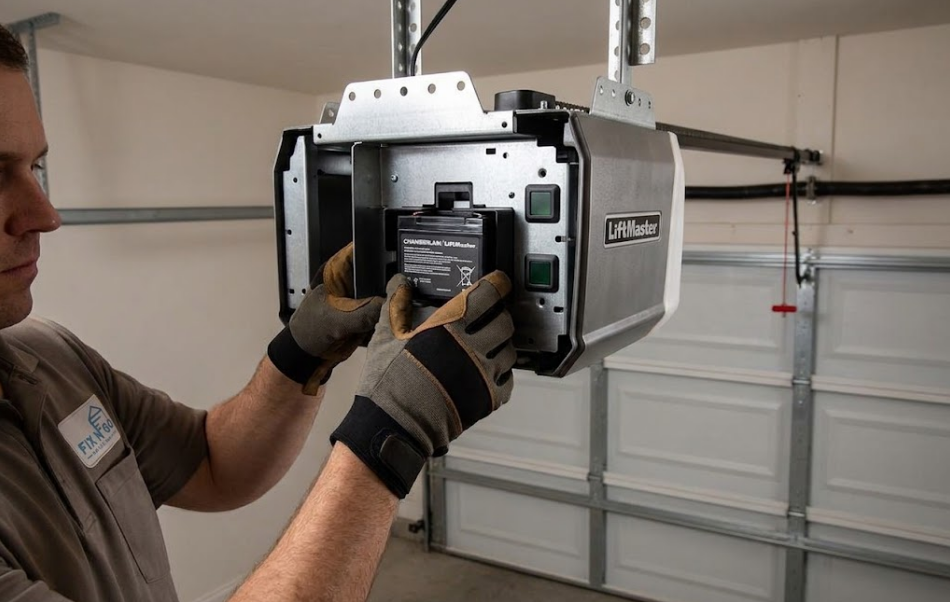
Your garage door opener motor and control board sit in the hottest part of the garage — ceiling level, where heat accumulates. In a Texas summer, that ceiling environment regularly exceeds the safe operating temperature for most residential opener electronics.
Heat damages opener components in several specific ways. Capacitors — which store energy to help start the motor — degrade faster at high temperatures, reducing their ability to deliver starting torque. A motor that struggles to start strains under load and fails early. Circuit board solder joints expand and contract with temperature swings, eventually cracking and causing intermittent connection failures. Motor winding insulation degrades, increasing the risk of shorts.
The practical symptoms are an opener that works fine in the morning when the garage is cooler and struggles or fails in the afternoon heat peak. Homeowners often chase remote battery issues and sensor alignment for weeks before realizing the opener is heat-failing in real time.
Garage Door Panels — Fading, Warping, and Finish Failure
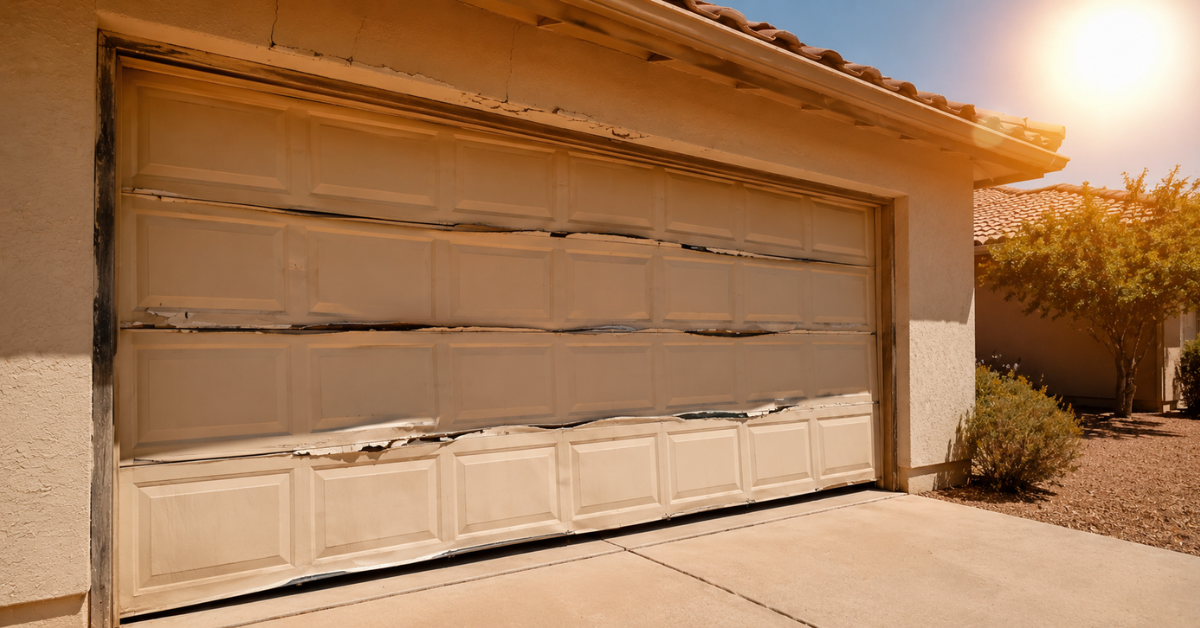
Steel panels absorb radiant heat directly from sun exposure. On a south or west-facing garage, panel surface temperatures can exceed ambient air temperature by 30°F to 50°F. That surface heat accelerates paint fading and chalking, degrades the factory primer layer, and causes the paint film to crack and peel — creating rust entry points at every breach.
Wood panels suffer more dramatically. Heat draws moisture out of wood fibers, causing shrinkage and cracking in the panel joints. The same wood that swells in humid months contracts in dry summer heat, creating gaps that compromise the door's seal, structural integrity, and appearance simultaneously.
Insulated steel panels hold up significantly better than uninsulated ones — the insulation core acts as a thermal buffer that reduces panel surface temperature and limits heat transfer into the garage interior. For Texas homeowners still running uninsulated doors, summer heat is the most compelling practical argument for an upgrade.
Weather Stripping and Bottom Seals — Baked Into Brittleness
The rubber and vinyl seals around your door perimeter and along the bottom edge have a simple but critical job: keeping the outside out. Texas heat bakes these materials relentlessly. Rubber loses its elasticity at sustained high temperatures, becoming stiff and brittle. A brittle bottom seal cracks along the floor contact line, creating gaps that let in rain, dust, pests, and hot outside air.
Side seals that lose flexibility pull away from the door frame at corners and joints, breaking the continuous barrier they're designed to maintain. A door with compromised seals lets summer heat flood the garage interior, pushing temperatures even higher and compounding the thermal stress on every other component.
Warning Signs Texas Heat Is Already Damaging Your Door
These signs appear before a component fails completely. Catching them early saves significantly on repair costs.
The door moves sluggishly in the afternoon but operates fine in the morning. This points directly to opener heat stress or lubricant that has thinned and migrated away from contact surfaces in the peak heat of the day.
Grinding or scraping noises that worsen in hot weather indicate roller bearing lubrication failure or early nylon roller deformation from heat softening.
The opener remote requires multiple presses in afternoon heat but works consistently in the morning. Capacitor degradation from heat is the most common cause — the motor struggles to start when the capacitor can no longer deliver full starting energy.
Visible fading, chalking, or paint peeling on panels signals that the factory finish has reached its heat tolerance limit and rust entry points are forming.
Cracked or stiff bottom seal that no longer flexes flat against the floor means the rubber has baked past its useful service life.
A visible gap in the spring coil — the clearest sign of a broken spring, often discovered on a hot summer morning after the door refused to open.
How to Protect Your Garage Door from Texas Summer Heat
Prevention costs a fraction of repair. These steps protect every component through even the most extreme Texas summers.
Lubricate every moving part before summer begins. Specifically use a high-temperature rated lubricant — standard white lithium grease melts and migrates faster in extreme heat. Apply it to springs, hinges, roller axles, cable drums, and bearing plates in late April or early May before temperatures climb. This barrier maintains protection through the heat peak when it matters most.
Install an insulated garage door if you haven't already. An insulated door with a minimum R-value of 12 to 16 reduces interior garage temperatures by 20°F to 30°F in peak summer heat. That temperature reduction directly extends the life of every component inside — opener electronics, springs, cables, rollers, and seals all degrade measurably slower in a cooler environment.
Add ventilation to your garage. A ceiling-mounted exhaust fan or wall vent dramatically reduces the heat accumulation at ceiling level where your opener lives. Cutting ceiling temperature by even 15°F to 20°F extends opener lifespan significantly and reduces the thermal cycling stress on springs.
Park your car outside for thirty minutes after driving. A car engine radiates enormous heat in an enclosed space. Parking directly inside a hot garage adds engine heat to ambient heat, creating a compounding thermal environment that accelerates every form of damage described in this article.
Inspect and replace weather stripping annually. Do this inspection in spring, before summer heat arrives. A fresh, flexible seal handles summer temperatures far better than one already cracked from the previous year's heat exposure.
Schedule a professional pre-summer inspection. A trained technician assesses spring condition, cable integrity, roller wear, opener performance, and seal condition before the summer heat cycle begins. Catching a spring with visible coil fatigue in April costs a fraction of the emergency repair when it snaps in August.
Fix N Go Keeps Texas Garage Doors Running Through Every Summer
At Fix N Go Garage Door Repair, Texas heat is something our technicians deal with every single day. We know exactly what components fail first in Houston's brutal summer humidity-heat combination, what breaks earliest in Dallas's dry 105°F afternoons, and what coastal salt air plus summer heat does to systems in Corpus Christi.
Our summer maintenance service covers every component that heat targets — spring inspection and lubrication, cable condition assessment, roller check and replacement, opener performance testing under load, seal inspection, and full hardware tightening. One visit addresses every vulnerability before summer turns them into failures.
You might also like
Fix N Go Blog