How to Fix a Noisy Craftsman Garage Door Opener Fast
A loud garage door can quickly become a daily annoyance. If your noisy Craftsman garage door opener is waking up the whole house or disturbing your neighbors, it’s time to fix the problem. The good news is that most garage door noise issues are easy to solve. In many cases, you don’t need professional help—just a few simple adjustments and some basic maintenance.
In this guide, you’ll learn why your garage door is making noise and how to fix it fast.
Why Your Craftsman Garage Door Opener Is Noisy
Before fixing the issue, it’s important to understand what causes the noise.
A garage door making noise is usually due to:
- Lack of lubrication
- Loose hardware
- Worn-out parts
- Misaligned tracks
- Aging opener components
Over time, normal wear and tear can turn a quiet system into a noisy one. Identifying the cause helps you choose the right solution.
Start With a Quick Inspection
The first step in fixing a noisy Craftsman garage door opener is a simple inspection.
Open and close the door while listening carefully. Try to identify where the noise is coming from.
Is it:
- A grinding sound from the opener?
- A squeaking noise from the rollers?
- A rattling sound from loose parts?
Pinpointing the source makes troubleshooting much easier.
Lubricate Moving Parts
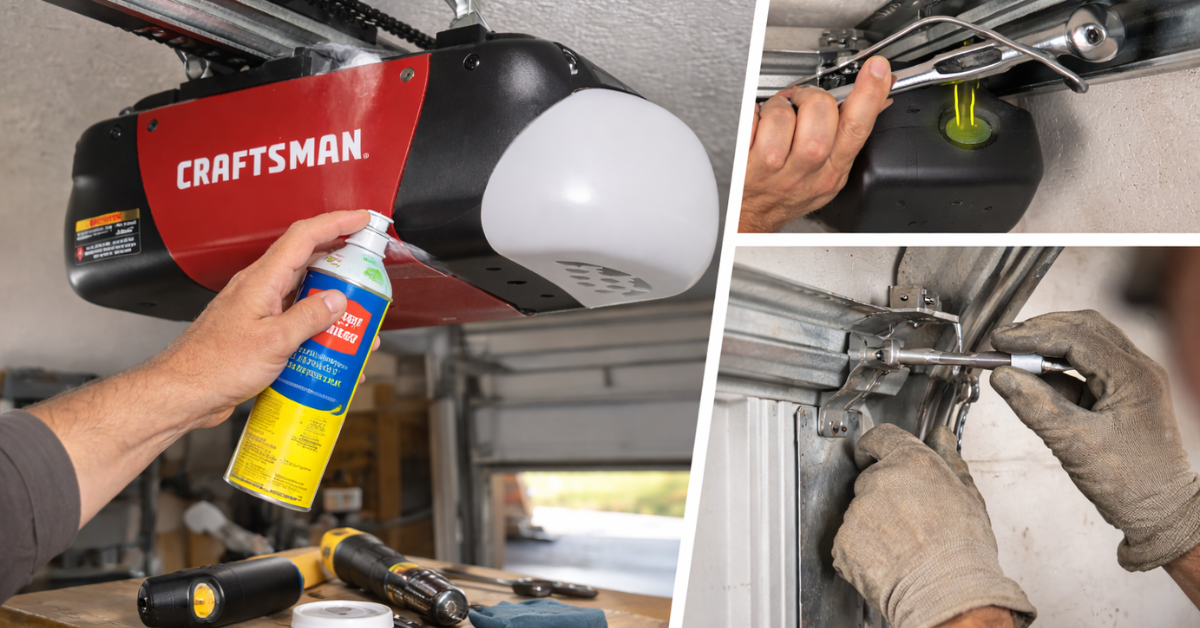
One of the fastest ways to fix a noisy garage door opener issue is lubrication.
What to Lubricate
Apply a high-quality garage door lubricant to:
- Rollers
- Hinges
- Springs
- Tracks
Why It Works
Friction between metal parts causes noise. Lubrication reduces friction and allows smooth movement.
Make sure you use a proper garage door lubricant instead of general-purpose oil.
Tighten Loose Hardware
Over time, the constant movement of your garage door can loosen nuts and bolts.
What to Check
Inspect:
- Brackets
- Hinges
- Mounting bolts
Fix
Use a wrench to tighten any loose parts. This simple step can eliminate rattling noises instantly.
Check the Rollers
Rollers play a major role in how smoothly your garage door operates.
Signs of Worn Rollers
- Grinding noise
- Jerky movement
- Visible wear
Solution
If your rollers are worn out, consider replacing them with nylon rollers. They are quieter and more durable than metal ones.
This is one of the best quiet garage door solutions available.
Inspect the Garage Door Tracks
Dirty or misaligned tracks can create noise and affect movement.
What to Look For
- Dirt and debris
- Bent or uneven tracks
Fix
Clean the tracks thoroughly and ensure they are properly aligned. Avoid applying lubricant directly on the tracks, as it can attract dirt.
Adjust the Chain or Belt
If your opener uses a chain drive, it may become loose over time.
Problem: A loose chain creates a rattling or banging noise.
Solution: Tighten the chain according to the manufacturer’s instructions. If your opener uses a belt drive, check for wear or damage.
Check the Motor Unit
Sometimes, the noise comes from the opener motor itself.
Possible Issues
- Aging motor
- Loose internal components
Fix
Ensure the motor unit is securely mounted. If the noise persists, the motor may need servicing or replacement.
Use Anti-Vibration Pads
Vibration from the opener can transfer to the ceiling and walls, increasing noise.
Solution
Install anti-vibration pads or rubber mounts between the opener and the ceiling. This helps absorb vibrations and reduce noise.
Replace Worn-Out Parts
If your garage door is old, some components may be beyond repair.
Parts to Consider Replacing
- Springs
- Rollers
- Hinges
Replacing worn parts not only reduces noise but also improves overall performance.
Regular Maintenance Matters
The best way to avoid a noisy Craftsman garage door opener is regular maintenance.
Simple Maintenance Tips
- Lubricate parts every few months
- Inspect hardware regularly
- Clean tracks and sensors
- Test door balance
Consistent care prevents small issues from turning into bigger problems.
When to Call a Professional
While many fixes are simple, some situations require expert help.
Call a technician if:
- Springs are broken
- The door is off track
- The motor is failing
These issues can be dangerous to handle without proper tools.
Quick Fix Checklist
If you want fast results, follow this simple order:
- Lubricate moving parts
- Tighten loose hardware
- Check rollers and tracks
- Adjust chain or belt
- Inspect motor and mounting
This approach solves most garage door maintenance tips issues quickly.
Conclusion
A noisy Craftsman garage door opener doesn’t have to be a long-term problem. With a little attention and basic maintenance, you can restore quiet and smooth operation in no time.
Start with simple fixes like lubrication and tightening hardware. If needed, replace worn parts and ensure proper alignment. Regular maintenance will keep your garage door running quietly for years.
A quieter garage door not only improves comfort but also extends the life of your entire system.
FAQs
Q1. Why is my Craftsman garage door opener so loud?
A: It is usually due to lack of lubrication, loose parts, or worn components.
Q2. How can I make my garage door opener quieter?
A: Lubricate moving parts, tighten hardware, and replace worn rollers.
Q3. What is the best lubricant for garage doors?
A: Use a silicone-based or garage door-specific lubricant for best results.
Q4. Are nylon rollers better than metal rollers?
A: Yes, nylon rollers are quieter and require less maintenance.
Q5. How often should I maintain my garage door?
A: Perform basic maintenance every 3–6 months to keep it running smoothly.
You might also like
Fix N Go Blog