Top Mistakes to Avoid with Craftsman Garage Door Openers
Let's be honest — nobody thinks about their garage door opener until it stops working. You press the button, nothing happens, and suddenly your whole morning is thrown off. The frustrating part? Most of the problems people run into with Craftsman openers are completely avoidable. Not because the units are flawed, but because of small mistakes that quietly build up over time.
Here's what to watch out for.
1. Skipping the Installation Manual (Yes, Really)
I get it. Manuals feel like a formality. You've installed something similar before, the parts look familiar, so you wing it. But this is where a lot of Craftsman opener headaches begin.
These units aren't all built the same. A belt-drive model has different mounting requirements than a chain-drive or screw-drive system. The chain tension, hardware placement, and wiring can all differ — sometimes significantly. Skip the manual, and you might get the door working, but you're probably stressing the motor in ways you can't see yet.
Before you touch anything, pull up the exact manual for your model on Craftsman's website. Give it ten minutes. The model-specific stuff is usually front and center.
2. Ignoring Safety Sensor Alignment
Those two little sensors sitting low on either side of your garage door tracks aren't decoration. They're required by federal law, and they exist specifically to stop the door from closing on a kid, a dog, or anything else that wanders into the path.
When they drift out of alignment — which happens more than you'd think — the door gets confused. It'll go down a few inches and bounce back up. Or your wall button works fine but the remote does nothing. Neither situation is fun to troubleshoot at 7am.
The sensors each have a small LED. Solid green and solid amber means everything's lined up. A blinking light means something's wrong — usually alignment, sometimes a blocked beam. After you move boxes around in the garage or bump into anything near the tracks, it's worth taking ten seconds to glance at those lights.
3. Neglecting Routine Lubrication
Here's one that trips up a lot of people. The garage door starts grinding or squealing, so they grab the WD-40 and spray everything down. Problem solved, right?
Not quite. WD-40 is a solvent, not a lubricant. It'll quiet things down for a day or two, but it actually strips away the lubrication that's already there, leaving bare metal to rub against bare metal. You've made things worse on a delay.
What you actually want is white lithium grease or a lubricant made specifically for garage doors. Hit the roller bearings, the hinges, and the length of the rail. Do it twice a year — spring and fall works well as a reminder — and the mechanical side of your opener will stay in much better shape.
4. Setting the Travel Limits Incorrectly
When the door starts acting strange — not closing all the way, slamming down too hard, reversing for no obvious reason — most people head straight for the force adjustment. Sometimes that's right. A lot of the time, it's not.
Travel limits are what tell the opener how far to move the door in each direction. When those are off, no amount of force adjustment is going to fix the behavior — you're just turning the wrong dial.
A quick way to check: lay a 2x4 flat on the ground under the door and let it close. It should reverse the moment it touches the wood. If it pushes down on the board or barely reverses, the down-limit needs adjusting. Your manual will show you exactly which screw to turn.
5. Overlooking the Importance of Battery Backup
Power outages aren't a matter of if, they're a matter of when. And if your Craftsman opener doesn't have battery backup, you're going to find yourself standing in a closed garage with no way to get your car out — or standing in your driveway with no way to get back in.
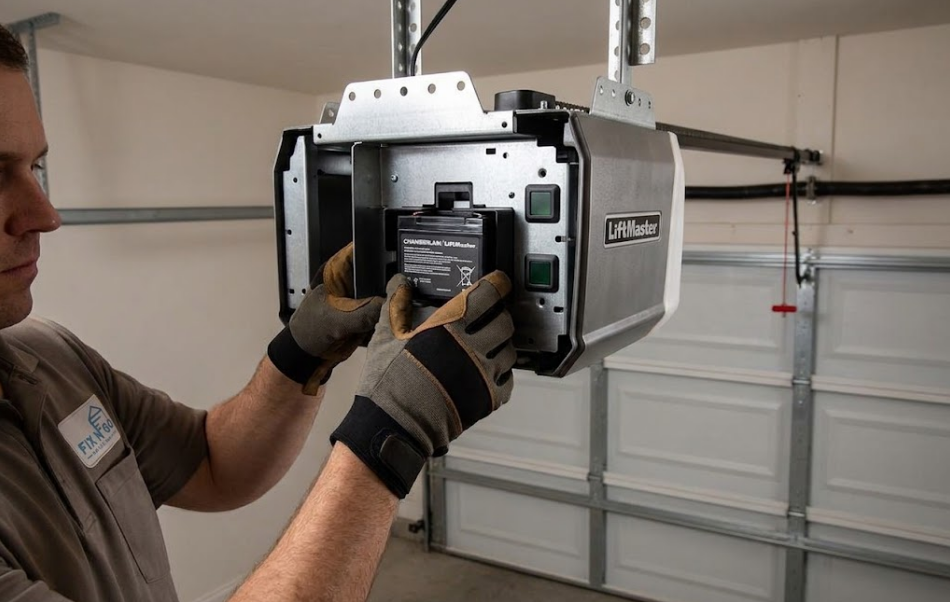
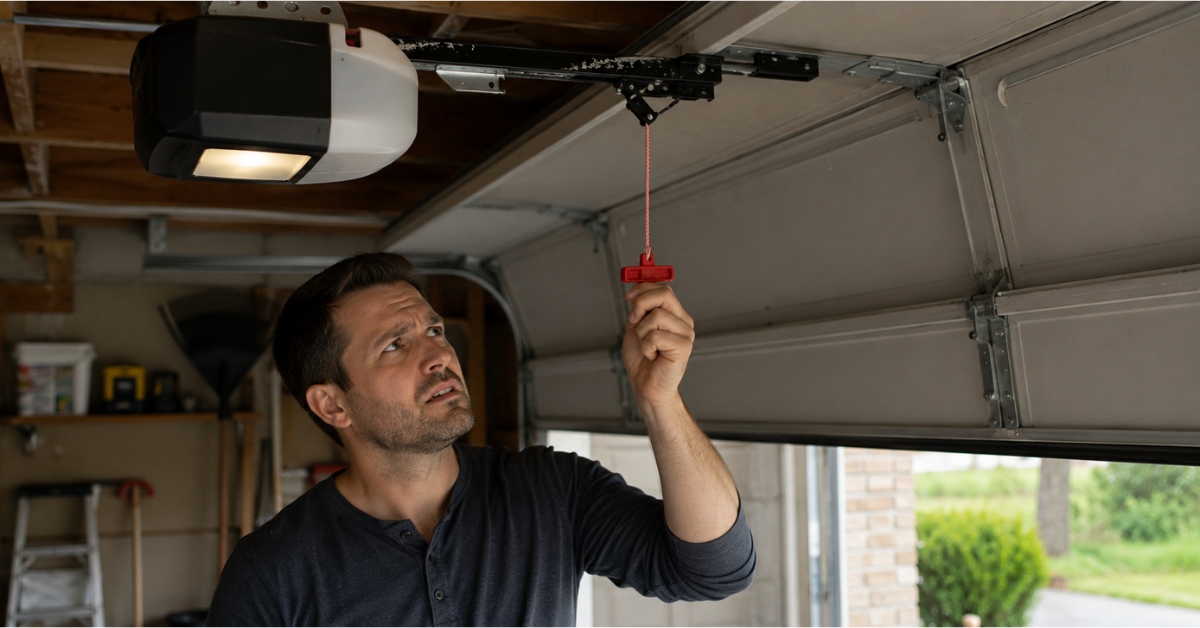
Newer Craftsman models handle this with built-in battery backup. Older ones don't. If yours is on the older side, at least make sure you know where the red emergency release cord is — the one hanging down from the rail. Pull it, and you can operate the door by hand.
The catch is that most people discover this rope exists for the first time during an actual outage, in the dark, in a panic. Practice it once on a normal afternoon so it's not a mystery when you actually need it.
6. Using the Wrong Remote Frequency or Programming Method
Craftsman remotes have changed a lot over the years. Older units used DIP switches — tiny physical switches inside both the remote and the opener that had to be set to match. Newer ones use rolling code technology, where the access code changes every single time you press the button.
If you buy a universal remote without checking which system your opener uses, you'll probably spend an afternoon trying to program something that was never going to work. The remote might seem to pair up, then randomly stop responding. Or it won't sync at all.
Check the back of your opener unit for the model number, then look up whether it uses fixed code or SECURITY+ rolling code before you buy anything. Five minutes of checking upfront saves a lot of frustration.
7. Delaying Repairs When the Door Starts Acting Up
This one's probably the most expensive mistake on the list. Your opener starts making a grinding noise. The door hesitates before moving. It reverses when it shouldn't. And you think — I'll deal with that this weekend. Then this weekend becomes next month.
Mechanical problems in garage doors don't plateau. They get worse. A roller that's wearing out costs a few bucks to replace. That same roller, left alone, starts dragging on the track, which overworks the motor, which burns out — and now you're looking at a repair that costs significantly more.
If something sounds or feels different, give it a week at most before you actually look into it. Most early-stage issues on Craftsman openers are straightforward DIY fixes. Catch them late, and they're not.
8. Not Testing the Auto-Reverse Feature Regularly
Your opener's auto-reverse feature is what stops the door from closing on someone. Every unit made after 1993 is required to have it. But the sensitivity can drift over time, and it's not something most people ever think to check.
Here's the test: put a 2x4 flat on the floor under the door and close it. The door should reverse within a second or two of touching the wood. If it keeps pressing down, or the reversal is slow and sluggish, the sensitivity needs adjustment.
Do this once a month. It takes about two minutes. If you have kids or pets who use the garage, it's not optional.
9. Ignoring the Garage Door's Overall Condition
People replace their Craftsman opener two, sometimes three times before realizing the opener was never the issue — the door itself was.
An unbalanced door, worn springs, or a warped panel puts a huge amount of extra strain on the opener motor. It's like trying to run with a weighted vest and wondering why you're tired.
Here's a simple test: disconnect the opener and try lifting the door by hand. If it moves smoothly and stays put when you let go at waist height, the door is balanced and the opener is likely your issue. If it drops, feels heavy, or shoots upward when you release it — the door needs work, not the opener.
Torsion springs, just to be clear, are not a DIY fix. They're under serious tension and can cause real injury. Get those looked at professionally.
10. Not Securing the Opener Against Unauthorized Access
Most people set up their remote, make sure the door opens, and never think about security again. That's fine for newer openers with rolling code technology, which makes code grabbing essentially impossible. But older fixed-code units? Those are a different story.
If your remote gets lost or stolen and your opener uses a fixed code, whoever finds it has access to your garage. And from the garage, in most homes, it's a short walk to the rest of the house.
At minimum, reset your opener's codes whenever a remote goes missing. If you're on an older unit, it might be worth upgrading.
Also worth doing regardless of your opener's age: put a small zip tie through the emergency release cord's latch. It's a known break-in method to fish a wire through the top of the garage door and hook the release cord. The zip tie doesn't stop a determined person, but it removes the easy option.
Conclusion
None of this is complicated. That's actually the point. Most Craftsman garage door opener failures come down to small, fixable things — a sensor that drifted out of alignment, a part that needed lubrication six months ago, a repair that got put off too long.
Run through this list once a year. Check the sensors, test the auto-reverse, grease the moving parts, and make sure you're not running on a security setup from 2003. A little attention goes a long way with these units — the difference between an opener that runs for fifteen years and one that gives out in five is usually just that.
Frequently Asked Questions
Q: Why does my garage door reverse before hitting the floor?
A: This is almost always a travel limit issue. The opener thinks the door has reached the floor before it actually has. Adjust the down-limit setting on the opener unit — usually a small screw labeled "down" or "close." Your model's manual will show exactly where to find it.
Q: How often should I lubricate my Craftsman garage door opener?
A: Lubricate the rollers, hinges, and springs twice a year — once in spring and once in fall. Use white lithium grease or a product specifically made for garage doors. Avoid WD-40, which evaporates quickly and can actually dry out metal surfaces.
Q: Why is my Craftsman garage door opener light blinking but the door won't close?
A: A blinking light typically signals a sensor problem. Check that both sensors near the bottom of the door tracks are aligned, unobstructed, and showing a solid (not blinking) indicator light. Even a small object like a leaf or cobweb in front of a sensor can trigger this behavior.
Q: Can I use any universal remote with a Craftsman garage door opener?
A: Not necessarily. Craftsman openers use different technologies depending on the model and year. Older models use DIP switch codes; newer ones use SECURITY+ or SECURITY+ 2.0 rolling codes. Always verify compatibility before purchasing a replacement or universal remote.
Q: How do I know if my garage door springs need replacing?
A: Disconnect the opener and lift the door manually to about waist height. Release it gently — the door should stay in place. If it falls or feels unusually heavy, your springs are likely worn or broken and need professional attention.
Q: What's the lifespan of a Craftsman garage door opener?
A: With proper maintenance, most Craftsman openers last 10 to 15 years. Units that run a high-traffic garage — opening and closing many times per day — may reach the end of their cycle rating sooner. The motor and drive mechanism are the components most likely to wear first.

You might also like
Fix N Go Blog