Why Garage Doors Rust Faster Near Coastal Texas
If you live anywhere near Galveston, Corpus Christi, or the surrounding Gulf Coast, you've probably noticed your garage door aging faster than a friend's door just an hour inland. Why do garage doors rust faster near coastal Texas? The short answer is salt, but the full explanation involves humidity, temperature swings, and a few maintenance habits most homeowners never think to change.
At FixNGo TX, we service far more rust-related garage door issues along the coast than anywhere else in our service area. In this guide, we'll break down exactly what's accelerating the damage and what you can actually do to slow it down.
The Real Reason Salt Air Speeds Up Rust
Ordinary rust forms when iron reacts with oxygen and moisture. Near the coast, that process speeds up dramatically because salt in the air acts as an electrolyte, making it easier for metal to corrode.
Wind carries microscopic salt particles inland, and they settle on any exposed metal surface, including your garage door's panels, hinges, and hardware. Even if you can't see visible salt residue, it's often there in amounts high enough to accelerate corrosion far beyond what an inland home would ever experience.
Why Coastal Texas Conditions Make It Worse
Constant Humidity
Coastal Texas doesn't just deal with salt, it deals with near-constant humidity that keeps metal surfaces damp for longer stretches than drier inland climates. That extended moisture exposure gives rust more time to form and spread.
Temperature Swings
Hot days and cooler nights cause condensation to form on metal surfaces, especially garage doors facing direct sun exposure during the day. This condensation adds another moisture source on top of humidity and salt spray, compounding the rust-forming conditions.
Storm Frequency
Frequent coastal storms and hurricanes bring heavy rain combined with salt-laden wind, which deposits even more corrosive material onto exposed surfaces. After a storm, doors often show visibly accelerated rust within just weeks if they aren't cleaned promptly.
Which Parts of a Garage Door Rust First
- Hinges and Rollers: These small metal components are usually the first to show rust, since they're constantly exposed and rely on smooth metal-to-metal contact that salt residue interferes with directly.
- Bottom Panel Edges: The lowest panels sit closest to ground-level moisture and are more likely to collect standing water or humidity, making them an early rust hotspot compared to upper panels.
- Exposed Screws and Fasteners: Unprotected fasteners often rust before the surrounding panel does, since they're smaller pieces of untreated metal directly exposed to salt air.
How to Slow Down Rust on a Coastal Garage Door
Rinse the Door Regularly
Hosing down your garage door every few weeks removes accumulated salt residue before it has a chance to accelerate corrosion. This single habit makes a bigger difference than most homeowners expect.
Apply a Protective Coating
A marine-grade rust-resistant coating or sealant adds a barrier between exposed metal and salt air, significantly slowing corrosion on hinges, tracks, and hardware.
Lubricate Moving Parts Consistently
Rollers, hinges, and tracks need more frequent lubrication in coastal environments than inland homes, since the lubricant itself helps repel moisture and salt buildup.
Choose Rust-Resistant Materials for Replacement
If you're replacing an aging door, materials like fiberglass, vinyl, or galvanized and coated steel resist coastal corrosion far better than standard, untreated steel.
Best Garage Door Materials for Extreme Heat
Signs Your Garage Door Already Has Coastal Rust Damage
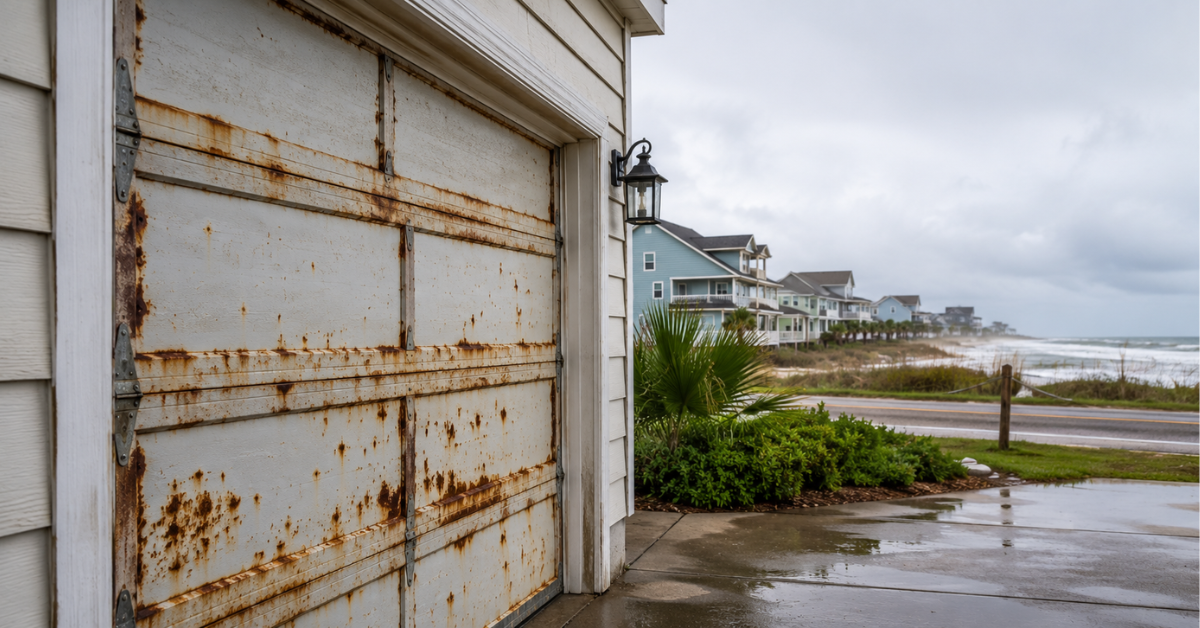
A few indicators suggest rust has progressed beyond a surface-level issue. Visible orange or reddish-brown flaking on panels or hardware signals active corrosion that will only spread further without treatment. Stiff or squeaky movement during opening and closing often means rust has reached the rollers or hinges internally. Difficulty aligning the door properly can indicate rust has affected the track itself, not just the surface.
If you're noticing any of these signs, addressing it early prevents a simple maintenance fix from turning into a full door or hardware replacement.
Final Thoughts
Understanding why garage doors rust faster near coastal Texas comes down to the combination of salt air, humidity, and temperature swings working together to accelerate corrosion most inland homeowners never have to think about. Regular rinsing, protective coatings, and choosing the right materials can dramatically extend your door's lifespan despite the harsh coastal environment.
If your garage door is already showing rust damage, or you want to prevent it before it starts, FixNGo TX can inspect your setup and recommend the right protection or replacement for your specific coastal location. Reach out to our team, and we'll help your garage door hold up against the salt air for years to come.
FAQ
Q: Why does salt air cause garage doors to rust faster?
A: Salt acts as an electrolyte that speeds up the natural corrosion process, allowing metal to rust significantly faster than in drier, salt-free environments.
Q: How often should I rinse my garage door if I live near the coast?
A: Rinsing every two to four weeks helps remove salt residue before it accelerates corrosion, especially after storms or high-wind days.
Q: What garage door materials resist rust best in coastal areas?
A: Fiberglass, vinyl, and galvanized or coated steel resist coastal corrosion far better than standard untreated steel doors.
Q: Can rust on a garage door affect how it operates?
A: Yes, rust on hinges, rollers, or tracks can cause stiff movement, misalignment, and eventually mechanical failure if left untreated.
Q: Is it worth applying a protective coating to prevent rust?
A: Yes, a marine-grade rust-resistant coating creates a barrier against salt air and can significantly slow corrosion on exposed metal parts.
You might also like
Fix N Go Blog