Garage Door Jerks When Closing — What It Means and How to Fix It
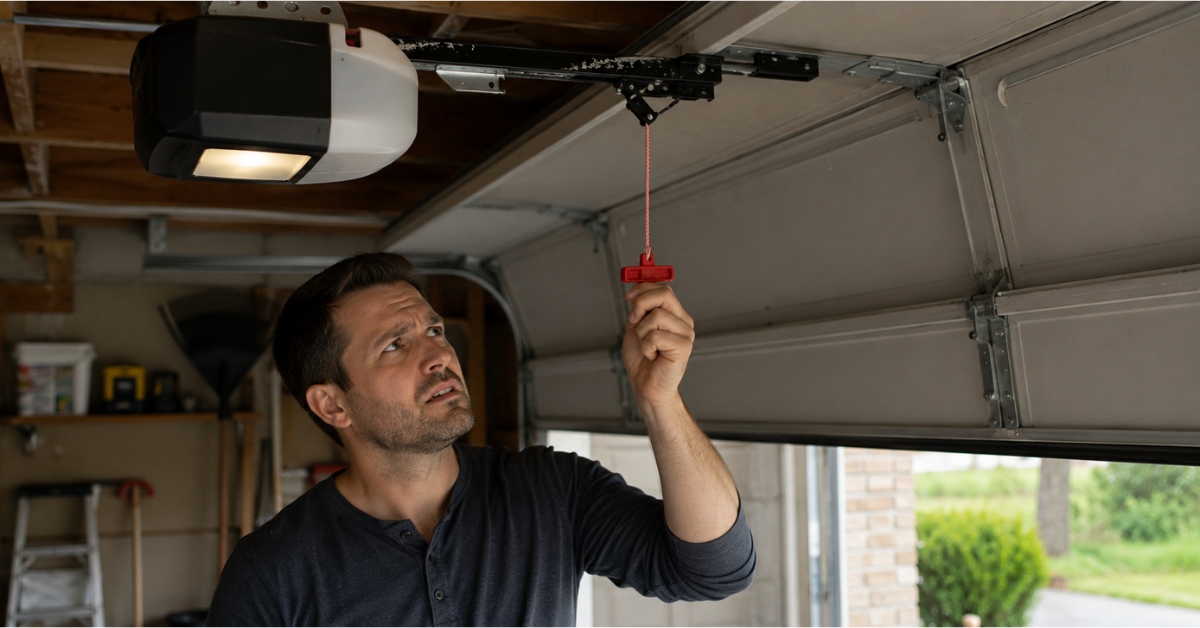
There is a specific kind of dread that comes with watching your garage door jerk, lurch, or shudder on its way down. Is it about to fall? Did something just snap? Should you stop it mid-travel? If your garage door jerks when closing, your instincts are right to pay attention. That movement is not normal, it is not something that fixes itself, and it is almost always a symptom of a mechanical issue that gets worse with every cycle you ignore it. The good news — most causes are diagnosable in minutes and fixable without replacing the entire door.
First — Is It Jerking or Reversing?
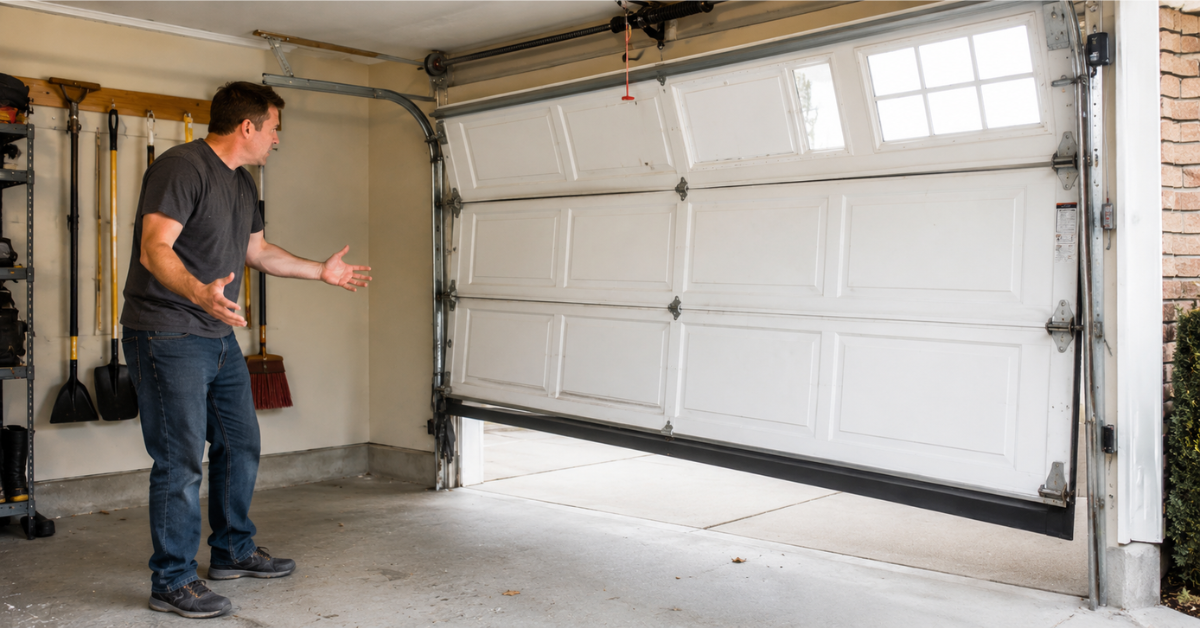
Before diving into causes, one clarification matters. There is a difference between a door that jerks or shudders during travel and a door that reverses direction and opens back up mid-close. Both are problems — but they have almost entirely different causes.
A door that jerks but continues closing has a mechanical issue — friction, obstruction, worn components, or cable imbalance — somewhere along the travel path. A door that reverses and reopens has triggered its safety reversal system, which points toward sensor misalignment, an obstruction the safety beam detected, or a force setting that is too sensitive.
This guide focuses on the jerking, shuddering, lurching motion during closing travel. If your door is reversing instead, sensor alignment and force adjustment are your starting points.
Cause #1 — Worn or Damaged Rollers
Rollers are the most frequent cause of a jerky closing motion — and the most overlooked. Each roller sits in the track and guides the door panel through its travel path. When a roller cracks, chips, or develops a flat spot, it no longer rolls. It drags, bounces, and catches against the track wall with every inch of travel.
The jerk you feel is the door fighting against that resistance at each damaged roller point. Run your eyes along every roller while the door is stationary. Look for cracked nylon, missing ball bearings, flat spots on the wheel edge, or rollers that wobble when pushed by hand. Any of those signs means replacement — and replacing a full set of rollers is one of the most cost-effective repairs on the entire garage door system.
Cause #2 — Track Obstruction or Debris
A garage track that looks clean from a distance can hide plenty of trouble up close. Dried grease, small stones, hardened dirt, and even insect nests accumulate in the track channel over time. When a roller hits that debris mid-travel, the door lurches and then continues — leaving you with that characteristic single jerk at the same point every time.
Here is a reliable test: if the jerk happens at the exact same spot during every closing cycle, a track obstruction is very likely the cause. Run a rag through the full length of both tracks, cleaning out any buildup. Then check for dents or bends in the track at that same location — even a minor inward dent creates enough resistance to cause a jerk.
Minor track dents can sometimes be tapped back into shape carefully with a rubber mallet. Significant bends, twists, or sections where the track has pulled away from the wall need professional realignment.
Cause #3 — Cable Tension Imbalance
Your garage door uses two cables — one on each side — working in parallel to lower and raise the door evenly. When those cables carry unequal tension, the door descends unevenly. One side moves faster than the other, creating the twisting, lurching motion that registers as a jerk during closing.
Cable imbalance develops gradually. Cables stretch at different rates. One side may have accumulated minor fraying that changes its effective tension. The drum that the cable winds around may have shifted. None of these are visible to the naked eye during casual inspection — but the jerking motion they produce is unmistakable.
Cable adjustment and replacement sit firmly in professional territory. The tension involved is significant, and an incorrectly tensioned cable creates the same problem it is meant to solve. If the jerk feels like the door twisting rather than a single-point catch, cable imbalance is the likely culprit.
Cause #4 — Loose or Misaligned Track Brackets
Every section of your garage door track mounts to the wall or ceiling with brackets. Those brackets take the full force of every door cycle. Over time — especially in a busy garage — they loosen. A loose bracket allows the track to flex slightly under load, and that flex creates a jerk at exactly the point where the bracket has given way.
Walk the full length of both tracks and check every mounting bracket by hand. They should feel completely solid with zero movement. Any bracket that shifts, wobbles, or has visibly pulled away from the wall needs its bolts tightened — or the wall anchor replaced if the mounting point itself has degraded. This is a straightforward fix that takes a socket wrench and ten minutes per bracket.
Cause #5 — Opener Force Setting Too High
Here is one that surprises most homeowners: the opener itself can cause jerky closing behavior. Garage door openers have a force adjustment dial that controls how much power the motor applies during travel. When the force setting is too high for the door's actual weight and resistance, the motor pushes too aggressively and the door accelerates unevenly — creating a lurch, particularly in the final foot of travel as the door approaches the ground.
Check your opener manual for the force adjustment location — typically a small dial on the motor unit labeled "close force" or "down force." Reduce it incrementally and test after each adjustment. The correct setting is the lowest force level at which the door closes smoothly and fully without stopping short.
Cause #6 — Worn or Dry Hinges
Each panel on your garage door connects to the next via hinges. Those hinges pivot with every open and close cycle — thousands of times per year. When they wear, corrode, or run dry of lubrication, they resist that pivot motion. The resistance creates a jerk or stutter as the door folds through its panels during closing travel.
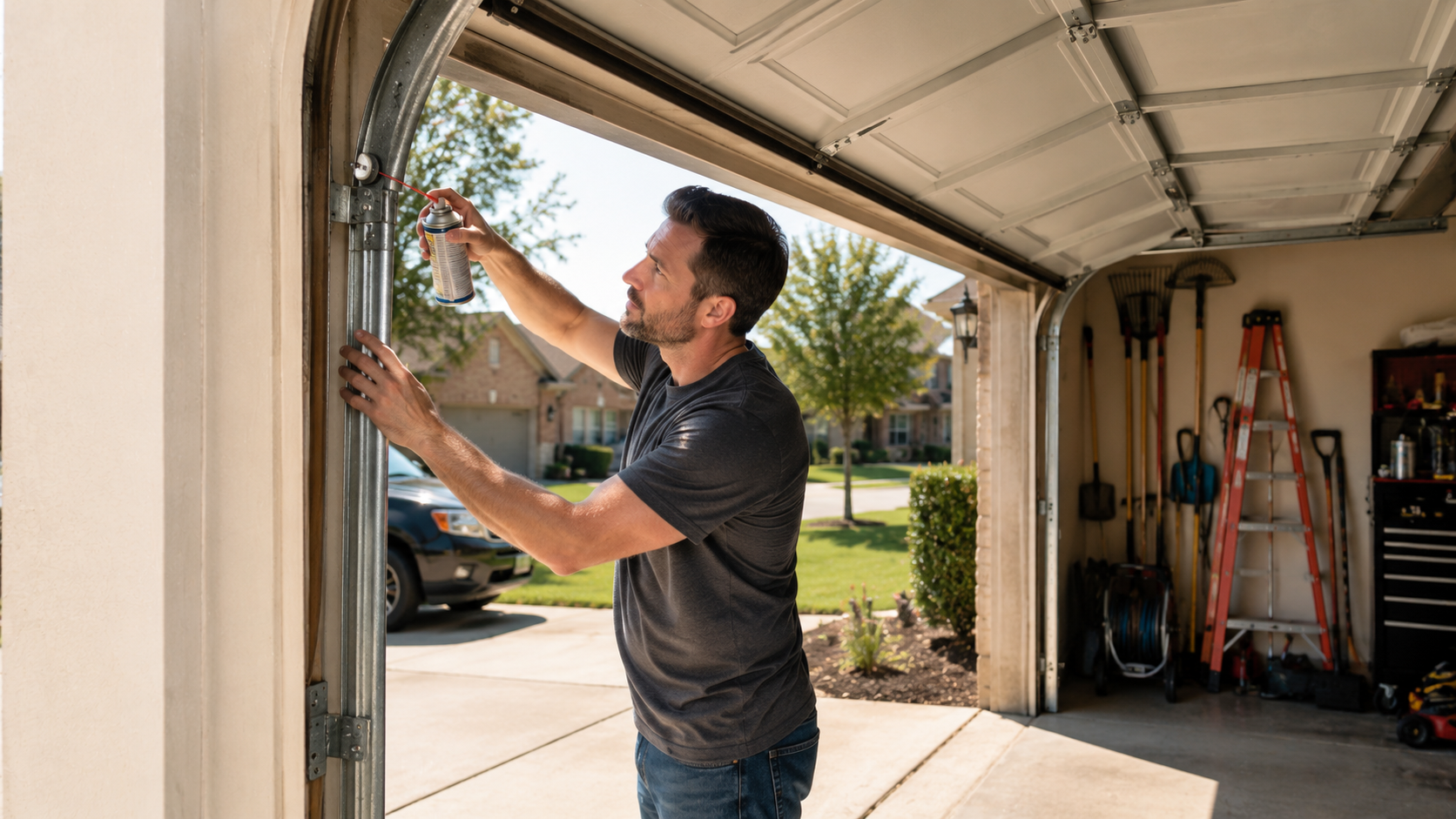
Spray a silicone-based lubricant directly onto every hinge pivot point with the door in motion if possible — or manually flex each hinge by hand and apply lubricant to any that feel stiff or resistant. If lubrication does not free a hinge within a few cycles, the hinge itself may be worn or bent and needs replacement. Hinges are inexpensive parts — do not let a worn hinge accelerate wear on the surrounding panels and track.
How Fix-N-Go TX Diagnoses and Fixes a Jerky Garage Door
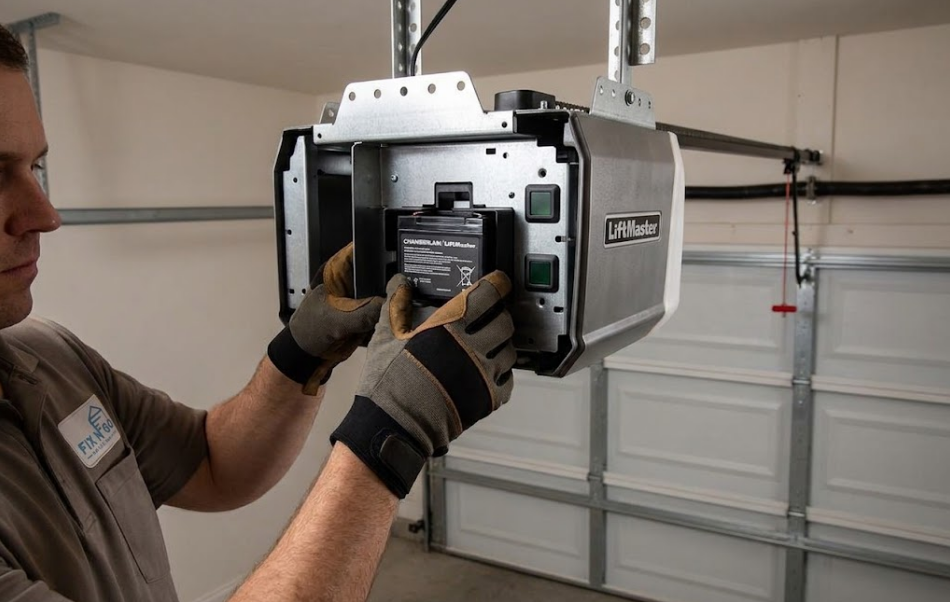
A garage door that jerks when closing rarely has just one cause — worn rollers create track wear, track wear stresses cables, and an out-of-balance cable puts extra load on the opener motor. At Fix-N-Go TX, every service call for a jerking or shuddering door starts with a complete system inspection, not just a fix for the most visible symptom. The technicians identify every contributing factor — worn rollers, debris in the tracks, cable tension imbalance, loose brackets, hinge wear, or opener force miscalibration — and address them together so the door closes smoothly and stays that way. Piecemeal repairs that miss the full picture send homeowners back to square one within weeks. Fix-N-Go TX fixes it right the first time. Visit fixngotx.net to book your repair and stop the jerk before it becomes a bigger failure.
The Quick DIY Checklist Before You Call
Run through these steps before booking a repair call. They resolve a meaningful portion of jerking door complaints at zero cost.
Check and clean the tracks. Run a rag through both tracks top to bottom. Remove any debris, dried grease, or buildup. Note whether the jerk happens at the same spot every time — that pinpoints the location of any obstruction or dent.
Lubricate every moving part. Apply silicone spray to all rollers, hinges, and the torsion spring. Dry components generate friction that shows up as jerky, uneven motion.
Tighten every track bracket. Work along both tracks and snug up every mounting bolt. A loose bracket causes localized flex that feels like a mechanical jerk.
Adjust the opener force setting. Reduce the close force dial one increment and test. Repeat until the door closes smoothly without stopping short.
If the jerk persists after all four steps — especially if it feels like a twist or a heavy lurch rather than a surface-level catch — the cause is mechanical and needs a technician.
Frequently Asked Questions
Q: Is it safe to keep using my garage door if it jerks when closing?
A: Short-term use is generally okay if the jerk is mild and the door closes fully, but continued operation accelerates wear on rollers, cables, and the opener motor — fix it promptly.
Q: Why does my garage door only jerk at one specific point when closing?
A: A jerk at the same spot every cycle almost always points to a track obstruction, a dent in the track, or a damaged roller at that location — check those three things first.
Q: Can a jerking garage door cause a cable to snap?
A: Yes — uneven travel caused by track issues or roller wear puts asymmetric stress on cables over time, accelerating fatigue and increasing snap risk if left unaddressed.
Q: How long does it take to fix a jerking garage door?
A: Most causes — roller replacement, track cleaning, bracket tightening, hinge lubrication — are resolved in a single visit of one to two hours by a trained technician with the right parts on hand.
Q: Will lubricating the tracks fix a jerking garage door?
A: Lubricating rollers and hinges often reduces jerking caused by friction — but do not lubricate the tracks themselves, as this makes rollers slip rather than roll and worsens the problem.
Conclusion
A garage door that jerks when closing is communicating clearly — something in the system is fighting against smooth travel. Start with the DIY checklist: clean the tracks, lubricate the rollers and hinges, tighten every bracket, and check the opener force setting. If the jerk remains, the cause runs deeper — worn rollers, cable imbalance, track damage, or hinge wear that needs professional diagnosis and repair. Every cycle you run a jerking door adds wear to components that are already stressed. Fix-N-Go TX identifies the full cause and fixes it completely in a single visit. Visit fixngotx.net to book your repair today and get that door closing the way it should.
You might also like
Fix N Go Blog